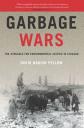
 We end a fantastic week of trash author interviews with David Naguib Pellow, sociologist and author of Garbage Wars: The Struggle for Environmental Justice in Chicago. In ‘Garbage Wars,’ Pellow provides a 20-year lit review and evidence-based analysis of Chicago’s waste management. This is a book about the politics of garbage (which are, as we all know, the very same politics that apply to race and class). It’s about the simple, universal fact that we all make waste–most of it smelly, some of it hazerdous–but only some people have to live with it. This book is the perfect finale to our exploration of trash lit because it brings us back to the very core of the everyday trash message: there is no such thing as “away”.
everydaytrash: Could this book have been written about another city?
David Naguib Pellow: Yes, absolutely. Chicago is really almost a metaphor or a window for what’s going on not only in other cities in the U.S. (Detroit, New York, New Orleans, etc.) but it reflects a global reality as well, since greater volumes of garbage and waste are being generated as societies become more ‘advanced’ and industrialized. Chicago is a particularly excellent site for this kind of study, however, because it has historically been much more racially segregated than most places in the U.S. This means that the garbage wars occurring in Chicago produce and reflect a much deeper sensitivity to racial inequality. In other places, garbage wars may fall more clearly along social class divides.
everydaytrash: Garbage Wars seems to be more about class and race than anything else. Why focus on trash and the solid waste industry?
Pellow: The way we treat our trash tells us a lot about the way we think about our relationship to nature. But it also tells us a lot about our relationship to other people, particularly populations that are marginalized politically, economically, and culturally. I have traveled to many cities and countries in the time since Garbage Wars was published and almost without fail, those groups at the bottom of the social pecking order tend to live and work in places where they are exposed to the rest of society’s trash and pollution. In other words, as much as we’d like to think of garbage and waste only as environmental problems, they’re actually social and political issues more than anything else.
everydaytrash: Is the environmental justice movement alive and well? Has it evolved in response to newer threats of high tech waste?
Pellow: Yes, the environmental justice movement is thriving in the U.S. and globally. In fact, some of the most exciting work going on in this movement is occurring outside the U.S. Electronic waste (e-waste) is a good case in point. As rich industrialized nations consume and dispose of hundreds of millions of computers each year, the waste from these products often ends up in global south nations, where workers attempt to refurbish them for reuse and remanufacturing. Unfortunately, since the average computer contains many pounds of toxic materials, this is an inherently dangerous process that threatens workers and ecosystems. In response, activists in West Africa, Latin America, and Asia have teamed up with advocates in the U.S. and Europe (where most e-waste originates) to push electronics producers (most notably computer firms) and governments to enact policies that would prevent the export of hazardous electronic waste to global south nations and to reduce the use of toxic chemicals in the production of electronics in the first place.
everydaytrash: What are some examples of current struggles between vulnerable populations and the garbage imposed on them? Where are today’s garbage wars being waged?
Pellow: Today Roma communities throughout Europe are threatened with environmental racism, as many of these populations are forced to live on or near garbage dumps. Some Roma activists are reframing and turning upside down the traditionally racist view that Roma prefer living near garbage dumps. In Sofia, Bulgaria, they are documenting the fact that Roma are often forced by cities and by threat of public violence to live in close proximity to garbage dumps (a classic example of environmental racism); they are also documenting the fact that Roma who are taking objects out of the dumps for reuse or resale, are what, in any other context, we might call recyclers or waste recovery workers, because they are contributing to Bulgaria’s national recycling efforts. So they are flipping the script on the work Roma are doing in garbage dumps and on why they are living there in the first place.
Similar struggles are going on in places like Egypt and the Philippines where people seek to turn environmental injustice into an opportunity to recover waste for reuse and economic development. So many of today’s garbage wars are being waged over the right to use garbage as a resource for our future rather than as a means for corporate profit.
###
This marks the end of authors’ week, but look out for future interviews with trash authors and personalities from around the world. And check back for daily posts on the art and politics of garbage.
 everydaytrash
Leave a comment