Al Jazeera English program Earthrise covers Lebanon’s trash mountain, Lebanese views on waste and consumption and the (B)IM Project performances featured here last Trashtastic Tuesday in the form of a Q&A with the creators.
Al Jazeera English program Earthrise covers Lebanon’s trash mountain, Lebanese views on waste and consumption and the (B)IM Project performances featured here last Trashtastic Tuesday in the form of a Q&A with the creators.
The fabulous site inhabitat featured today Ida-Marie Corell‘s Ikea gown, the centerpiece of her installation in a show called “Oh, Plastiksack” at the Gewerbemuseum in Winterthur, Switzerland.
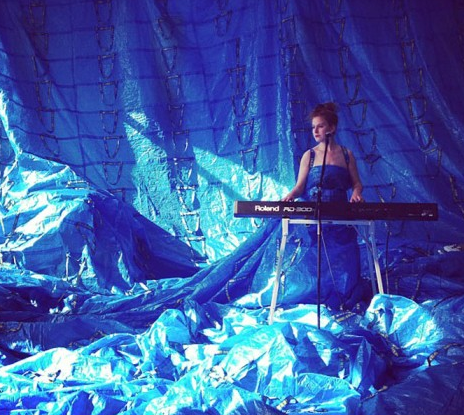
Ida-Marie Corell’s Ikea gown
In trying to find out more about both the artist and the show, I came across Corell’s wonderful Plastic Bag Blog, which I’ll be adding to the blogroll and trolling for content on the regular from now on. She also has a book out about plastic bags, German-reading trashies consider this an open call for a guest post review.
Feeling philanthropic? Rolando Politi, founder of the Yanbuki trash worshipers, has launched a fundraising campaign to support a project with women rag pickers in Delhi, India. The idea: teach the members of the women’s waste workers cooperative to make and sell trash art.
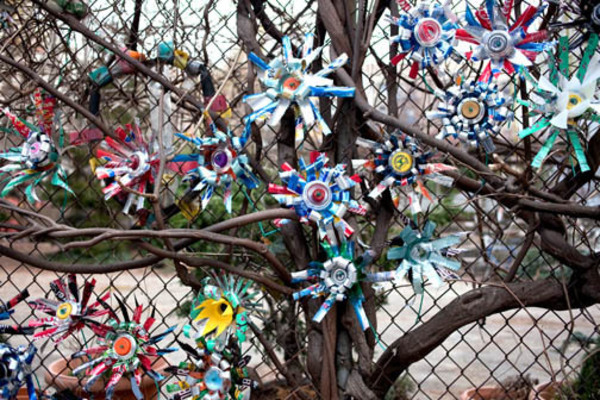
Trash flowers
The campaign states two aims, to generate income for the women and to destigmatize their work by creating something positive from the materials they collect.
For more on waste, recycling and the informal industry of rag picking in Delhi, check out the documentary Delhi Waste Wars.
A new documentary on the trash picking Zabaleen community of Cairo may peak the horizon. REORIENT, an online magazine featuring Middle Eastern arts and culture, this week profiles director and cinematographer Justin Kramer on the two-and-a-half year process of shooting Zabaleen.

photo via REORIENT
Kramer tells the reporter:
I had to spend a lot of time with these families before they trusted me enough. They’re very marginalised. What they do is sort of taboo, and they were reluctant to open up to an American guy who barely speaks the same language’
A moving and naturally-paced excerpt of the film entitled “Mourad’s Morning” can be viewed on VIMEO, which includes the following description:
Mourad’s mornings are all the same. He wakes up at 2am. Then, he fights to get his sons out of bed for an hour before leaving late for his garbage route in Shoubra.
This piece was submitted and accepted into Werner Herzog’s Rogue Film School in London March 2011.
Sounds very promising.
A now-completed Kickstarter campaign includes a brief video message from Kramer and cites the blog The Zabaleen Project as the documentary’s website. It appears to be an interesting compilation of Zabaleen news, including an automated filter for the latest #zabaleen tweets.
Here’s hoping the final product makes the rounds on the film festival circuit and makes its way to screenings we can all attend. In the meantime, to bone up on Zabaleen issues, check out:
Today we revive the long dormant weekly feature, Trashtastic Tuesday, with an inspiring performance series. The (B)IM Project, short for books in motion, cites as its mission “to make theatre accessible in Lebanon by performing for free, in site -specific locations across Lebanon.”
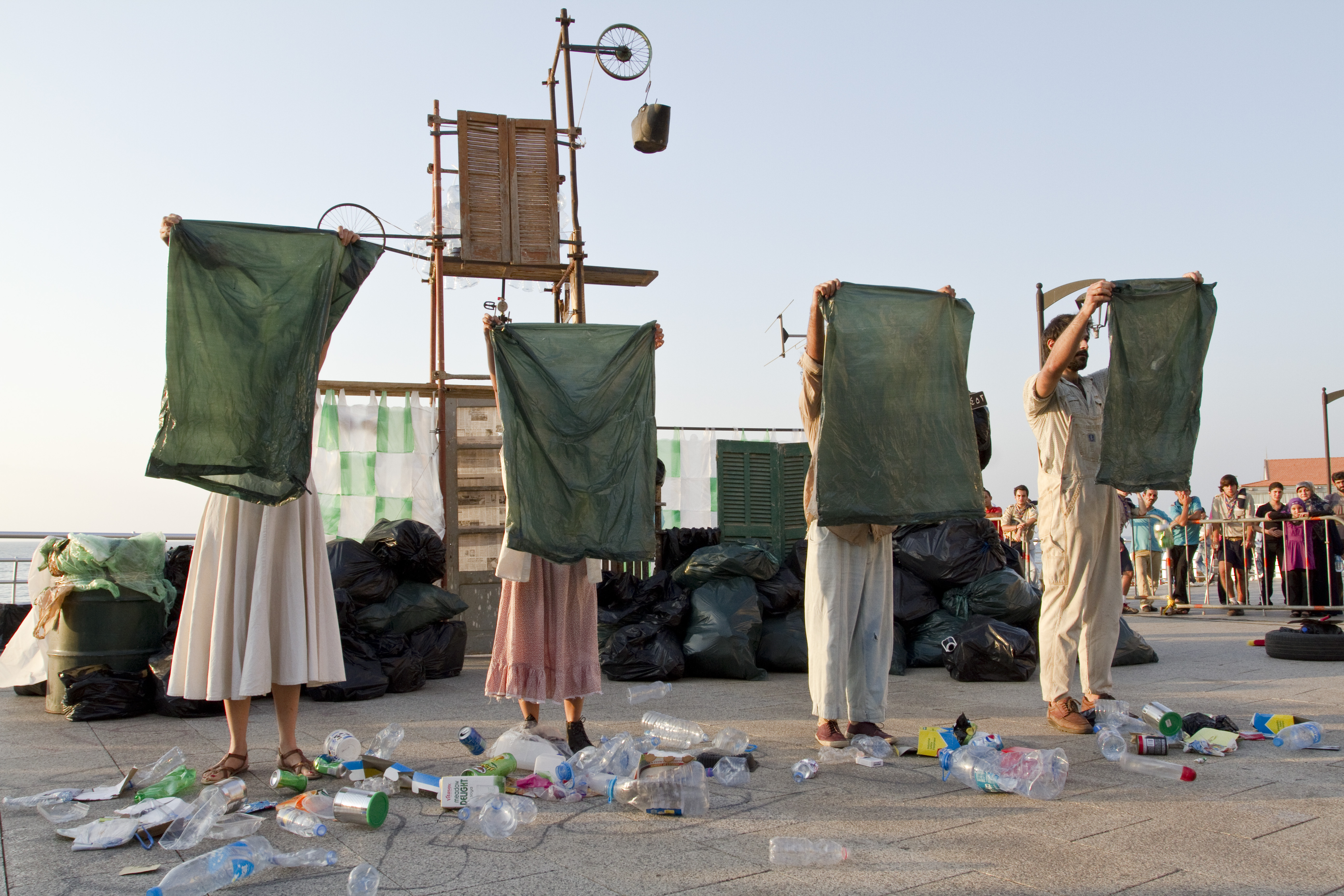
Beirut
The company’s latest project is called “10453: A Story About Life in 1 km2 of Trash.” Kindly, writer/director Camille Brunel Aoun and Producer Denise Maroney agreed to answer a few questions for everydaytrash.com.
—
everydaytrash: What is “10453: A Story About Life in 1 km2 of Trash”? How did the project come about?
The (B)IM Project: 10453 is a theatrical performance that combine dance, mime, clown, text and images related to the nightmare of our everyday life surrounded by trash. The play is a journey through the life and habits of 5 characters who deal with garbage, both consciously and unconsciously. The play offers metaphors for the absurdity of a society that ignores the dirt it is breathing in every day and the danger it is creating for itself.
The title “10453” references the official square area of Lebanon ( 10,453 km2). We added an extra kilometer (10453) to allude to the growing kilometers of trash that are popping up across Lebanon’s coast (e.g. Saida trash mountain; Google it, if you don’t already know about it, you’ll be horrified!)
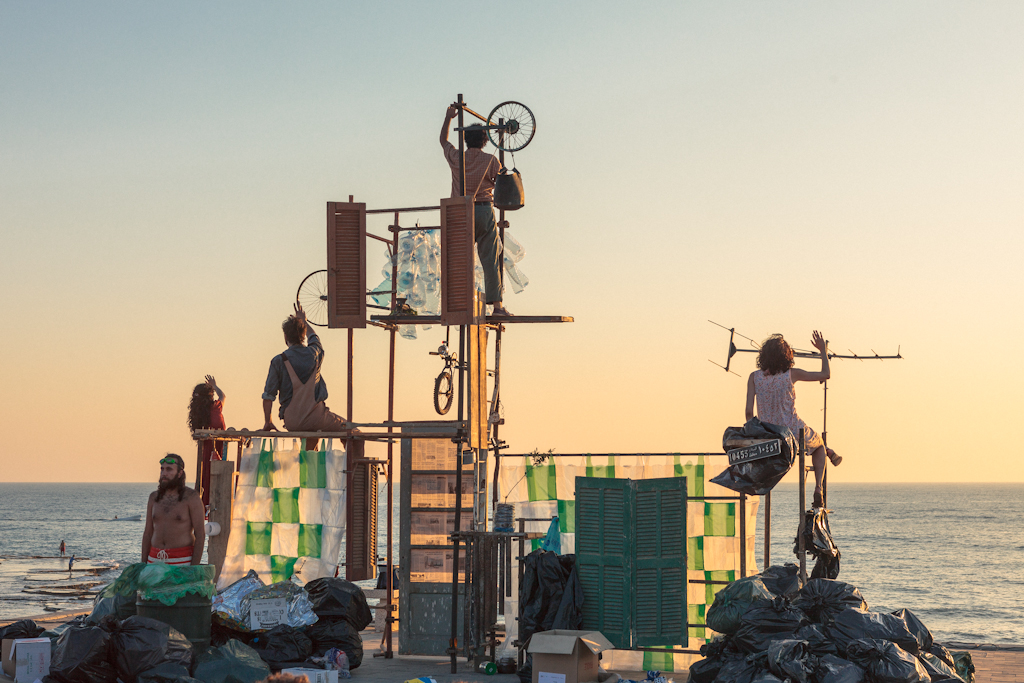
Group scene
The project began in 2011, when producer Denise Maroney was awarded a grant from the Theatre Communications Group to workshop a theatrical production in Lebanon, pertaining to the Mediterranean Sea. During this period, Maroney spent time examining topics related to Lebanon’s Mediterranean coast. The abundance of trash found on beaches and in the sea struck a chord. With director/writer Camille Brunel Aoun, the two began imagining a performance that would spotlight trash and question human behavior relating to waste.
everydaytrash: Where will the tour take the performance?
(B)IM: We began with performances on the boardwalks of major cities in Lebanon- Tyre, Sidon and Beirut. The boardwalks offered an appropriate location: a public, accessible place where land and sea meet. The backdrop of the sea provided a stunning effect and resonated within the story.
We are currently preparing to present this play in various festivals across Lebanon during Ramadan. In the fall, we hope to perform in schools and indoor theatres across Lebanon. And of course, we will be looking for opportunities to take this play into international theatre festivals!
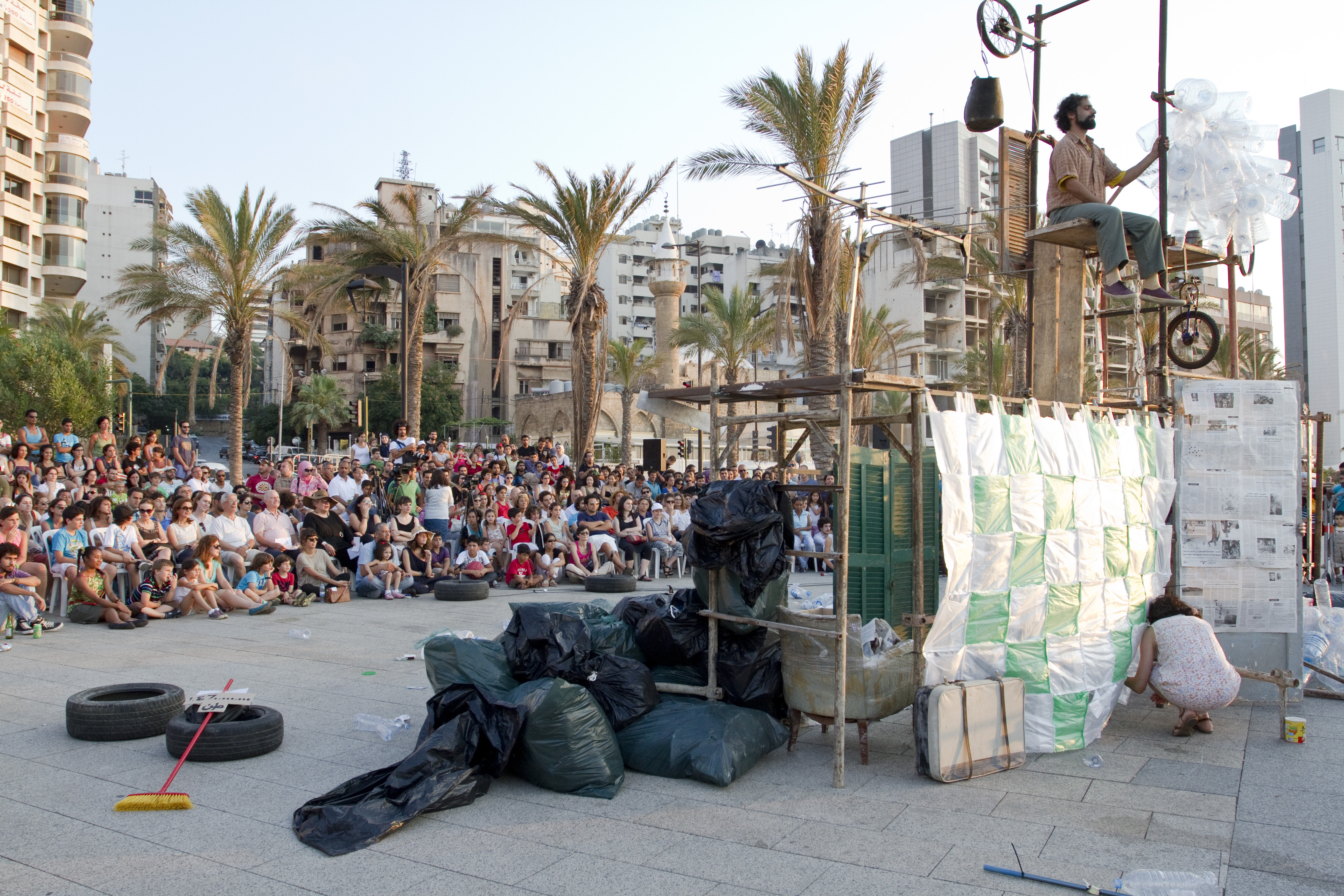
Audience
everydaytrash: Several of your past performances have incorporated trash and recycled material, what do you see as the connections between theater and waste? Are there particular connections for Lebanese or more generally Middle Eastern societies?
Theater offers a space to re-imagine ‘waste.’ Lebanon, in particular, is a country surrounded by waste, namely rubble from post war de/re-construction and heaps of abandoned trash. By animating discarded material from the society we are living in, we are opening up imaginations and inviting our audience to creatively examine their environmental space.
One can also approach the relationship between theater and waste through the lens of legendary Polish director, Jerzy Grotowsky, and his ideas of a poor theatre: “Theatre must recognize its proper limitations. If the stage cannot be richer than cinema, let it then be poor. If it cannot be as lavish as television, let it be ascetic.” Thus, we use what surrounds us to create theatre. At the end of the day, you can create for a very low cost. It’s a positive and magical act to create “something” from very little.
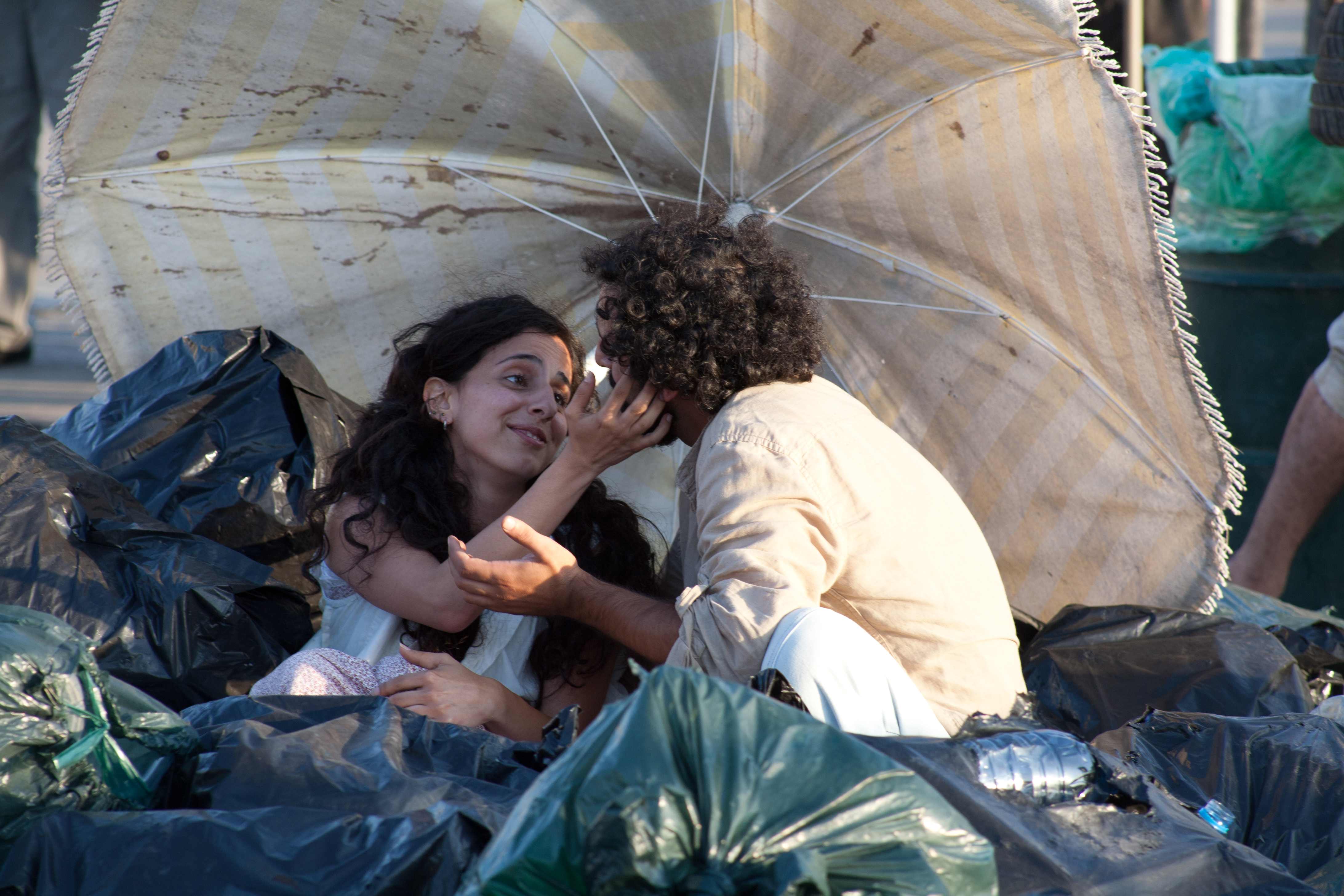
Beach trash scene in Saida
everydaytrash: What’s next for The (B)IM Project?
(B)IM: We’re going to live with this play for a while… performing in different venues across Lebanon. Eventually, we want to perform it beyond Lebanon’s borders. Whether we tour in neighboring Middle Eastern countries, or beyond, 10453 is a play relevant to all citizens on this Earth.
Remember Willis Elkins, the artist who collects cigarette lighters from the shores of New York City? His latest found art adventure involves not just collecting found objects, but restoring them.
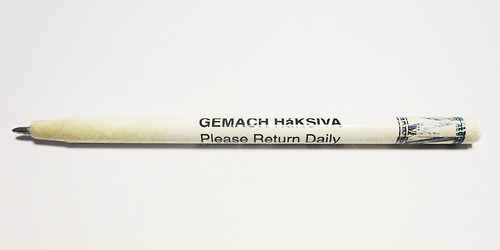
The Haksiva
For the Jamaica Bay Pen Project, Elkins gives new life to pens that wash up on the shores of Jamaica Bay in Queens by cleaning them up and replacing the ink cartridges. Track the project here.
Brazilian-born, New York-based artist Vik Muniz has set up his latest project in Rio de Janeiro, timed with Rio+20, the United Nations Conference on Sustainable Development. Appropriately entitled Landscape, Muniz’ new work recreates Rio (the global capital of debate around the environment) entirely out of trash. You probably remember Muniz from the incredible documentary Waste Land.
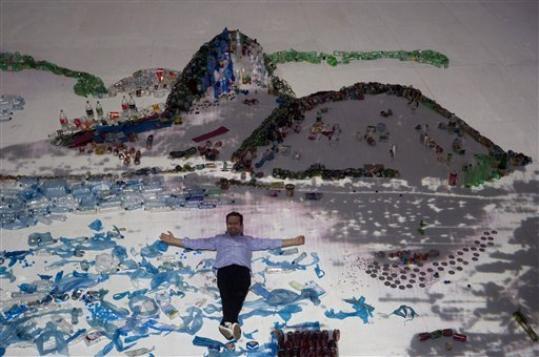
Photo via the AP
As one whose day job revolves around international development, I was somewhat relieved not to have to go to Rio this week and participate in the organized chaos of assessing the state of sustainable development around the world. Women’s rights, my area of focus, don’t get much prominence on the agenda and I have many dutiful colleagues who trooped down to Latin America to remind world leaders that, as a Guatemalan colleague put it recently, “we can’t achieve sustainable development if women’s lives are unsustainable.”
Anyway, that is to say I was feeling pretty jaded and exhausted by the mere thought of all the hustle and bustle and tedious bureaucracy orbiting around a meeting of this size and pomp. Until I read about this new Vik Muniz endeavor. Suddenly, I’m jealous of all the activists and diplomats packed into conference rooms and pouring over the past twenty years of progress (or lack thereof) on issues of sustainability. Those bastards get to slip out and visit amazing trash art projects! I wonder what other creative efforts environmentally-minded artists have cooked up for this occasion.
Are you in Rio? Send updates and photos, please!
Over the weekend, AfriGadget shared this wonderful short documentary by the Kenya-based Dutch journalist Ruud Elmendorp on trashpicking craftswomen near Nakuru.
The women, including Lucy Wambui, featured in a video and report on Elmendorp’s site, collect plastic bags from the dump and weave them into marketable goods. In an area of the world ravaged by poverty, HIV, domestic abuse and drug addiction, these women are bettering their lives and educating the next generation on the income they earn selling recycled plastic. Lucy, for example, pays her grandson’s school fees with part of her income.
I find this piece particularly compelling because I have been to Nakuru, spent the night in the national park for which the area is famed and even spent a night in town without ever crossing paths with a community of trashpickers. Elmendorp’s shot of the dump site with flamingo lake in the background beautifully illustrates the contrast between the two worlds. It reminds me of this photo, which I shared here in 2010, taken from the shore of the same lake.
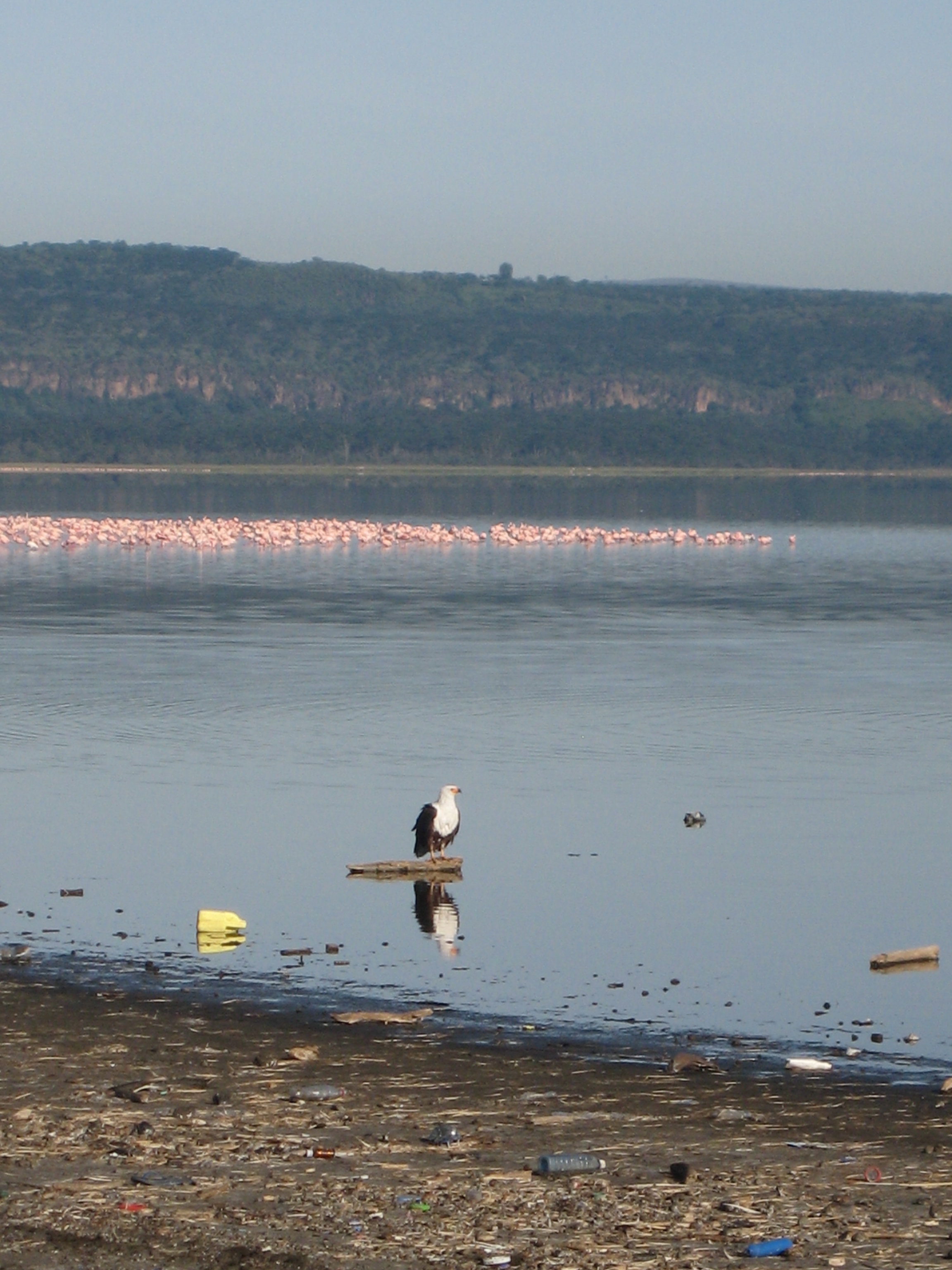
Lake Nakuru
How different the planet appears from the other side of the looking glass.
I thought Decorative Dumpster Day was over, but then this evening, while flipping through an art magazine, I discovered this magnificent piece by the Japanese-born, LA-based artist Kaz Oshiro.
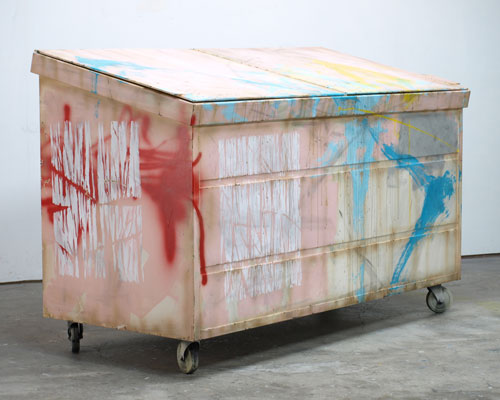
Kaz Oshiro's Dumpster (Flesh with Turquoise Swoosh) 2011
The photo appeared in the fabulous Walker Art Center‘s monthly magazine as part of a feature on a new show called Lifelike. According to the Walker website, “Lifelike invites a close examination of artworks based on commonplace objects and situations, which are startlingly realistic, often playful, and sometimes surreal.”
Check out an interview with the painter/sculptor here. My favorite bit is Oshiro discussing his choice of media:
If you know the construction of a painting, you have a wood frame and you stretch canvas over it. So that structure is kind of important, and you can’t really go beyond that. The objects I’m making are boxes. If you see the conventional painting frame, it’s kind of thin. But in my case, wood stretcher bars become a box and then I stretch canvas over it.
I’ve been making trash bins and dumpsters for awhile. Sometimes I’m not sure why. Somehow I’m really attracted to it. You see dumpsters everywhere in the United States on the street. I drive around town. In LA, I have to drive everywhere. Somehow I always see things on the street, and everything’s coming from my memory.
Why I paint them? First of all, I like the shape of the metal big box. You see all kinds of marks on it. The [form of the] dumpster allows me to paint the way abstract painters do. That’s one of the things I like about painting dumpsters. To me, it’s existing between representation and abstract painting.
Perhaps my favorite decorated dumpster story of all time is this one via inhabitat. German trash collectors turned dumpsters into pinhole cameras to take stunning photos.
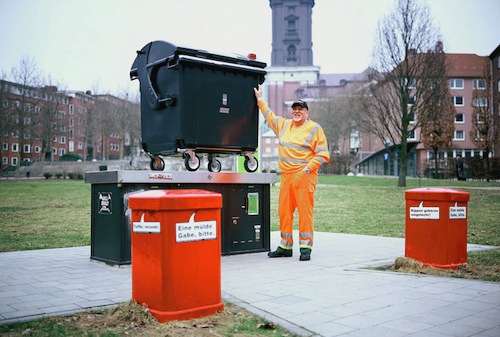
Dumpster camera
It’s a twist on decorating a dumpster, rather than dressing it up, they transformed waste receptacles into beauty-making machines.
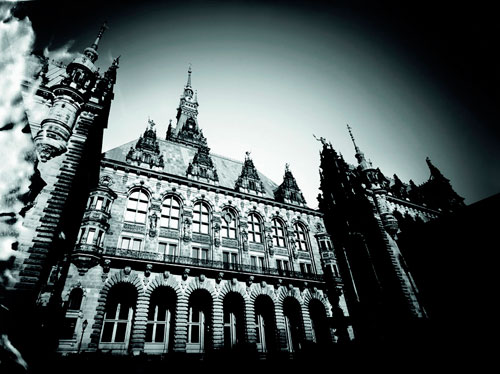
Photo taken by dumpster
May 1st is Decorative Dumpster Day. Each year, my colleagues in trash Little Shiva and Ruby Re-usable and I take a day to post photos of and reflect upon the containers in which we store our waste. Today our sites everydaytrash.com, The Visible Trash Society and Olympia Dumpster Divers will share links from our own collections and maybe a few from around the blogosphere. Happy DDD!
My kick ass friend and fellow blogger Oriana of the amazing site Brooklyn Spaces has a lovely “honorary Brooklyn” post of right now featuring Austin’s Cathedral of Junk.
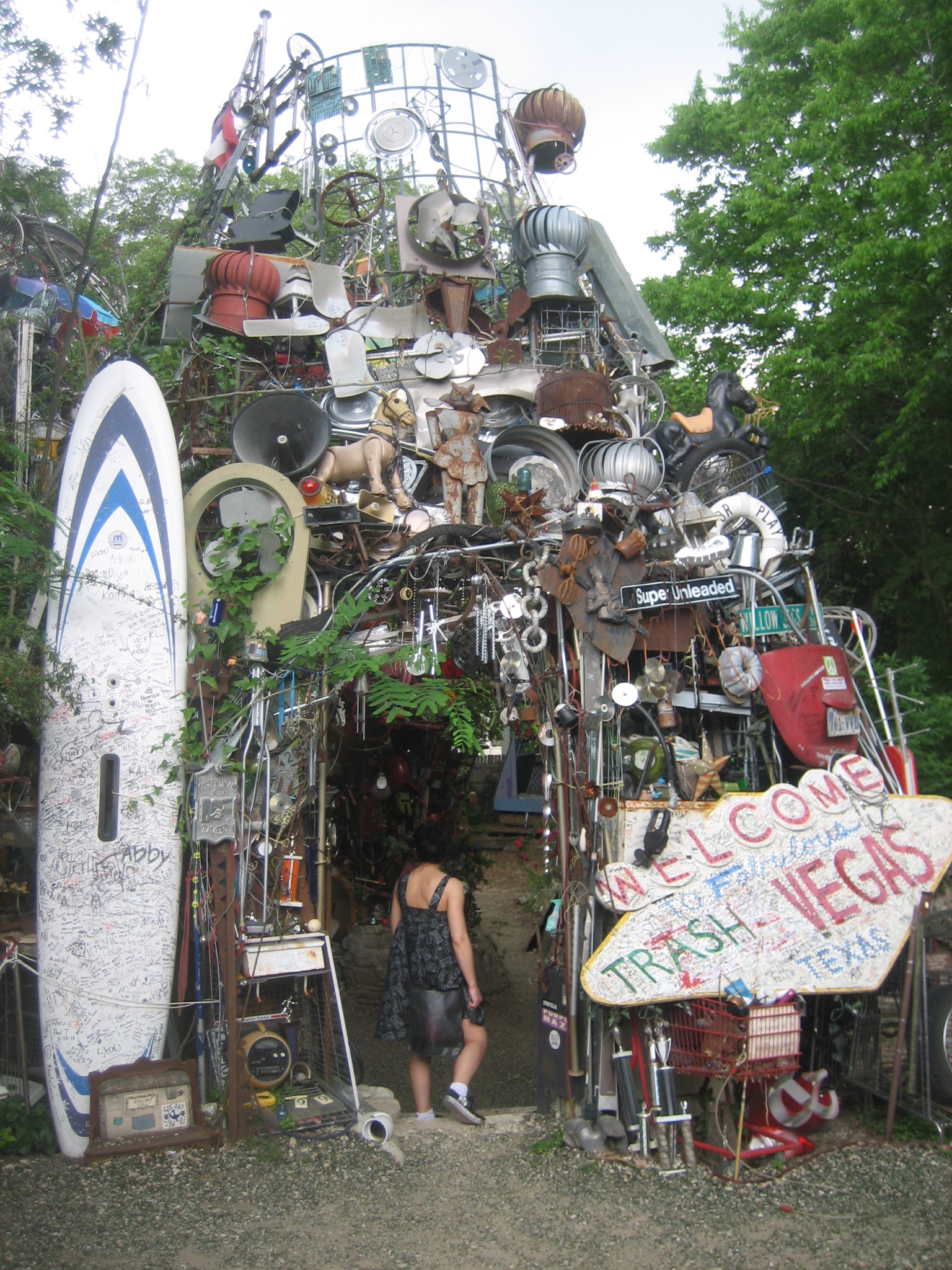
Cathedral of Junk
Looks like a magical place and yet another reason I need to get to Austin.
“The question we must ask ourselves is who and what are waste?”
My friend, Myra, sent me photos of a show she spotted while attending a conference this weekend at Hampshire College. And of course, this being the future, online video tells the story best.
Click here to find out more about this innovative work reimagining dumpstered skateboards, discarded plastic water bottles and countless other materials we sometimes think of as waste. I wish I’d taken a Design, Art and Technology class as an undergrad!
Thanks for the tip, Myra!
Happy Monday, trashies!
Thanks for the tip, Elizabeth!
Remember this sweet chandelier? I just learned that it’s coming to NYC for Earth Day!

Chandelier in Toronto, 2009
I have to say I get MANY, MANY Earth Day pitch emails, usually covering general green topics not directly linked to trash and most pimping a for-profit product. So I was extra thrilled to get word that a public art project I have admired from afar. It goes up tomorrow, here’s what the press release has to say about the installation, which opens tomorrow (I added the links):
A 21-foot tall sculpture in the form of a chandelier made of recycled plastic containers will hang above the World Financial Center Winter Garden’s famed marble staircase for an entire month starting on April 15th.
From April 15th through May 11th, visitors to the ten-story glass-vaulted atrium will be able to look up and see artist Katharine Harvey‘s stunning Chandelier, a 21-foot tall and 15-foot wide sculpture consisting of thousands of used plastic containers laboriously washed and strung together. The artist has transformed water bottles, sandwich trays, muffin tins, salad boxes, egg cartons, and more into a symbol of luxury and opulence while simultaneously commenting on the glut of plastic in consumer society.
A resident of Toronto, Canada, Katharine Harvey, represented by Nicholas Metivier Gallery, is known for creating sculptural installations that refashion plastic packaging and dollar-store items into startlingly beautiful works of art. Her paintings, light displays, and sculptures have been featured in galleries and public installations throughout the world, including the Monterey Bay Aquarium in California, the Vancouver Winter Olympics, Nuit Blanche Festival in Toronto, Canadian Embassy in Washington, D.C., Le Centre d’Exposition in Baie-St-Paul (Québec), and the Painting Center (New York). Group shows include the Galerie Art Mûr (Québec), Art Gallery of Regina, Saskatchewan, as well as residencies at Ivavvik National Park in the northern Yukon (2006) and The Banff Centre in Alberta (2003).
 everydaytrash