Archive for the ‘TRA$H’ Category

Everydaytrash on the Road

Saturday, April 5, 2008

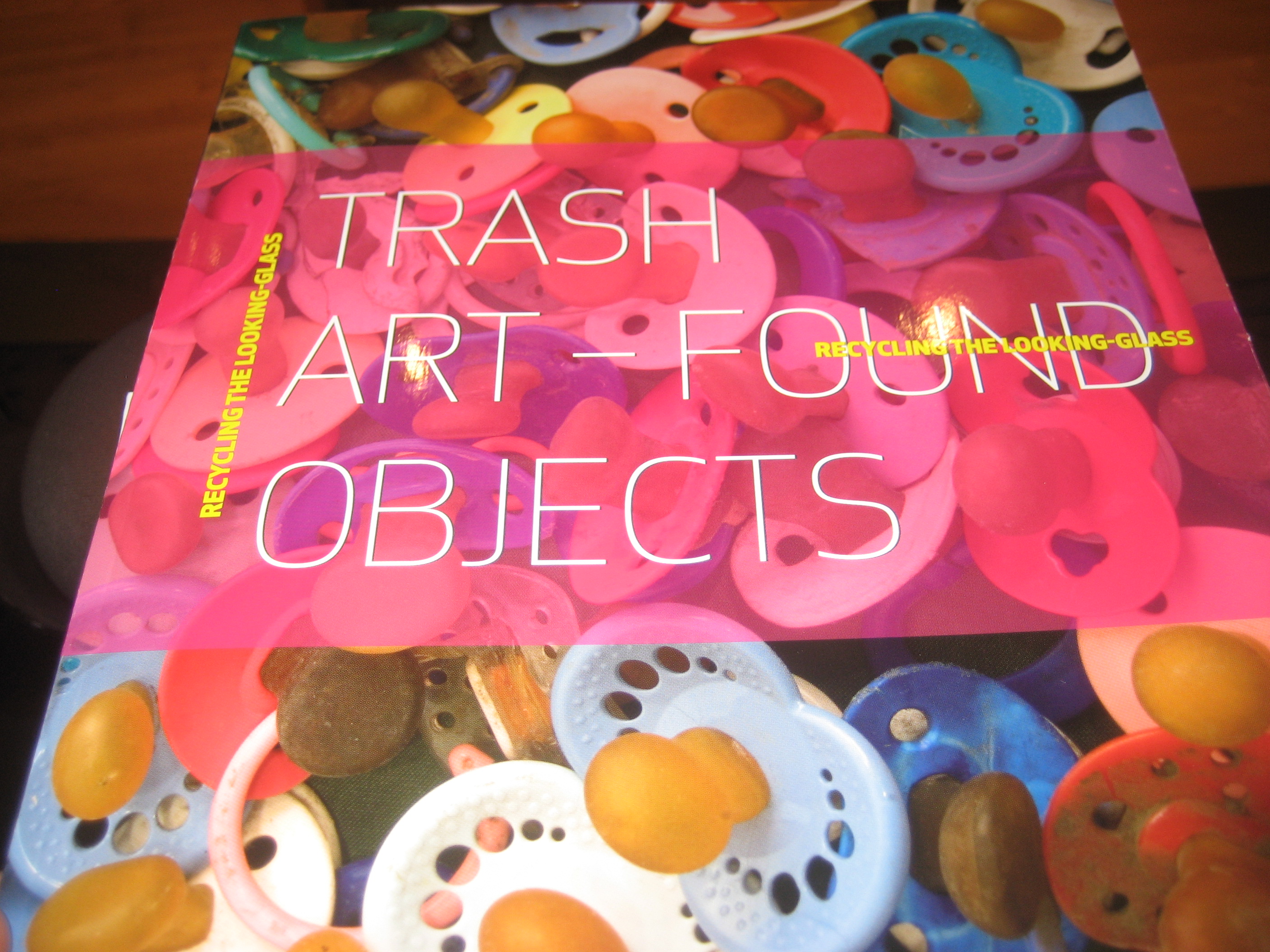
Recycling the Looking Glass catalog

“Hi hi” from Oslo. I’m here attending the opening of “Recycling the Looking Glass, Trash Art-Found Objects” a wonderful group show curated by the incomparable Samir M’kadmi. Much, much more will be posted here about the show, the contributors and organizers. At the moment, I’ll throw up a couple photos from the opening seminar and the piece I submitted to the catalog (my talk was basically a longer version of what’s below). Other panalists included a feminist art critic, an economist and an ecologist who uses trash art projects to teach kids about the environment. Two artists also gave talks. Stay tuned for less Leila-centric posts very soon, I have met amazing artists and art world peeps from all over the World this weekend and can’t wait to share the virtual booty with all of you!

A Short History of Garblogging

My obsession with trash began when, as a journalism student in New York City, I started researching the unimaginable number of tax dollars spent each year transferring garbage from my hometown to places as far away as the middle of the country.

New York closed it’s only landfill in 2001 with no immediate plans for what to do with all the trash created by the millions of local residents and businesses. The immediate solution was to export the waste to other states, an expensive venture involving enormous contracts with private waste haulers. Previously, the city had evacuated the majority of its trash on barges pulled by tugboats. This new plan created a billion-dollar-a-year industry and added significantly to the number of trucks circling the already congested city streets.

Not surprisingly, the poorest neighborhoods bore the brunt of these changes. In order for the garbage to be moved long distances, it had to be emptied from local dump trucks and packed up again into larger vehicles. This transfer of trash—a smelly process that attracts rats—continues to take place in several of the city’s poorest neighborhoods.

While the story I was writing focused on local politics, my fascination with garbage extended far beyond the United States. I started to see trash as everything from an indicator of poverty to a medium for art. Before long, everyone I knew associated me with trash and when they came across related factoids, I would receive an email. So I started a blog. The Internet seemed to be the perfect outlet for these tidbits and the perfect venue to start a larger conversation.
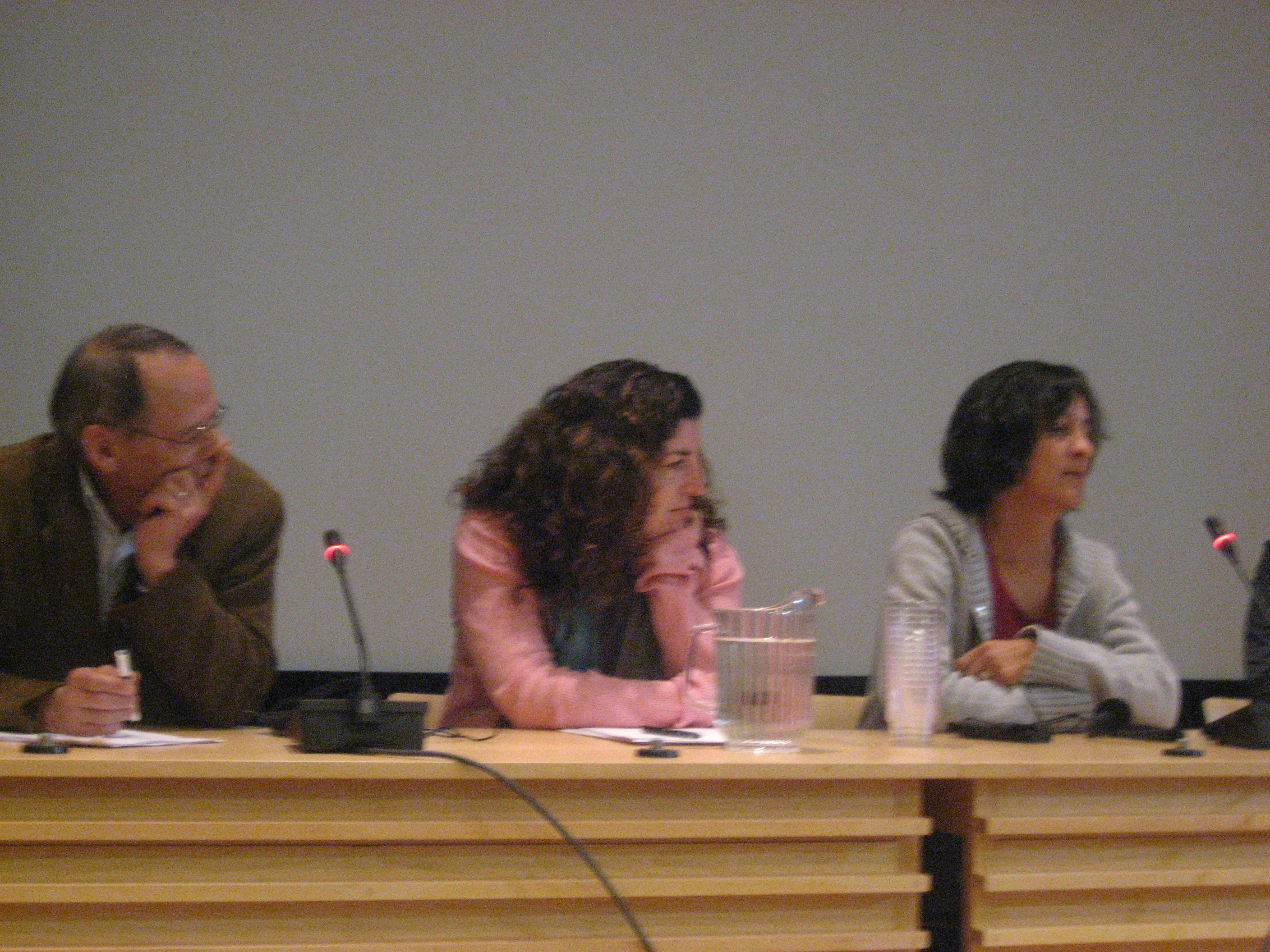
Through the Looking Glass panel

(French economist Gérard Bertolini, me, Panama-based American artist Donna Conlon)

The wonderful thing about the World Wide Web is that if you have a pet interest, it is easy to locate whole communities of people who share that interest. And so it was for me with trash. Soon after launching everydaytrash.com, over two years ago now, I discovered a universe of other sites dealing with interrelated themes. Because my interest in the subject had grown from local politics, it took me some time to think of everytrash.com as an environmental or “green” blog.

My audience had no such doubts. I quickly realized that the majority of people interested in trash are interested in reducing waste and approach the issue in terms of saving the planet. I came across people keeping track of their own waste online, weighing their garbage each day and trying hard to make less the next. And there were sales sites, marketing niche environmentally-friendly products to those willing to pay a bit more for a clear conscience. There appears to be a huge market out there for reusable tote bags, organic baby clothes and business card holders made from recycled gasoline.

It doesn’t take much exploration into the world of trash to see that, fundamentally, trash is an economic and class issue. Only those less fortunate ever have to worry about what happens to what society discards. The rest of society, on the other hand, sleepwalks through life believing that trash disappears the moment it hits the bottom of a trash can.

Early on in the life of the blog, I became interested in trash pickers, communities of people who go through the trash and find new uses for what others have chucked. In Argentina, China and Egypt and probably many other places, there are words for these people and the practice is associated with very particular ethnic groups. In many other places, people supplement their income by collecting and redeeming cans or hunting for and selling scrap metal. Sifting through the smattering of articles that pop up each year on trash pickers, I am constantly reminded of the wastefulness of the era I live in.

"Garblogging" translated in the English/Norweigan catalog--love it!

Once you notice trash, it’s hard to ignore. Around the time I was pouring through New York’s solid waste management plans, my job at a public health nonprofit began taking me to Africa. There, I encountered a relationship with material goods entirely foreign to me. Terms like recycling and zero waste have no place in these societies where value and lifespan of any given product are given their full respect. In places where people have very little, these concepts are organic.

I met a roadside tailor in Malawi who spent his days mending the worn clothing of local villagers, squeezing extra days, weeks and months out of the worn fabric. In Uganda, women from the North, an area burdened by enduring violence and high rates of HIV/AIDS, form beads out of old magazine pages that they then shellac to create brightly colored bracelets and necklaces. Women in Kenya collect floating flip flops from the ocean to refashion into crafts to sell; one project has even created a giant whale out of the discarded plastic shoes to raise awareness about the dangers of plastic waste to marine life. Plastic bags in Burkina Faso are twisted into small dolls and sold to tourists. While the African cultures I visited varied dramatically, the unmistakable smell of burning garbage welcomed me the moment I stepped off the plane and onto the tarmac in a new city.

In fact, many of the news articles I read while traveling focused the depletion of Africa’s resources and the threat of disease. The contrast between the joyful and hopeful efforts of the beaders and doll makers and the overall pessimism of news coverage on Africa fed my enthusiasm for blogging. I was glad to have a forum to highlight positive, homegrown responses to seemingly overwhelming problems.

Of course many positive approaches to the subject of trash come from the artistic community. Through everydaytrash.com, I have discovered “trashion” designers who create fantastical outfits from discarded items as well as countless artists who use trash as a dynamic medium with which to create provocative pieces. What I love most about these works is their effortless incorporation of an often dense political topic. Trashtastic!
Garbage Revolution

Friday, November 23, 2007

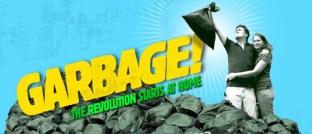
garbagetitle_main.jpg I gotta tell you, since starting this blog I have noticed that a disproportionate percentage of the innovative trash solutions projects on this planet originate in Toronto. Ah, Canadians. Check out the Web site to this new documentary that chronicles one family who, instead of throwing their trash away, keep it in the garage and allow it to be filmed to show the world just how much waste one family produces.

I’m headed out of town again for a few weeks (warning, posts will be few and far between until mid-December), but when I return I plan to host a screening. Happy Thanksgiving, everyone.

Wired’s Luddite rails on tech trash

Thursday, November 22, 2007

Some of you may be untroubled by this. If so, shame on you. Your planet is slowly dying from carbon dioxide emissions and the casual dumping of toxic waste. Turning a blind eye to this fact while eagerly consuming every glittery new tech bauble dangled before you is not only pathetic, but suicidal…

Recycle your junk mail

Thursday, May 24, 2007

junksmall.jpg  Yesterday, the Direct Marketing Association launched a campaign to encourage people to recycle their junk mail, including this new “Recycle Please” Web site.  From the Web site, companies can download a logo reading “recycle please” and attach it to their direct mail campaigns and mail catalogs. 

Nowhere on the site does the DMA suggest that companies replace unsolicited paper mailings with electronic mailings or that they allow customers to opt to receive the same information via email. 

And why should they?  The DMA’s press release includes several bulleted stats, including these factoids that suggest that though Americans are bombarded by letters and catalogs they never asked for, many of us flip through them before tossing:

  – The average US household gets 18.5 pieces of advertising mail per week,
    a figure that has held steady during the past five years.  (US Postal
    Service, 2005 Household Diary Study)

  – Consumers do read their mail.  According to the US Postal Service,
    85 percent of US households usually read some or all of the advertising
    mail they receive.  (US Postal Service, 2005 Household Diary Study)

A campaign truly geared at helping the environment—and not just out to polish the image of marketers and fundraisers—would include a downloadable logo promoting paper-free options.

Some suggestions from everydaytrash:

“Let Us Know if You Prefer Email”

“This Catalog Available Online”

“Spam Over Junk Mail”

For helpful tips on actually reducing junk mail, check out: Ecosource; Ecofuture; and Privacy Rights.

Photo from the Government of Westchester web site.

High Court Trash

Wednesday, May 23, 2007

gavel1.jpg  If only blogs had budgets!

Man do I wish I could afford the SWANA special e-session breaking down the implications of United Haulers Association v. Oneida-Herkimer Solid Waste Management Authority!  While it doesn’t have a historically punchy name like Roe v. Wade, Brown v. the Board of Education or Griswold v. Connecticut, Oneida-Herkimer is one for the trash textbooks.  The decision ruled that it’s ok for communities to insist that trash collected locally be directed to nearby dumps in an effort to encourage recycling and reduce truck trips and traffic. 

Solid waste export companies claim such local laws unfairly discriminate against interstate trade and their right to make a dime.  In an earlier case involving a private local dump, the Court had ruled that it was unfair for cities to insist that trash be dumped in one spot over another.  This latest case involved a public dump, which may have been the necessary difference in opening the Justices eyes to the environmental side of the argument.  I say ‘may have’ because I’m not sure.  The analysis is locked, beyond my reach on an expensive site.  Sit tight my budget readers, I’ll try to find us some free legal advice.

A “greener, greater New York”

Monday, April 23, 2007

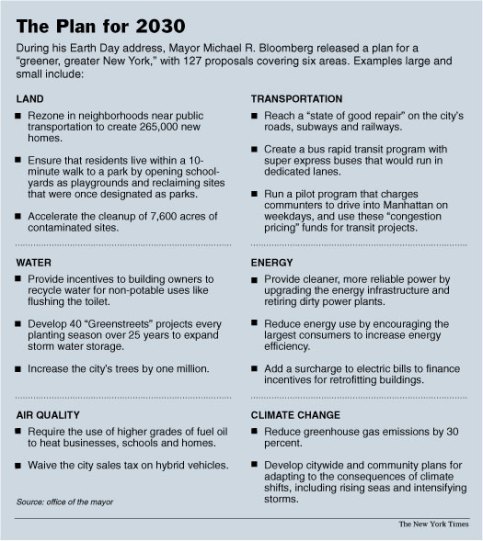
mayor_graphicfull.jpg Check out this handy graphic from today’s NYT coverage of Bloomberg’s long-term plan for a greener city. The Times points out that New Yorkers may be pissed off by plans to charge cars $8 for the privilege of entering Manhattan and loosening zoning restrictions to allow for more densely populated neighborhoods. The paper also notes that the plan is very expensive and would require huge buy-in from the State. We shall see.

The Independent Media center breaks down the congestion plan and links to criticism here.


The Economics of Waste

Saturday, April 7, 2007

trash1.jpg  Professor Dick Porter was out of the country when I first put out the call for literary trash participants.  He’s back, and I’m happy to share this week his follow-the-money perspective on waste problems in America and the road to their realistic solutions.  His is an approach not seen very often in the green blogosphere: ECONOMIC.

everydaytrash:  Why do you think environmental policies so often fail to address environmental problems?


Dick Porter:  Because legislators are more interested in collecting money and votes than in “catering” to “extremists”. 


everydaytrash:  What are some of the hidden costs of American garbage collection?


Porter:  The whole cost is hidden since the amount of taxes you pay is totally unrelated to the amount of trash you generate (except for the few communities that have pay-by-the-bag systems). 


everydaytrash:  What are a few of the creative solutions you’ve come across in your research in which communities have succeeded in addressing their waste problems economically?


Porter:  Pay-as-you-throw systems are becoming so popular that it is hard to call them “creative” anymore.  How about actually fining people who fail to sort out their recyclables?  Is this done anywhere (“courtesy tags” don’t count as fines in my book)?


everydaytrash:  Are there any creative international interventions/donor initiatives you’ve come across that are working to build up developing world cities’ capacity to deal with their trash?


Porter:  In my experience, when agencies get involved with 3rdworld trash, bad things happen—like giving them great big garbage compaction vehicles that don’t fit onto the roads in the poorer sections of the city, or offering to set up a “modern” recycling center (i.e. MRF) when currently thousands of people are already recycling far more than Americans do and they are doing it without government budget, just for a living.

###

You can preview and purchase The Economics of Waste, Porter’s book on trash and cash, via Google Books.  I have to say, one of the things I admire most about this books is its lack of a pretentious subtitle.

*BONUS MATERIAL*

The following is an op-ed of Porter’s written in 2003, but which continues to resonate with current NIMBY debates on the business of exporting trash.  Porter calls his “a minority viewpoint” and asks us to consider what about somebody else’s trash makes it so much worse than our own.  I’ll let you draw your own conclusions:

Nothing Wrong With Trash Trade

Richard C. Porter

Ann Arbor News

29 June 2003


Hardly a week goes by without a headline like “Lawmakers Seek Waysto Block [Toronto] Trash”. It is true that Toronto sends its municipal solid waste to the Carlton Farms landfill in Sumpter Township (and used to send it also to the Arbor Hills landfill in Salem Township), each only 20-30 miles from Ann Arbor. A less well-known fact is that Michigan turns around and ships over 50,000 tons of hazardous waste to Canada for disposal there. In short, NAFTA applies to waste as well as cars.

Indeed, all trash is traded. Hardly anyone buries it in the back yard. Ann Arborites used to trade our solid waste to the City landfill at Platt and Ellsworth. Now that the city landfill is closed, we trade it to the very same landfill that Toronto uses.


Why is it traded further away now than it used to be? A few decades ago, every town had its own “dump” with its attendant litter, smell, fires, and vermin. No more. Over the last few decades, the Environmental Protection Agency (EPA) has required landfills to clean up their act. The engineers, lawyers, and lobbyists needed to operate a proper modern landfill are beyond the abilities of most small, and even medium, size cities. Per ton of waste handled, large landfills have become much cheaper than small landfills. As a result, in the 1970s, there were some 20,000 landfills in the United States; today there are 2,000.  Ann Arbor’s landfill closing is typical of thousands of American towns. Urban sprawl has ensured that even for cities with their own landfills, the landfill will now be further from the center of the city. The average household is a lot further from the nearest landfill than it used to be.


And transport costs for trash have fallen a lot, too. Now, household trash is compacted at the curbside and then further compacted at the transfer station – which didn’t exist 30 years ago – and then is shipped in large semi-trailers to the landfill. Landfill charges and transport costs together are about the same for New York City no matter whether it buries its trash near the City or sends it some 300 miles away – New York would probably send its trash to Michigan, too, if Virginia and Pennsylvania weren’t a tad nearer.


Increased waste trade is happening, but that doesn’t make it a good thing. Landfills may be much better run today, but they still generate some noise, congestion, and litter, and there is always a risk that their plastic liners and careful monitoring will fail and contaminate the groundwater that provides well water to households. Economists call these “external costs” – they are real social costs that are not paid for by either Toronto or Carlton Farms but are foisted onto the unwilling – and sometimes unknowing — neighbors of the landfill.


These external costs have been much reduced by EPA regulation, but the landfills themselves do much to assuage neighbor discontent. They acquire acceptance of the small remaining risk in the old-fashioned way, by paying “host fees” to the neighboring towns. Both Arbor Hills and Carlton Farms pay over $300 per capita per year to the “host” townships, plus of course free solid waste disposal. Since the size of these fees is based on the volume of waste interred, it is no accident that Sumpter Township residents are rarely among those demonstrating to stop importing Toronto trash.

Maybe the SumpterTownship residents are short-sighted, and there really is a dangerous amount of trash being buried in Southeastern Michigan. What should we do about it? First of all, we must realize that what is dangerous is trash, not Toronto trash. How should we arrange to reduce the amount of trash being buried in Michigan? The reason so much is buried here is that it is cheap, barely $10 per ton — that’s one half cent per pound. (Do you remember when we thought we were running out of landfill space? We weren’t.) One of the best ways to discourage an activity that generates external cost is to tax it. But Michigan is the only state in the Great Lakes region that does not tax waste disposal. That’s the main reason why trash disposal is so cheap here.

Why not just tax non-Michiganders’ trash and spare Michiganders the burden of more expensive solid waste disposal? (A $4 per ton trash tax would cost the average Michigander about a penny a day.) Two reasons. One, we can’t do that; and two, we don’t want to do that. Can’t because the U.S. Supreme Court and the U.S. Constitution forbid state taxation of interstate trade. And don’t want to because, if trash creates external costs for Michiganders, Michiganders who generate trash should also be encouraged to reduce their waste. Higher landfill taxes will eventually show up in Michigan’s cities and towns as heightened recycling efforts and perhaps trash collection charges.

Richard Porter is Professor Emeritus of Economics at The University of Michigan and author of The Economics of Waste, published by Resources for the Future.

waste-to-wealth

Monday, February 5, 2007

9dragons.jpg  This article in the Asia Times  and subsequent Internet research led me to several fascinating discoveries today.

1.  The world’s wealthiest garbage tycoon is a woman.  Her company is called Nine Dragon’s Paper and she made her fortune shipping used paper from India to China.

2. Google Finance is a nifty feature for researching big business holdings.

3. The Institute for Local Self-Reliance has a great page on waste-to-wealth initiatives.

Literary Trash, a week of trash authors beginning with Elizabeth Royte

Monday, February 5, 2007

erauthor.jpg A friend in public radio tipped me off to Elizabeth Royte and her fantastic chronicle of trash, Garbage Land: On the Secret Trail of Trash, this past summer after talking to Royte for a show about trash and the law. I bought the book the next day and later met Royte at the Brooklyn Book Fest, where she was reading from her newly released paperback edition. I introduced myself and asked if she’d be willing to be interviewed for everyday trash. “Sure,” she said, adding [something along the lines of], “but I read on your blog that you’re still reading my book, so wait to see if you like it.”

Outed as not yet having finished Garbage Land, but thrilled that a genuine trash reporter had not only heard of but read everyday trash, I filed away the idea of an interview until…author’s week! What better way to kick of a week of interviews than with the Garbage Lady herself?

everydaytrash: Now that you’ve finished your book, do you still research the subject of garbage? Any recent excursions/adventures?

Elizabeth Royte: I try to keep up with garbage news through various media (including yours) [editor’s note: Royte is an occasional and much appreciated tipster to everyday trash], and I go around talking on college campuses about consumption and waste. I was recently invited by a friendly engineer to tour his landfill in Anchorage, but my plane left too early for a visit. Since Garbage Land came out, I’ve written magazine stories about the Katrina cleanup, about corn-based plastics, and waste from pharmaceuticals and personal-care products in our waterways. Oh, and I recently stayed at a zero-waste hotel in Boulder – that was kind of neat. I can’t seem to get away from the topic!

everydaytrash: Your book focuses on the way New York deals with trash. What are some other cities whose creative waste solutions you admire?

Royte: I admire what San Francisco is doing with their zero waste initiative, particularly their composting program. Boulder signed a zero waste resolution last year and is investigating composting options, and now Seattle, which has an excellent curbside program, has started fining residents for putting anything recyclable into the regular trash. It shows they take this seriously. (New York City fines residents for recycling improperly, but it doesn’t seem to be that hard-nosed about it – perhaps recognizing that the public is still pretty confused about our recycling rules.)

everydaytrash: In your book, you use your own household waste as an example of the amount we throw away and what a struggle it can be to reduce that waste. Are you still hyper-sconscious of your own trash?

Royte: I’m still hyperconscious, but I’m not nearly as conscientious as I was when I was sorting and weighing my trash. I’m lazier about getting small pieces of paper – shopping lists, receipts, blow-in cards from magazines–into my paper recycling pile (which is ten steps away and outside my apartment door). But I’m still composting.

everydaytrash: From a bigger picture perspective, are there lobbying or legislative initiatives out there that people should look out for? Is garbage a voting issue or should it be?

Royte: Yes! Mayoral elections in New York have swung on garbage issues. People _should_ be aware of where their garbage is going and have some say in how it’s handled, how their tax dollars are spent. New York City spends over a billion dollars a year collecting and disposing of waste. And yes, all Americans should be pushing for legislation that requires manufacturers of electronic waste to take responsibility for their products’ end-of-life, to recycle this stuff responsibly. Computers are hazardous waste in a landfill. We should be pushing for bottle bills, for composting programs, and for bans that keep yard waste (leaves and grass clippings) out of landfills, where it generates leachate and methane. I could go on, but I’ll spare you.

everydaytrash: Has writing a book about trash earned you any strange nicknames?

Royte: The garbage girl. Or lady.

###

Next up on the Literary Trash lineup is Dominant Wave Theory, a series of photos depicting beach debris by British artist and surfer Andrew Hughes.

pipelines to pipe dreams

Tuesday, January 30, 2007

trash.jpg  Japan has to scrap its futuristic system of underground garbage tunnels.  The subterrainian passageways aren’t bringing in the private revenues they once did and thus have become waste themselves (Look out Minneapolis, the Skyway’s days are numbered). 

The tunnels made news earlier this year when some kids from Osaka got stuck inside one.  Of course cash, not safety, is what finally shut them down.

No word yet on whether this will simplify Japan’s complex garbage collection and categorization methods.

Perhaps they’ll just go back to burning it all.

standing in the electronic corner, wearing a dunce cap

Thursday, January 25, 2007

trashcan.jpg  In addition to cracking down on outstanding fines, the city of Boston has decided to post the names of residents who can’t keep their trash under control on the mayor’s Web site.  If your can is routinely overflowing, watch out, it’ll come up when your friends, colleagues, potential employers and worst of all, potential lovers Google you. 

More fun to come when the site goes live!

Update: Looks like we’ll have to wait until March for the names to go up.

garbage man scam

Monday, December 18, 2006

oboe.jpg  Some asshole in Florida beat the real trash collectors to the tipping punch by leaving fake holiday notes on people’s doorsteps informing them of an address to which to mail holiday tips.  Shame, shame. 

[Tangent Alert]

I have to say though, it was a cleaver scam.  Back in the day, before I got (unjustly and unceremoniously) fired from my very first job delivering newspapers, my wise mother suggested I deliver holiday cards with the papers one morning to introduce myself (and inspire giving).  So I drafted a little note explaining that I was thirteen and saving up to buy my very own oboe.  It worked like magic.  In the space of the next week I made my annual salary in tips. 

Soon after, my grandparents happened to meet a famous oboist after a concert and happened to tell him all about their granddaughter’s quest to buy an oboe.  He let them in on another scam: oboists often pay for trips to France by buying a few oboes in Paris and reselling them in the states for a mark up.  He hooked them up with an oboist on his way to France, they recounted my sweet story and an at-cost oboe was promised to me.  My holiday tips covered one third, my parents came up with another third and my now-very-invested-in-the-quest grandparents covered the rest.  And shipping insurance. 

I have to say, though I haven’t played since college and the prized instrument now wastes away in a closet in my mother’s apartment, that oboe is to date the best appreciating investment I have ever made.

And it all started with a little holiday tip note scam.

Holiday Trash

Tuesday, November 28, 2006

gift.jpg In what should no longer be a shockingly quick transition, it is now officially holiday (read: Christmas) season. Construction paper turkeys and all things harvest have been stripped from store windows to be replaced with snowmen, candy canes and token symbols of non-Chirstian festivals. My family has been emailing around such specific wish lists that shopping for each other has become more choreographed inventory filling than thoughtful selection. Of course, wish lists guarantee that what we get is what we wanted, thus reducing holiday-related waste and, worse, regifting. [I’ve been trying hard to see wedding and baby registries as well as brand-specific Christmas wish lists as environmentally friendly and efficient and not just tacky and materialistic.]

Green-themed gift ideas fall into a similarly questionable category. On the one hand, the products recommended are recycled, Earth-friendly and what-have-you. On the other hand, suggested gift lists play into our stuff-driven culture and I, for one, am often tempted to treat myself to a slew of new purchases at this time every year.

Here are a few of the seductive links I’ve come across so far this season…

  • Fabulously Green shares ideas for the modern home;
  • Green Loop compiles sustainable fashion and organic creams;
  • Cool Hunting starts what is sure to be a long season of helpful gift suggestions with a roundup of stylish wrapping papers (some green);
  • Great Green Baby continues its year-round mandate of green gift suggestions, while Great Green Goods includes seasonal items such as menorahs made from recylced glass and pipe;
  • The Grist holiday list takes an intellectual approach to the quest; and
  • The Groovy Green Blog argues the virtues of a living Christmas Tree.

More roundups of roundups are sure to come as the holiday lists come drifting in.

Feeling like a dirty Capitalist? Purge on this buy nothing Christmas link or check out the recycled trees rounded up by The Temas Blog.

bullshit and libertarianism

Wednesday, September 27, 2006

pennteller.jpg  The Justice Talking trash special got me thinking about the recycling episode of Penn and Teller’s Showtime series Bullsh*t.  In it, the comic magicians make an argument similar to the one the Adrian Moore of the Reason Foundation made on the radio this week.  Essentially, they think recycling is too complicated, costly and inefficient and the only way to make it worthwhile would be to follow the money.  Either offer cash incentives for recycling by buying back reusable trash or charge people for the amount of trash they generate (thereby offering a cash disincentive to create waste in the first place). 

While I’m all for big government, mandated recycling and corporate responsibility, the bottom line is the bottom line: money talks.  The most effective arguments for recycling aren’t that we’re running out of space for trash or that gasses and other polution will harm the environment.  These are longer-term issues most are happy to pass on to our grandchildren.  Proving that reusing products saves money, on the other hand, or that recycling can generate income or threatening to charge big wasters their fair share of trash hauling costs are arguments more likely to resonate with the mighty.  And the frugal.  One cost-benefit analysis is worth a thousand soapbox speeches. 

just trash

Tuesday, September 26, 2006

radio.jpg The folks at Justice Talking, the NPR news magazine that examines global issues through a legal lens, took a long, hard look at trash this week. Of particular note are a liberal-Libertarian debate on whether to mandate or pay people to recycle and commentary from a trash lawyer. Check out the program’s website for an interview with trashie author Elizabeth Royte on exporting and reducing trash, lessons from Colorado on defining and building a “zero waste” community and a fantastic sidebar of recommended reading.