Archive for the ‘Trash Politics’ Category

Reusing colonial currency

Thursday, December 3, 2009

While in Ethiopia last week, I stopped into a silver store to check out trinkets, including antique Coptic crosses. The Ethiopian cross, if you haven’t seen one before, has a distinctive elongated shape and cross hatch pattern, so abstracted from the traditional European kind of cross that you can’t always tell immediately that that’s what they are.

Austrian coins, Ethiopian cross, coin cross

In Addis, I learned that these shapes vary by region and era and that collecting examples from around the country and throughout its history are a popular hobby among people interested in the country—expat bingo if you will (just kidding, I am sure collecting crosses reflects a deep interest in Ethiopian history and culture). Anyway, it wasn’t the traditional cross that caught my eye, but some examples of crosses cut out of old Austrian coins from the Colonial era. It seems Ethiopians more interested in the Colonialist’s religion than his currency “upcycled” old Austrian silver coins into silver crosses. As you can see, the coin cross is shaped more like the Western shape we are used to. That’s because this upcycling was done by Protestants rather than members of the Ethiopian Orthodox Church. Of course, I couldn’t resist picking one up as a souvenir, which as a non-believer and non-Christian may not be put to much use, I just had to have a 200-year old sample of upcycling!

The Garbage Girl

Sunday, November 15, 2009

Did you catch the NYT piece on the garbage patch last week and/or check out the accompanying slide show? The author of that article is Lindsey Hoshaw, a freelance journalist who spent three weeks this summer aboard the Oceanographic Research Vessel Alguita on an expidition led by Captain Charles Moore to explore that great swatch of plastic in the sea. Check Hoshaw’s blog and puruse the archive for a first-hand account.

Notice the link to spot.us at the bottom of the NYT article. It’s a tool for freelancers to raise funds for  their reporting, supporters of which helped to finance Hoshaw’s research. How thoroughly modern.

Side note: in Googling links for this post, I came accross another Garbage Girl, a woman working at a landfill and blogging about it. Stay tuned for more on women and trash.

Happy America Recycles Day

Sunday, November 15, 2009


FACT: Twenty years ago, almost 1,000 curbside recycling programs existed in the United States. Today there are more than 10,000 across the nation.

Trash drug staying on the market

Saturday, November 14, 2009

WTF?

Garbage Dreams update from Cairo

Thursday, November 12, 2009

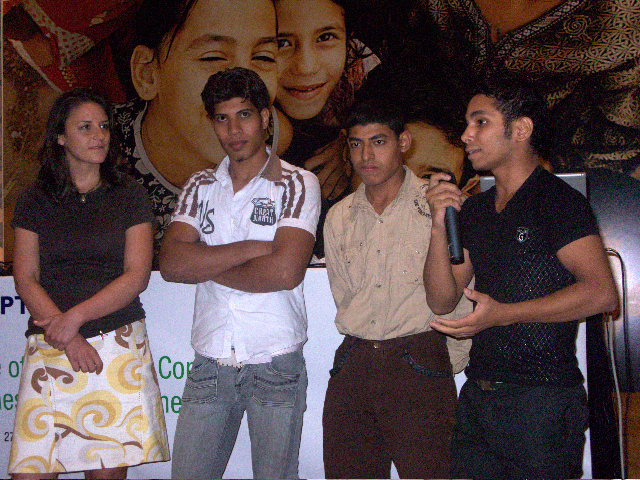
This just in! An everydaytrash.com exclusive from Cairo where Garbage Dreams filmmaker Mai Iskander arranged for our friend and journalist Beige Luciano-Adams to attend a screening of the film and speak with Zabaleen activists.

Following a screening of Garbage Dreams at the International Sustainability Conference in Cairo last month, the Bill and Melinda Gates Foundation has pledged an award of $1 million for the Spirit of Youth Foundation, the NGO featured in the film. For the filmmaker and her subjects, the award comes as a welcome surprise, and a testament to a growing international interest in the Zabaleen of Egypt.

But since Mai last filmed Adham, Nabil and Osama, the three protagonists whose wintry narratives outline a broader story of survival in the community, conditions on the ground have deteriorated. Cairo’s Zabaleen are still locked out of the trash trade by the multinational companies that arrived on the scene several years ago as part of the Egyptian government’s failed attempt to overhaul the municipal waste management system.

Recently, in what many criticize as a grossly misguided attempt to prevent an H1N1 pandemic, the Egyptian government culled nearly 300,000 pigs –eliminating an important source of income for the Zabaleen, who raised the pigs on the city’s daily tidal wave of organic waste. Without pigs – and without the legal right to collect and sort trash – many unemployed Zabaleen are resorting to illegal scavenging. According to Ezzat Naim Guindy, who heads the Spirit of Youth Foundation (SOY), the average Zabaleen salary has been cut in half since the pigs were killed.

Guindy and other community leaders say the next several years will be crucial to the fate of the Zabaleen, as activists attempt to legalize their profession and fully integrate them in the formal waste management sector. Currently, Guindy says about 90 percent of the Zabaleen operate illegally. Leaders are also hoping that their campaign for source separation – in which residents sort organic from non-organic waste before it reaches trash collectors – will gain government support and take root among Cairo’s 20-million citizens. With the multinational companies’ government contracts set to expire in 2015, the Zabaleen are focusing on modernizing their trade so they can reclaim a place for themselves in the system.

While the current economic outlook is bleak, there is growing international interest in the Zabaleen’s industrious and innovative recycling practices. Leaders also note that the Egyptian government is finally acknowledging the Zabaleen as a valuable and skilled resource. As for the Gates grant, which has yet to be confirmed, the money will ostensibly be used to support the Source Separation campaign, train workers and modernize recycling facilities.

Everydaytrash.com recently sat down with Garbage Dream’s Adham and his teacher, Leila, at a community screening of the film in the Zabaleen settlement of Moqattam, Cairo, to discuss current challenges and visions for the future. The following are edited excerpts from these conversations.

everydaytrash.com: What are you doing now?

Adham: I graduated from school, and I’m continuing my studies in the government school.  I’m saving my money to buy a used car so I can work – I want to collect materials at night and do transportation work during the day.

everydaytrash.com: How has the economic situation changed for the community since the film – have things gotten worse, or have people found a way to create work in the new system?

Adham: Now there’s no work. The foreign companies took the work. Some people collect materials from the trash and from the multinational bins (scavenging). And starting about a month ago, men here have being doing [plastic] granulating with a company, going to the garbage collectors and working as middlemen.

The Zabal still has some work, but he has lost his [livelihood]. It’s really different now.

everydaytrash.com: How has the pig cull affected the Zabaleen?

Adham: Life is very difficult without the pigs. They ate the organic waste – which now has to go to a landfill. This is hard for the Zabaleen because they have to drive [to transport the waste, which cuts into profits]. People aren’t working like they used to. The pigs were also extra income – so it’s very hard for us now.

everydaytrash.com: What is your vision for the future of the Zabaleen community here?

Adham: We want to change. We learned a lot in our school and a lot of us now have the [experience] to start companies with more modern ways.

We want help from the government and from society – we need to make them realize how important the Zabaleen are.

We need government support for the Source Separation program. When we traveled abroad, we brought back knowledge we can use here. Now [SOY] is trying to increase the program; they’re trying to get people to understand the importance of source separation – to understand that the problem can be solved at the source.

everydaytrash.com: What are some of your personal goals – what’s next for you?

Adham: I want to study outside Egypt because I want to get more experience, so I can make a recycling company here. They [Europeans] have the technical know-how but not the precision. I want to bring the technology to Egypt, and the precision to other countries.

everydaytrash.com: How will the Foundation use the money from the Gates grant?

Leila (featured teacher in Garbage Dreams, now principal of the recycling school in the Zabaleen settlement, Moqattam): They’re going to use this money for upgrading the lives of the Zabaleen and their families. They’ll use it to create awareness about the importance of the Zabaleen, the importance of recycling education and the source separation program. This is their vision.

everydaytrash.com: The recycling school currently hosts 120 boys, as well as 60 girls (who come twice a week for literacy and computer programs). Are you hoping to expand the facilities or programs, and perhaps include more students?

Leila: We’re hoping that with more money we’ll be able to buy a bigger place (we don’t own the current one we’re in) and be able to expand the school.

As for the kids, we wait until one class finishes their programs and graduates, then we take another. The process takes five years.

everydaytrash.com: But, with more than 40,000 Zabaleen in this community, isn’t there a greater demand for the program from young people, especially with the recent economic hardship people are facing?

Leila: Yes there’s a big demand, and a lot of children have come. The children bring their friends and relatives to join. The school is willing to take any number of children, but the children have to apply.

Actually, sometimes we go out and recruit dropouts, and sometimes children apply. We have already started going door to door, on every street [to recruit people]. But there are a lot of dropouts in the community that we can’t reach. The problem is that they’ve come out of government schools, where the standard of teaching is very, very poor. If they’re in the middle of the school year, we can’t help them.

Green Books Campaign: The Adventures of a Plastic Bottle

Tuesday, November 10, 2009

This review is part of the Green Books campaign. Today 100 bloggers are reviewing 100 great books printed in an environmentally friendly way, according to Cupbarn.com. Our goal is to encourage publishers to get greener and readers to take the environment into consideration when purchasing books. This campaign is organized by Eco-Libris, a green company working to green up the book industry by promoting the adoption of green practices, balancing out books by planting trees, and supporting green books. A full list of participating blogs and links to their reviews is available on Eco-Libris website.

100bloggers

Logo design by Susan Newman

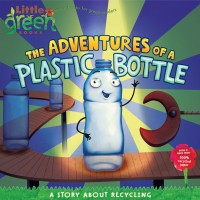
As part of today’s interactive green blogger book fest, I just finished reading The Adventures of a Plastic Bottle, an illustrated kids book published by Little Green books, written by Alison Inches illustrated by Pete Whitehead. It’s a cute little volume printed on postconsumer waste recycled paper (and even includes a handy definition of postconsumer waste right in the inside cover).

bottlebook

Cover

The story follows a googly-eyed personified entity from life as a “thick, oozing blog of crude oil” through incarnations as plastic particles, a plastic bottle, a recycled flower vase, shredded plastic bits and, finally, a synthetic fleece sweatshirt worn into space by an astronaut.

I jumped on selecting this book for the Green Books Campaign because I was psyched to see such a trash-related kids book on the market. I was a bit disappointed to discover the whole thing was written in a “dear diary” format, mostly because I don’t believe in dumbing things down too much for children, but also because it’s a bit confusing in this particular case since the protagonist is a blog of molecules that are reshaped several times over the course of the story.

That said, The Adventures of a Plastic Bottle does an excellent job explaining in clear, compelling and adorably-illustrated text how plastic bottles are made and how they might be reused and recycled beyond a single use storing bottled beverage. There’s even handy glossary in the back to review new terms learned such as “oil refinery” and “extruder”. I do love a good glossary.

But at the end of the day, the overall framing of the story leaves me hesitant to recommend it to parents wanting to give their kids a good green education. While understanding where plastic comes from and how to recycle it is a valuable lesson, a better story would have been one that included ideas about how to avoid using plastic all together…or conserving resources like crude oil for other tasks than temporarily holding single servings of water and soda. It struck me as very add and more than a little sad that a volume coming out of a green publishing imprint that went through all the pains of publishing on uber-pc postconsumer waste paper. Of course, you can’t really have a story narrated by a little bottle and then advocate for that bottle not to exist. Well, I guess you could, but it would be weird and dark…which come to think of it describes all my favorite childhood tales…

In short: this book needs an appendix!

Mark your calendars

Monday, November 9, 2009

November 15th is America Recycles Day.

Counterbalance

Friday, November 6, 2009

New Yorkers, save the date for November 14th. Quad Cinema will screen Counterbalance, a new film about waste pickers in Dehli as part of the 8th Annual Mahindra Indo-American Arts Council (MIAAC) Film Festival. Event starts at noon. $15 general admission, $12 students and IAAC members. Purchase tickets here. Check out the Facebook invite for details here.

wastepickers

Wastepickers, photo via Chintan

Here’s a description:

Every day, tens of thousands of waste pickers and waste recyclers in Delhi earn their income from collecting, selling and recycling trash. Their work, measured to be highly efficient, has not only been undervalued but even marginalized with the introduction of large private companies. This is the story of two municipalities in Delhi: one that has incorporated the work of the waste recyclers as part of the formal waste system, while the other has taken another direction.

Counterbalance is the product of a partnership between the video advocacy group WITNESS and the Indian environmental group Chintan. You can watch an interview with Bharati Chaturvedi, the film’s director and the founder and director of Chintan, here and here.

And for more about WITNESS, click here. For more about Chintan Environmental Research and Action Group, click here.

Thanks for the tip, Elizabeth!

Now there’s a trashy news show

Thursday, November 5, 2009

Sesame Street Mocks “Pox News” via HuffPo

Happy Birthday, Sesame Street. Thank you for Oscar. I remember when Big Bird was the only person who could see Snuffy. And when Mr. Cooper died. He was the first person I knew who died. Everyone on Sesame Street drank hot chocolate that day and so did I.

Trash Trip

Thursday, November 5, 2009

Another trashy woman rec from the wonderful Beth Terry of Fake Plastic Fish: Trash Trip. It’s the website of engineer and artist Karen Hawes who will trek from Alaska to Argentina reporting on trash along the way. We look forward to updates and interviews from the road.


Million dollar trashies

Thursday, November 5, 2009

Everydaytrash.com sends a warm congratulations to The Spirit of Youth Association—an association of Zaballeen from the Caireen shantytown of Manchiet Nasser—who recently received a $1 million grant from the Bill & Melinda Gates Foundation.

The grant was announced following a screening of the documentary Garbage Dreams (which we’ve touted here on more than one occasion) at the International Sustainability Conference in Cairo. The Spirit of Youth Association is the nonprofit that runs the recycling school featured in Garbage Dreams.

Iskander, Nabil, Osama & Adham

Mai Iskander, Nabil, Osama & Adham of "Garbage Dreams"

Special Kudos to filmmaker Mai Iskander for harnessing the power of journalism to raise awareness around the Zaballeen and informal trash picking communities in general and to Adham, Nabil, Osama and their teacher, Laila, for lending their life stories to the cause. More to come on this evolving story.

Roots of Health

Thursday, November 5, 2009

A few months ago, my friend Ami Evangelista Swanepoel and her husband Marcus packed up their New York City life and set off for her native Philippines to start a nonprofit organization called Roots of Health (Ugat ng Kalusugan). Roots of Health’s mission is to improve the health and lives of women and girls and their communities in Puerto Princesa, Palawan.

landfillplayground

Boy playing on collected recylclables, photo via Roots of Health

In order to best direct their efforts in this monumental task, Ami and her team have been conducting surveys in rural areas not served by health centers to assess the areas of greatest need and determine those best matched to what Roots of Health can do to help.  I and others have been following their progress via the Roots of Health blog where this week Ami describes the issues facing a community living beside a landfill.

Earlier this week we returned to an area in Santa Lourdes called Purok Matahimik which means “quiet place”, also known as “Pulang Lupa” or red earth because of the color of the soil, and is also simply known as “Dumpsite” because of the community’s proximity to the Puerto Princesa landfill. This community is a top runner for where we might begin our services as it is quite isolated and very poor and has high numbers of malnourished children.

Photos from our visit are here.

It appears the links between my lives as a garblogger and reproductive health nonprofiteer grow stronger every day. I guess it’s not surprising, health and trash are universal connectors. Click here for Ami’s full post and survey results. And click here to visit (and fan) the Roots of Health Facebook page.

International electronic tra$h crimes 101

Wednesday, November 4, 2009

We probably missed it (released in June 2009) due to not being on the send list, but now we’ve read it and it is high time we introduced to you the INTERPOL report Electronic Waste and Organized Crime – Assessing the Links.

The report goes in to some depth analysis of electronic & electric tra$h, highlighting facts such as the annual turnover of the UK market; UK£2 million (US$ 3,3 million), using the example to paint an overview. Most intriguing conclusion is that actors in the legal market claim that contractors offering free recycling of toxic electronic products probably also operate illegally, as profiting otherwise wouldn’t be possible.

Further, the report gives an image of the incentives of entering the illegal market: Tra$h fat cats buy (for example) an old TV, with the promise that their company will recycle it and sell the parts for profit, but instead sells it in a developing country. Buying the unit will cost US$4 or so, and sell for US$8.

Last but not least, the people behind the report call for more research in order to cast light over these shadowed activities. We most certainly agree to that. Increased efforts of recycling must not be the source of growing international crime (and with that, increased numbers of non-recycled electronics and electrics spewing out toxins once their capacity to entertain finally stops).

Sweden: Export an illegal fridge and go to jail

Thursday, October 29, 2009

The Swedish Government seems to want to make an example, as the Cabinet later today will initiate drafting of a new law that would make it easier to send illegal exporters of electric and electronic tra$h, which we know is a global and profitable business, to court. The new law is also supposed to make it easier for law enforcement to press charges against individuals in the tra$h business for attempted smuggling (right now, the tra$h must leave Sweden for things to become illegal, making it a lot more complicated process for authorities to engage in).

While there will be a while before we see actual proposed legislation, I applaud this, but think that we should also recognize that this is a symptom that cooperation between police forces of involved countries should be strengthened. We can’t just add new legislation to cure an inefficient collaborative environment. International Trash Police Summit now, please!

More equality = more recycling

Monday, October 26, 2009

Reading this ambitious book review of The Spirit Level: Why More Equal Societies Almost Always Do Better, written by Richard Wilkinson and Kate Pickett, I can’t help but to share the insight that it seems that the more egalitarian a society (be it a nation-state or a state within a nation), the more trash gets recycled by its people. Adding this to the list of the  many trashtastic outcomes of redistribution of wealth.