Archive for the ‘Trash Politics’ Category

Trashtastic Tuesday with Kim Holleman

Monday, July 21, 2008

For those of you, like me, who couldn’t make it to the TRASHNAMI! opening last week, here’s a trashtastic interview with artist Kim Holleman. I’m posting this early because it’s the last trash of the week. Starting tonight I’ll be offline for a whole week, relaxing in rural Minnesota where the word on the river is that cell phones don’t work, not even global Blackberries. So exciting!

everydaytrash: What is a Trashnami? How did you collect the materials for this installation?

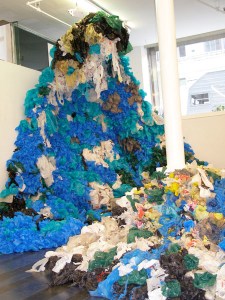
Holleman: The TRASHNAMI! is a giant cresting wave of garbage.
For it’s previous incarnation as a FUTURE MOUNTAIN (a 360 degree rendering of a mountain range in garbage bags), I had my “community” of people collect their shopping bags normally and give me the tornado of bags that everyone normally gathers under their kitchen sink. I collected for about 7 months, including my own bags.

For TRASHNAMI!, I actually added in blues and greens that were purchased with money budgeted for the show. I also created stickers for the left over bags and handed them out as freebees.
everydaytrash: How do politics play out in your work?
Holleman: My work is political in that is places a premium on real information about our world and our lives and the true consequences of our lifestyle and culture. I use art to address issues and if not solve them, show them in their true light, so that hopefully, no one can turn away and pretend that how their singular lives are is the truth of the world as it is right now. Just because we are here and temporary unscathed does not mean we are safe, innocent, or unaffected for long. Just ask people in New Orleans. My work is political in that is places a premium on real information about our world and our lives and the true consequences of our lifestyle and culture. I use art to address issues and if not solve them, show them in their true light, so that hopefully, no one can turn away and pretend that how their singular lives are is the truth of the world as it is right now. Just because we are here and temporary unscathed does not mean we are safe, innocent, or unaffected for long. Just ask people in New Orleans.
everydaytrash: The title of your show is dated in the near future and refers to our changing world. That, coupled with the image of a “trashnami” gives the sense of impending doom. Do you see trash as an immediate threat to our way of life?
Holleman: The TRASHNAMI! isn’t a threat to our way of life, it IS our way of life. Make that distinction please. And it is dire and it is a non-negotiable fact. See this, please read about the Pacific Garbage Patch. There are now more particulates of small plankton-sized pieces of plastic in the ocean than plankton at some spots. This is coming from scientists who drag plankton nets and then count and sort particulates under microscopes. The way we handle plastic/petroleum/chemicals/poisons/refuse/trash causes global warming, which causes more extreme weather conditions, hence more earhtquakes, tornado, hurricanes and tsunami. We are doing it. WE are doing it.
Photos kindly provided by Holleman

Wall-E Verdict

Sunday, July 20, 2008

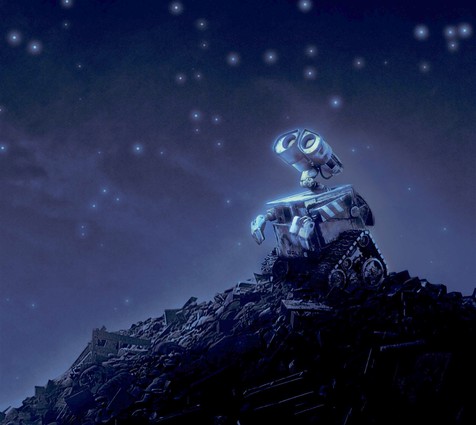
After thoroughly skimming the press out there on Pixar’s trash robot oeuvre, I have chosen a camp on the “beautifully understated, morals shouldn’t be beaten over our heads” versus “apolitical fluff” debate. I liked it. Wall-E sends good messages about trash and its consequences and I believe I would have groaned had the links between an endless trash compaction on Earth and the sad fate of humans in space been made more clear. Of course, I don’t expect kids to go home and refuse Wall-E themed toys because they now understand the dangers of consumerism. But if we’re talking about important causes and saving what’s endangered, then my allegiance goes to all that is subtle.

As for the film itself, I agree that the first half is the best part. I was, of course, charmed by the little guy’s trash collection (in fact, it reminds me I have one more story from Oslo to share, that of an obsessive collector and found object artist). The only drawback for me (other than having to admit to buying into a Disney product) was that while Wall-E himself is very human and lovable, his love interest Eve is a cold machine. Despite warming a bit as the film goes on, she never quite acquires a personality. While I know some guys go for the ice queen thing, watching the wooing of a tin can gets a little old as the film wears on.

It’s over when we say it’s over

Friday, July 18, 2008

CNN reports that Berlusconi is about to announce the end of the Neapolitan trash crisis. Kind of like when Bush declared victory in Iraq.

Documenting Trash

Thursday, July 17, 2008

Attention photogs, the Nashua Telegraph wants your trash-themed pics. I’m sure this is not the last you’ll hear of this initiative.

Oxymoronic

Thursday, July 17, 2008

It kills me that this CNN story is about “stealing trash”. Such sensationalism. Oh no, people are taking the things you should have recycled out of your trash and making money off the stuff you recycled and could have sold yourself but didn’t. I understand, to some extent, the annoyance of having your trash thrown all over the block if you’re the one who had to bundle to papers and sort the stuff in the first place. But that’s about all I’ll give you: mild annoyance.

Gourmet compost in San Fran

Wednesday, July 16, 2008

Thanks for the link, Jennie!

Trashtastic Tuesday with Scott Kellogg

Tuesday, July 15, 2008

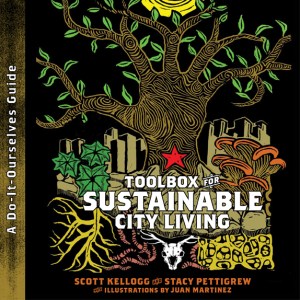
Scott Kellogg and his partner Stacy Pettigrew are coauthors of “Toolbox for Sustainable Living: A Do it Ourselves Guide“. The book lays out the how-to in creating simple tools out of simple materials so that we, not to be redundant, can live more simply and use up fewer resources. These are tricks and tools the couple has developed and put to use as part of their organization, the Rhizome Collective and which they frequently share in what they call Radical Urban Sustainability Trainings (R.U.S.T.). I saw Scott give a talk on the book in New York recently. His talk emphasized the need for eating locally and making sustainable choices to be more than a green fad. The questions from the audience focused on how hard that can be when one lives in a concrete jungle. Scott was a kind enough to answer a few follow-up questions for a (long overdue) Trashtastic Tuesday interview.
everydaytrash: What is radical sustainability?

Kellogg: Radical Sustainability” is a term that we came up with at the Rhizome Collective to reclaim the term sustainability that has been all but entirely co-opted by multinational corporations to promote the neo-liberal economic agenda. The original idea of sustainability is that renounces should be available to innumerable numbers of human generations and should be equitably distributed as well. Radical sustainability emphasizes the relationship between environmental sustainability and social justice. It’s not enough to just be green, but to be a good environmental steward you have to look at race and class and equity…that’s it in a nutshell.

everydaytrash: What are some of the sustainable living tools you have created out of trash?

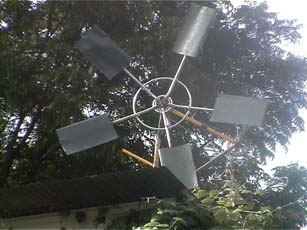
Kellogg: We’ve treated household wastewater with tossed bathtubs—those are items generally found in the trash. We’ve also made passive solar water heaters out of junk refrigerators and old hot water heating tanks. We’ve constructed wind turbines out of recycled bike parts. We try to really look at how we can [build sustainable living tools] using cheap, salvaged and recycled materials. If you’re looking at what’s local and abundant in cities: that’s trash.

everydaytrash: What can people living in cities can do (particularly those like me who have no roof access and no backyard) to lead more sustainable lives?

Kellogg: First, worm boxes can be just a simple little plastic box to keep red wigglers, a variety of worm that can eat a pretty good portion of household kitchen scraps. They don’t smell, don’t take up hardly any space and can be expanding modularly by adding boxes. The castings created by the worms are fabulous for gardens. Even if you don’t have a garden, you can give them to a friend.

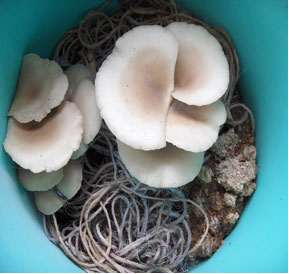
Another thing I recommend in cities is growing edible, miniscule mushrooms on logs…this can be done in apartments that don’t get a lot of direct light.

everydaytrash: What kinds of big-picture policy things can people do?

Kellogg: I encourage people to organize with neighbors and interested people to gain access to vacant lots. There’s a lot of space in cities that can be turned into food producing spaces. A lot can be done terms of policy. If we’re going to talk seriously about bringing resources closer to cities, this is what needs to happen.

Photos ripped from the Rhizome Collective site

Textiles of the Future

Monday, July 14, 2008

I have umbrellas on the brain. I could have really used a parasol yesterday to avoid the seriously bizarre tan lines I got while celebrating Bastille Day. Also, it’s raining and despite noticing that when I got out of bed today I still didn’t grab an umbrella before heading out the door. I got halfway down the block before deciding to head back, go all the way back upstairs and grab one. I think in the back of my mind this absentmindedness is a temporary state that I’ll one day shed, caterpillar style and emerge a fully put-together adult woman. The kind who checks the weather every morning before leaving the house and keeps a suit jacket and extra pair of heels at the office and band aids in her purse, just in case.

I’ve been thinking about buying a snazzy trash umbrella, but can’t justify the purchase since I already have an amazing hippo umbrella with ears and am fundamentally opposed to the eco-chic backlash of buying more stuff because it’s “green”. That said, I have a lot of admiration for groups like Monsoon Vermont and any income generating project that employs scavengers. [As Clement L., a commenter on a previous post, pointed out, trash is the textile of the future, it tells the stories of our lives. I’m digging that image this morning. It reminds me of grade school and studying the pioneer days when families embroidered patches with abstracted images of life events and sewed them together in quits.]

This company TerraCycle makes a lot of the same style stuff without the feel good international charity piece. Instead, they’ll pay YOU for sending in used candy wrappers and drink pouches. I’m not sure how I feel about that. Nevertheless, here’s a charming video of how a Capri Sun pouch becomes a tote. I’d love to know what you think.

A lot of my garblogging of late has been pointing out new things to buy. I’d like to get away from that. Remember the umbrella inside out design competition? For some reason I found that whole concept more inspiring than the juice-box bag craze. Maybe it’s that the juice boxes seem a tiny bit self-righteous. And while I’m all about self-righteous accessories (nearly all of my jewelry comes from women’s collectives in Africa), I think I’d rather be wearing a little dress made out of an old umbrella and be the only one who knows the secret back story than something that screams “look at me, I recycle”!

Image of dress via Treehugger

Plastic Works

Wednesday, July 2, 2008

The AP ran a great feature today on the Indonesian company, Plastic Works, which buys plastic trash from trash pickers and employs locals to make it into bags and other brightly colored goods to sell.  Remember those cute Jakarta umbrellas from Monsoon Vermont?

We’ve heard it all before

Wednesday, July 2, 2008

Berlusconi claims he’ll be stepping in the end the Naples trash crisis.  While that would be nice to believe, Sivlio doesn’t have the best rep for doing what’s best for Italians.

Photo via UPI

Top of the World Trash

Tuesday, July 1, 2008

Climbers left 120 tons of trash on the China face of Everest last year.   That side will be closed for trash pick up for the time being.  On the other side, Nepal charges big fines to those who don’t come down the mountain with all the equipment they took up. I wonder how all of this fits into China-Tibet politics.

Photo from Alamy via The Independent.

Attn: NYC Trash Reading

Monday, June 30, 2008

From the Bluestockings site:

Wednesday, July 2nd @ 7PM – Free
Reading: Kellogg & Pettigrew “Toolbox for Sustainable City Living”
Please join co-founders of the Rhizome Collective for a reading from their book “Toolbox for Sustainable City Living: A Do-It-Ourselves Guide,” and in a discussion of the design of autonomous urban communities utilizing simple techniques such as rainwater harvesting, bioremediation, and worm composting.

Photo of the Rhizome entrance from the Collective’s Web site.

Weekly Compactor

Saturday, June 28, 2008

This week in trash news:

Pixar still via the LATimes

As promised, freegan wort hogs

Saturday, June 28, 2008

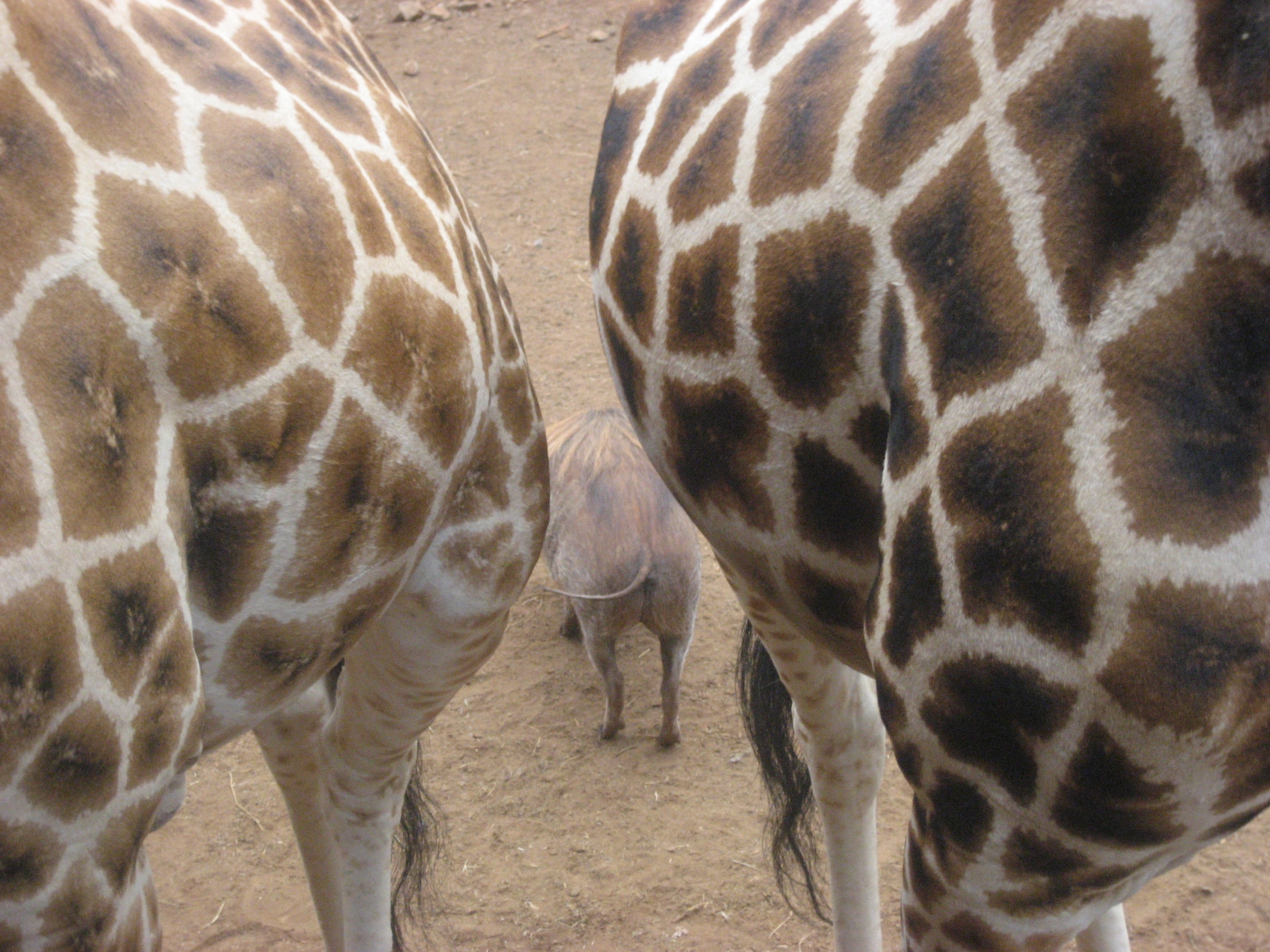
At the Nairobi Giraffe Center, it isn’t just the endangered Rothschild Giraffes that get fed, a healthy population of wort hogs lives on the reserve.  It’s a bit far from the National Park, but after catching wind of the free food scheme, the wort hogs have taken up permanent residence.  No food waste at the Center!

It doesn’t take a tall fence to keep giraffes in, their knees prevent them from being able to step OVER anything.

Among the fun facts I picked up on this only tangentially trash-related afternoon: giraffes sleep only half an hour a day, standing up with their eyes open.

Wort hogs and giraffes hang out in the real world, as well.  Giraffes have great eyesight and can see danger coming.  Wort hogs can’t see anything if its not right in front of their faces, but can smell trouble coming that giraffes might not see.  A happy pairing.

Next week, back to the wonkier side of trash.

Freegan wort hogs

Wednesday, June 25, 2008

Ugh.  I took some hilarious photos of wort hogs eating up fallen food pellets at the Nairobi Giraffe Center.  Sadly, I don’t have the connection speed to upload them here.  Sorry, trashies, I’ll be home this weekend and promise to make up for lost time garblogging.