Sara Bayles‘ blog The Daily Ocean chronicles trash she finds on the beach every day for a year. Recently, she and her husband took nine weeks to join a sea expedition to the Great Pacific Garden Patch. She’s now posting details of the trip and photos in a series of posts before returning to the regularly scheduled program.
Archive for the ‘Trash Politics’ Category
The Daily Ocean at sea
Monday, May 30, 2011Introspective Trash
Friday, May 27, 2011William Rathje at the University of Arizona founded the sociological discipline of garbology, which Wikipedia defines as follows:
[T]he study of (mostly modern) refuse and trash. As an academic discipline it was pioneered at the University of Arizona and long directed by William Rathje. The project started in 1973, originating from an idea of two students for a class project.It is a major source of information on the nature and changing patterns in modern refuse, and thereby, human society.
Or, as a New York Times headline on the topic put it: We Are What We Throw Away.
Recently, I’ve come across three examples (which, by the laws of lazy journalism = a trend) of personal studies in garbology.
Mac Premo‘s The Dumpster Project, covered here before, documents all the things the artist had stockpiled in his old studio before losing that space. Premo is now cataloging the items, some intensely personal (an early pair of his daughter’s shoes, the invitation to an old girlfriend’s party to christen her wheelchair), some just neat things he collected over the years (Persian smokes pictured here). Premo hopes to procure a dumpster and display all the documented stuff in said dumpster. The piece will either tour as an art exhibit or be left out for collection. Or both.
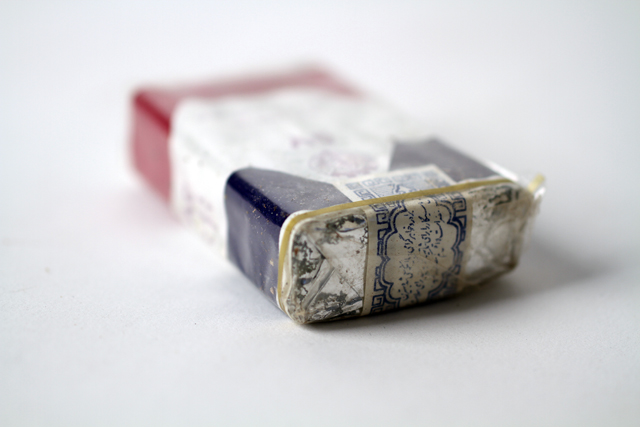
Mac Premo's The Dumpster Project
Writer Chappell Ellison is throwing away her stuff in an effort to live with less. Unconsumption covered her project, which consists of a blog where she posts photos of things she is throwing away, sometimes alongside their stories. The first person to comment on each item gets to keep it.

Chappell Ellison's Everything Must Go project
Writer Porochista Khakpour is selling relics of her past and each piece comes with a story on a tumblelog called One Woman’s Trash. “Trying to be people I was not was a theme of my 20s,” begins a post about a silk romper. The microblog is a for-profit venture presented as more stoop sale than art project, but it’s a creative exercise in garbology nonetheless.

Porochista Khakpour's One Woman's Trash
I once threw away all my journals. It was a rash decision I frequently question today. Somehow reading entries on these three sites picks at that scab. What I love about all of these efforts is the thought put into our collecting of things, the stories each item acquires — making it harder and harder to part with over time — and the discipline of each artist to actually get rid of it.
Garbage Revolution
Tuesday, May 24, 2011In case you missed it, Uma Viswanathan had a lovely HuffPo piece last week on a youth program composting organic food waste in Haiti. It’s called the Nouvelle Vie Haiti Youth Corps, a project of the International Association of Human Values.
I don’t know anything about this group, but a glance at their philosophy, here, makes me curious to dig deeper.
This weekend my aunt and younger cousins told me they are planning a trip to Haiti to volunteer at an orphanage. They are a service-oriented family and my aunt was interested in taking her daughters to a developing country for the first time. It was hard, my aunt said, to find a nonreligious volunteer program.
I look forward to hearing about their experience. And to learning more about Nouvelle Vie Haiti’s work on sanitation and other development projects.
Yucca Mountain
Tuesday, May 17, 2011Nuclear waste. It’s the most controversial kind of trash. Here in the U.S. our government has been talking about different ways to bury nuclear waste for years. Nearly a decade ago, Congress passed a law stating we needed a permanent underground storage facility by the mid-1990’s and later named Yucca Mountain, outside of Vegas, as the chosen spot.
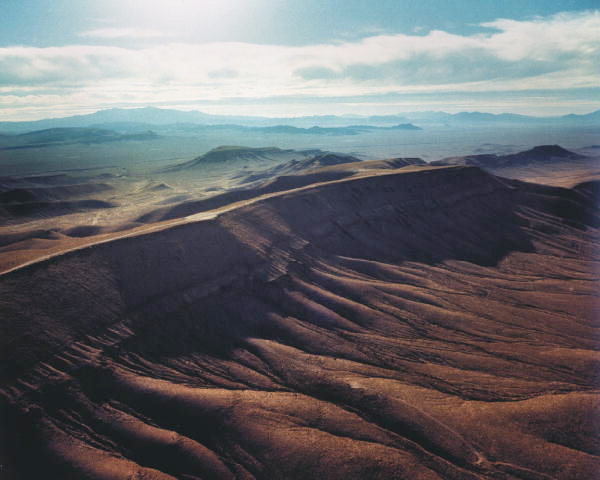
Yucca Mountain
Lately though, the government has been rethinking that decision. For one thing, Japan’s nuclear disaster proved worrisome, causing experts to rethink the whole idea of storing toxic waste in pools.
But Yucca Mountain was the subject of debate long before the earthquake in Japan. It’s a bit of a messy fight to follow. I didn’t quite understand all the pieces until I read this handy list of FAQs published by Reuters. In a nutshell, people in Nevada have long been pissed about the choice of where to put America’s nuclear waste, President Obama campaigned on the promise to block the facility from being built, his administration did indeed block the Yucca Mountain site, inspiring the Government Accountability Office to prepare and release a report stating that politics rather than technical or safety concerns drove the decision.
The report also pointed out that since 1983 the government has spent $15 billion assessing Yucca Mountain, $9.5 billion of which was collected via extra charges on Americans’ electric bills.
We’ll have to wait until early next year to find out what an appointed Blue Ribbon commission suggests we do instead. Our options include finding a new place to dig a hole, looking to the French model of recycling nuclear waste or paying a country like Mongolia to deal with it for us. One would hope the proposed plan includes ideas on creating less nuclear waste in the first place.
May 1 is Decorative Dumpster Day 2011
Monday, April 25, 2011Attention trashies. Decorative Dumpster Day is just around the corner. This Sunday, May 1, Visible Trash, Olympia Dumpster Divers, everydaytrash.com and our colleagues in trash will take a day to post photos of and reflect upon the containers in which we store our waste. For reference, links to the first time we tried this can be found here and here.
This coming Sunday!
Earth Day
Friday, April 22, 2011Happy Earth Day. To celebrate, I just watched the CBS News special on the very first Earth Day on YouTube. It ends somberly, as you can see here. And in some ways, not much has changed since 1970. Except, maybe, that environmental advocates have, in part, become more chic. One thing that struck me, watching these vintage clips, is how focused the activists were on big corporations and the major perpetrators of waste and pollution. That seems like a stark contrast to the hundreds of Earth Day emails and press releases I received this year, all pimping green products and encouraging very individualized actions geared at reducing my own little footprint. Did you do anything for Earth Day?
Flip flop round up
Tuesday, April 19, 2011This unconsumption post on upcycled flip flops reminded me of a story I read in 2007 about Kenyan women building a giant whale out of the old slippers that washed up in their fishing villages. I recommend watching the BBC video on the project, it’s an amazing example of political art. I especially like the whale because, as I’ve mentioned here before, the flip flop jewelry and key chains I’ve seen are all overpriced and, in my personal opinion, not that cute. I do, however, love the way sun faded bits of flip flop add character to things sculpted out of them. There’s something whimsical about the material, which I think you get from the Studio Schneemann pieces in the unconsumption link; and, of course, evident in the everydaytrash.com official mascot, P.C. the Flip Flop Rhino.

P.C.
A company called UniquEco made P.C. Or rather, Kenyan women made him and UniquEco put a snazzy label on his belly and made sure he was available for purchase at my favorite women’s collective shop in Kampala. UniquEco are based in Kenya and also have a life-sized whale made from washed up flip flops, which makes me think they may be connected to the original story.
In the U.S. TerraCycle and Old Navy are launching a campaign called Flip Flop Replay whereby you can drop your old flip flops off at Old Navy and TerraCycle will collect them and recycle them into play grounds. At first I thought that meant play ground mats. Then I saw the picture below. I don’t always love TerraCycle’s projects, but this one is just cool.

via TerraCycle
The power is yours
Sunday, April 10, 2011Children of the 90’s, this one’s for you. Remember Captain Planet and the Planeteers? (Sing it with me: Captain Planet, he’s our hero. Gonna take pollution down to ze-ro!)
Best. Cartoon intro. Ever.
Just in time for Earth Day 2011, Shout! Factory is releasing Season One on DVD. Preorder it on Amazon here.
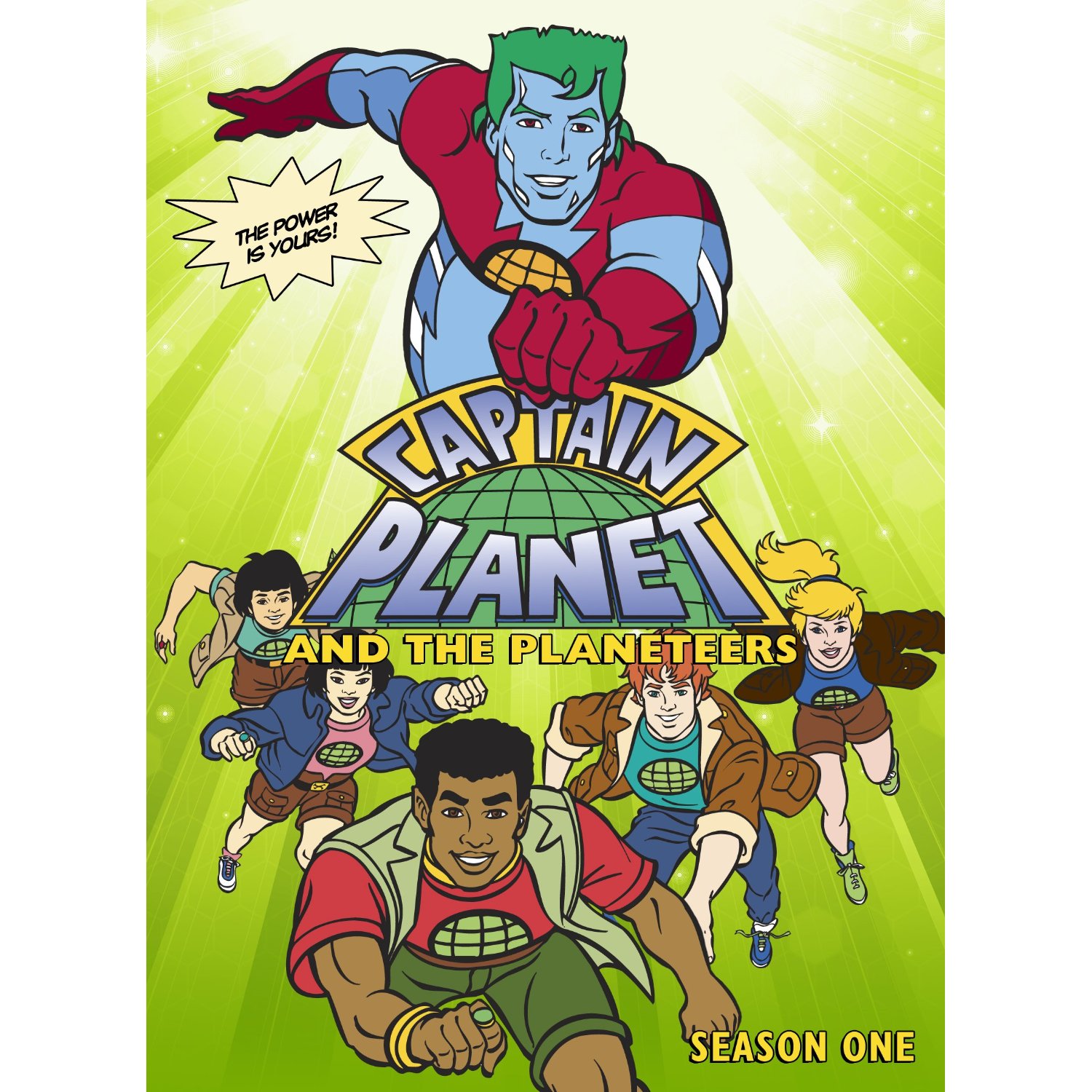
Season One DVD Box Set
I get asked to review a ton of crap on everydaytrash.com, but I have to say I was thrilled to receive the pitch for this product. My sister and I used to love this show. She’s almost five years younger but I think even as a kid she was aware of the abundant kitsch comedy: the contrived diversity, the earnest but nearly racist attempts at cultural sensitivity, the two-dimensional portrayal of environmental problems…we thought it was hilarious. Also, that theme song. So catchy.
For those not familiar with the show, Captain Planet explained environmental threats in a manner similar to the way the Bush administration explained terrorism: overly simplified and featuring a cartoon villain.
The premise: Gaya (aka Mother Earth, aka Whoopi Goldberg) selects one teenager each from Africa, Asia, Europe, Latin America and North America and gives each a ring that allows them to control one of the four elements: Earth, Wind, Fire, Water. The indigenous kid from the Amazon gets the ambiguous but very meaningful power of “Heart.” The European delegate is a hot Russian blond. The North American speaks like a wise guy from 1940’s Brooklyn. LaVar Burton voices Kwame, the generic black African, with the appropriate amount of enthusiasm warranted by the gig (which is to say approximately 1/100,000,000th of the energy he poured into Roots). These are the Planeteers. When really bad guys — with names like Vermenous Skumm (voiced by Jeff Goldblum), Sly Sludge (Martin Sheen) and Dr. Blight (Meg Ryan)–come along and dump toxic waste where they shouldn’t or plot to raze ancient forests, the team has a secret weapon. When they pump a fist in the air and shout out their elemental power, light shoots from their magic rings and mingles to create Captain Planet, environmental superhero.
I kid, but where else were we going to see hero images that included brown people and women? I enjoyed rewatching the pilot and am saving the rest for a marathon with my sister. These DVDs would make a great gift for liberal parents and nostalgic 20 and 30 somethings.
Shrimpmobile
Sunday, April 10, 2011Check out this heartwarming story from Brazil. Orismar de Souza was homeless. Over the course of four years, he begged and went hungry to buy the parts he needed and put them together to build his own car, aka the Shrimpmobile. With wheels comes status, so junk parts changed this man’s life.

Photo via Jalopnik
GrowNYC posters
Friday, April 8, 2011Local nonprofit GrowNYC sends informative emails and has a fantastic website if you’re interested in innovative environmental programs. Sign up for their listserv or follow them on social media. My favorite tidbit from their most recent update is this cute poster series.

via GrowNYC
The Dumpster Project
Tuesday, April 5, 2011A friend sent me a link to this video today, but I don’t know which one because it arrived as a somewhat generic Vimeo link. Thanks, friend.
The artist’s website can be found here. Also, this reminds me that May 1st is Decorative Dumpster Day 2011.

#DDD2011
Save the date, it’s going to be good.
Waste Land, the documentary
Friday, April 1, 2011I have wanted to see Waste Land — Lucy Walker‘s documentary about Brooklyn-based Brazilian artist Vik Muniz and the huge trash portraits he created outside of Rio with help from local cartadores — for a while now. Somehow, I missed two or three chances to do so while the film screened in New York. Now, though, we all have another chance. Waste Land premiers on the PBS series Independent Lens on April 19th (check local listings). Or you can rent or stream it from Netflix here.
I got an advance review copy a while back and this past week had my friend Lisa over to watch it with me. Lisa is a sociologist who has lived for several years in India researching waste and water issues, which means she has spent a lot of time in dumps and with trash pickers (more on that to come in future posts).
I don’t want to belabor the review here. Short version: see this film. It made me cry. Twice. And I am not someone who cries easily.
The medium-length version: The storyline of Waste Land follows Muniz (via some slightly staged seeming Skype calls) setting up his project and getting others to help him execute his vision: to build large scale portraits of trash pickers using the trash they pick and getting those pickers to help him do it. Most of the film takes place outside of Rio at one of the world’s largest dump sites where you get to know an extremely compelling cast of characters who live and work there including a heartbreakingly young mother and the incredibly charismatic president of the cartadores association, which serves as a labor union and coop for the pickers.
Some interesting things I learned:
- One, cartadores aren’t trash pickers. They are recyclable materials pickers.
- Two, plastic is more lucrative to pick than glass according to the cartadores.
- Three, Vik Muniz’ breakout show was a series of portraits called Sugar Children for which he created images of the children of sugar plantation workers out of sugar.
As an aside, during post-viewing Googleing, I found this story and video on Brazilian picker associations collecting used veggie oil.
Lucy Walker is also the filmmaker behind The Devil’s Playground, a fascinating look at Amish adolescence, which answered many of the burning questions I accumulated about the simple life during my teen years in Central PA. Definitely also worth seeing.
Pirates
Thursday, March 31, 2011You may have read that a prison just for pirates opened recently, financed with UN money and appropriately located in Somaliland, the self-declared autonomous region of Somalia.

Somali pirates arrested by French commandos, photo via justfoodnow.com
A UN rep laments that they needed to build the prison because while countries will hold trials for stateless people, like pirates roaming the high seas, no one wants to make room for them in their prisons. So the UN decided to build one special.
This story, making the news wire rounds, puts Somali pirates in particular back in the international spotlight. It’s been a while, but you may recall the international melee a few years back when pirates off the coast of Somalia kept kidnapping Europeans and demanding high ransoms for their return. The most interesting part of the story, from a trash perspective, is that these pirates claimed to be defending African waters from the illegal dumping of toxic chemicals by huge European corporations.
As Bloomberg reports, the class, trash and power issues run deep:
Pirates operating off the coast of Somalia carried out 15 of the 16 hijackings at sea this year, according to figures released by the International Maritime Bureau’s Piracy Reporting Center on March 24. There are currently 28 seized vessels with 576 hostages held by Somali pirates, the bureau said.
Piracy has flourished off the coast of the Horn of African nation, where a two-decade long war has left the country with no effective government and a moribund economy. Remittances from overseas workers of about $1 billion a year are the country’s main source of revenue, according to the London-based charity World Vision, which runs health, water and education projects in Somalia.
Wasted clothes
Wednesday, March 30, 2011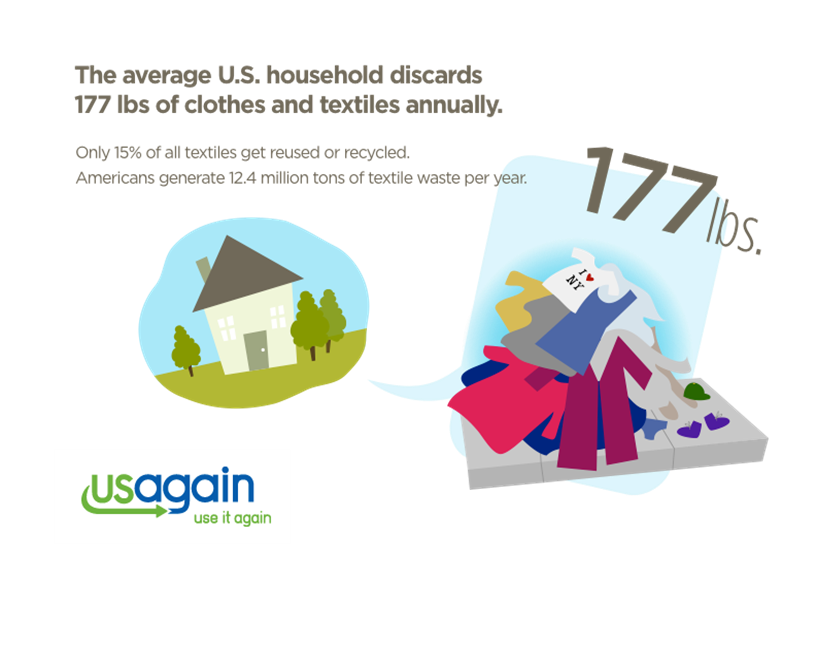
via USAgain
How I Met Your Mother
Monday, March 21, 2011…is a really good show. Case in point, in a recent episode entitled “Garbage Island,” the character of Marshall gets obsessed with the Great Pacific Garbage Patch.

Marshall
Hilarity ensues. Here’s a link to the episode.
 everydaytrash