Spotted on the streets of Addis Ababa: this series of trash picking, street sweeping, public gardening and construction images.
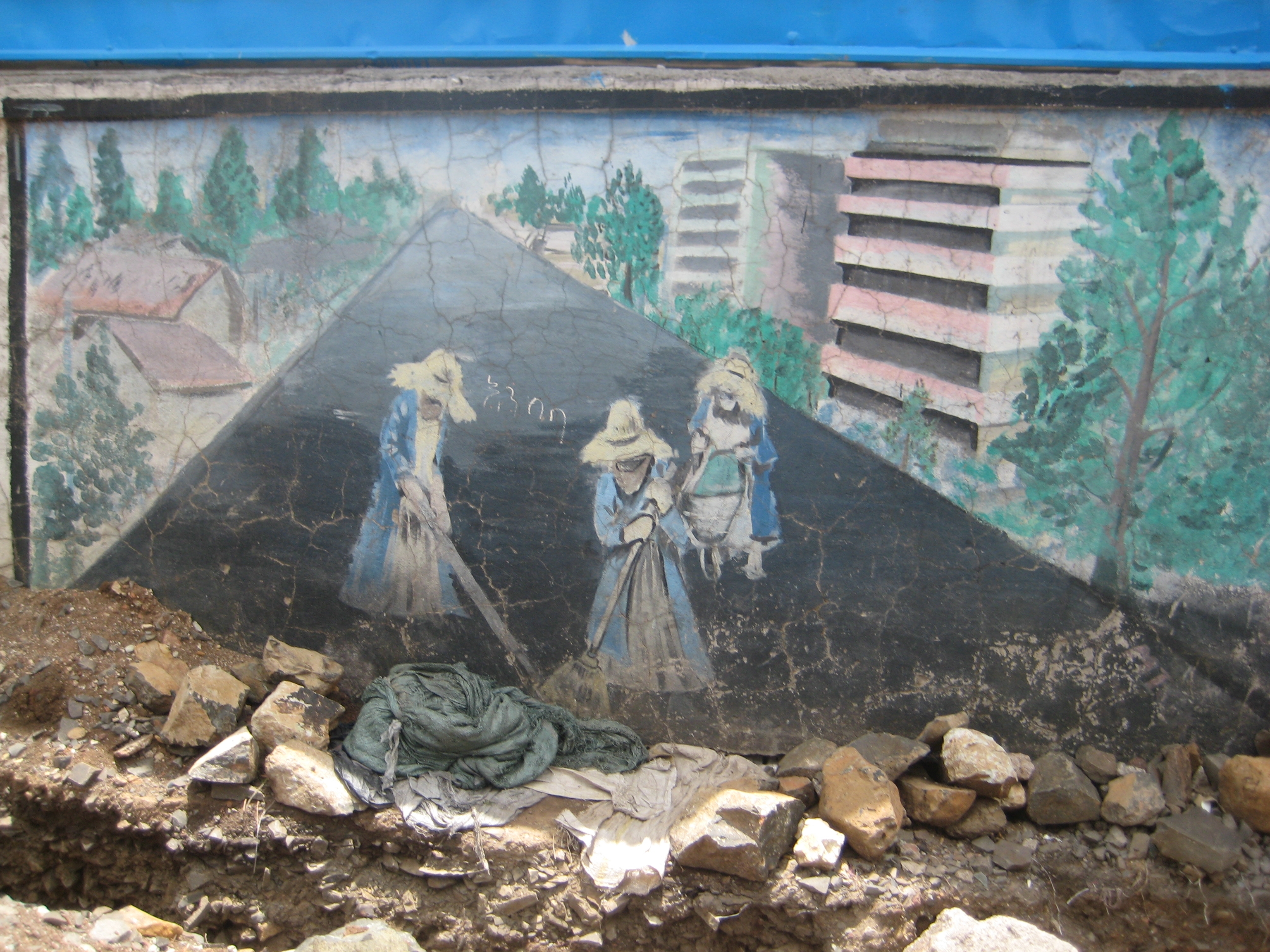
Street sweeping
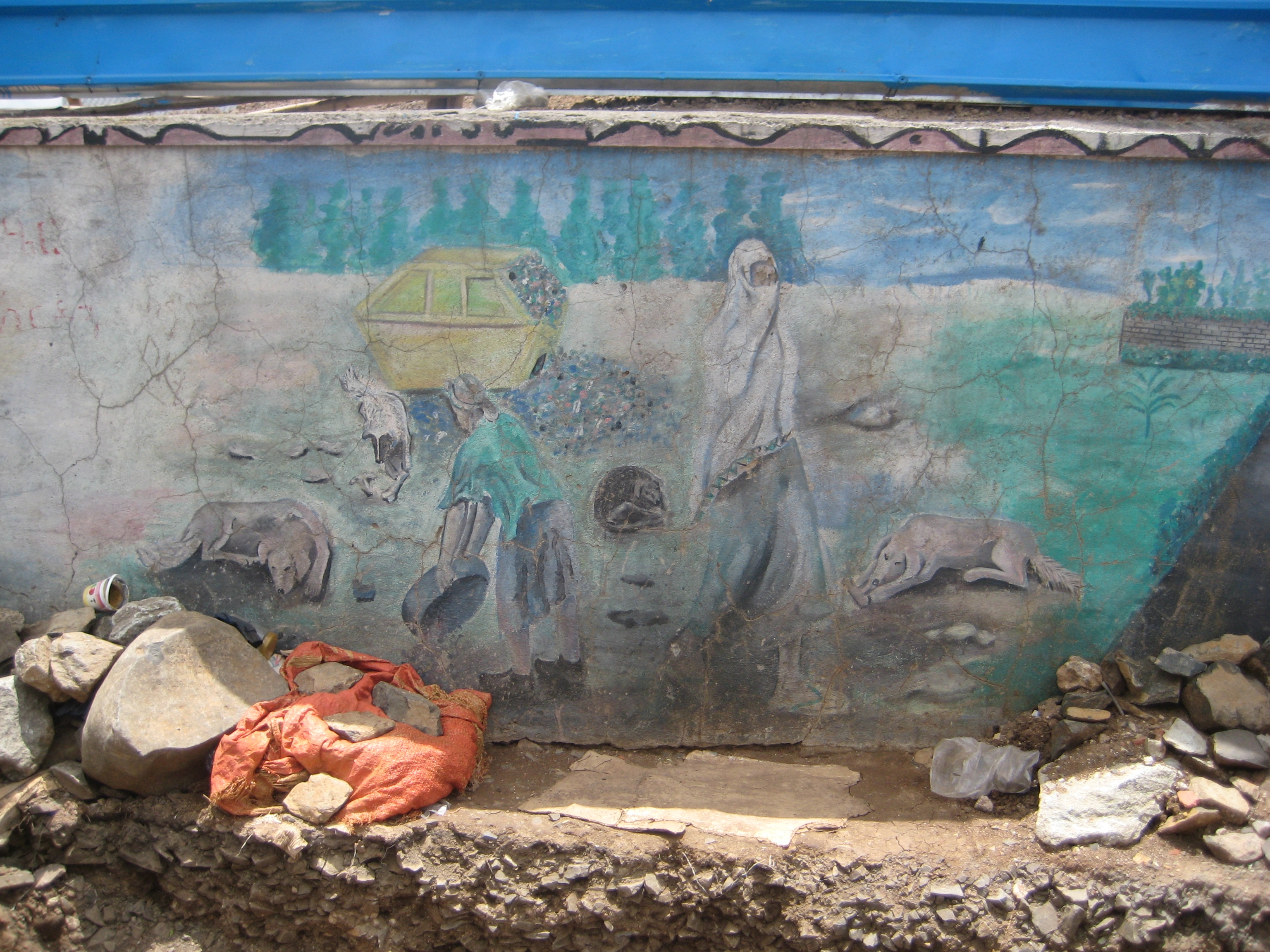
Dumpster

Dumpster

Raking
Spotted on the streets of Addis Ababa: this series of trash picking, street sweeping, public gardening and construction images.
Street sweeping
Dumpster
Dumpster
Raking
Scientific American reports that despite an increased interest in recycling plastic, most Americans have to hunt around for places that will take back hard plastic items like ski boots.

Ski boots - photo via bumps.com.au
Click through for a list of resources on where to recycle at the end of the post—handy for anyone getting rid of equipment as the ski season draws to a close.
Another gem from the creator of The Story of Stuff. via EcoLibris.

Plos One
The average American tosses 1400 calories worth of food every day. That’s enough to sustain one skinny American or a whole developing country family (my calculations). Freshkills Park Blog has more scary food waste stats here. They come from this report, originally posted on Treehugger.
“It’s the dawn of a new decade! The economy is in trouble & we still have too much garbage! Your art could be part of the solution!!! If you make art from things that would have been thrown away – broken stuff, old stuff, burned stuff, torn stuff transformed into art- 2D & 3D in any media rescued from trash, your art is eligible. It’s happening again! The exhibit “Art of Detritus: Recycling with Imagination” features fine art from cast-off materials created by professional artists from throughout the country. The heart of this exhibit is the message of the three R’s: Reduce/Reuse/Recycle. The 2010 Art From Detritus Exhibition is a juried international art competition for dynamic, inventive and provocative work created from a multitude of materials that would have been discarded if not rescued for artmaking. The exhibit will occur in spring 2010 at PureLight Gallery located in a recycled building in Turner’s Falls Massachusetts.This show will be curated by Vernita Nemec, artist/curator, former director of Artists Talk On Art & Viridian Artists in New York City and currently on the Board of Directors of Soho20 in Chelsea NYC. She conceived the first Detritus Exhibition in 1993 & over the years has received funding from The Puffin Foundation, the Kaufmann Foundation and the National Recycling Coalition. Since then, there have been more than a dozen Detritus exhibitions through out the U.S. You can see images of and information on past Detritus shows here. Submit your best work now! Email 3-6 jpegs of work no larger than 500 dpi in either direction. Include in your email an Artwork List with size, materials used, title & date, plus an artist bio & statement. Submit by April 1, 2010 to: ncognita at earthfire dot org. There is no submission fee, but accepted artists will make a small contribution towards the exhibition expenses.”
Amazing sculptures made from plastic utensils via renest by way of unconsumption.

Kitchen Utensil sculptures by Sayaka Kajita Ganz
Attention NYC: The Parks Department has just announced a dozen opportunities for you to experience a guided tour of beautiful Freshkills Park.

Freshkills Park
Tours in April, May and June are currently open for public sign-up. The tours begin at the Eltingville Transit Center, 90-98 Wainwright Avenue in Staten Island, at 10am and 1pm on alternating Saturdays, and are free of charge. They will run through the middle of November. Here are the exact dates and times:
April 10, 10am and 1pm
April 24, 10am and 1pm
May 1, 10am and 1pm
May 15, 10am and 1pm
June 5, 10am and 1pm
June 19, 10am and 1pm
I plan to attend at least one of these dates myself. Who’s in?
Notes from an everydaytrash.com field trip.
Victor:
Leila, Flex Unger and I recently went to a screening of Garbage Warrior, a documentary about architect (or should we perhaps say anarchytect) Michael Reynolds, who has spent the last 30 years building what he calls “Earthships” – houses built largely by trash and designed to facilitate an off-grid life (that is, living without electricity, gas and other comforts connected to one’s house). The documentary, directed by Oliver Hodge (founder of Open Eye Media UK) follows Reynolds’ quest to perfect the art of Earthship construction, as well as establish trash house communities in his home state New Mexico.
The main narrative centres on legal battles with the State of New Mexico, with Reynolds putting on a lobbyist hat in order to get legislation passed that will allow him to carry out his visions. Being an anarchytect, Reynolds has little respect for the slow turning wheels of institutionalized democracy, and not surprisingly, the bill passed after three years is stripped of visionary content. During the after-film meet-the-director evening we attended, Hodge felt pressed to point out that New Mexico is one of the more progressive states in the US on off-grid construction.
While the political game is interesting and highly comical, it steals the focus from what we trash fetishists crave the most: Delicious imagery of tyres and plastic bottles being transformed into houses. (Perhaps there’s extra material on the dvd.) We do get our share though, when Reynolds and his crew fly over to the tsunami stricken Andaman Islands, and build an Earthship for the community, inspiring local engineers to wild ideas of putting up a couple of hundred more.
Leila:
I enjoyed this in-depth look at a community of cutting-edge architects living in their own experiments and thinking about new ways to design homes that don’t have to rely on municipal sources for electricity, water and sewage. The enemy fought in this film are city regulations requiring that homes be connected to the grid, which the architects see as stifling. I see their point; though I am also glad that architecture is a licensed profession that carries with it a commitment to safety. The key to advancement in green building seems to be finding the balance between forcing homes to connect to the grid and ensuring new construction concepts are tested and sound.
As someone who travels a fair amount in parts of the world where municipal infrastructure isn’t the enemy but the impossible dream, I’d like to put in a little plug for government-run utilities. Clean tap water, flushing toilets connected to pipes that take the shit away, electricity so reliable we think black outs are national emergencies or cause for a street party, these are all luxuries I gladly take part in. Yes, these systems can be improved and run on far fewer resources. But let us remember that the time, money, skills and resources to build an Earthship remain out of reach for most. In the meantime, advocate to reform the grid, not destroy it.
Check out this in-depth piece chock full of links about the Great Garbage Patch. Not sure I agree that it’s a “new” discovery among enviros, but glad to see the coverage nonetheless.
Does your city have a store? Mine does. City Hall augments tax dollars and offsets the cost of renovating and upkeeping by selling New Yorkers city-related stuff. What kind of stuff? Well, for example, if you get married at City Hall, you can pick up flowers, travel tissues, bride and groom rubber duckies, etc. All the essentials, really.

City Hall wedding souvenir
I am deeply conflicted about private/public partnership in this town. On the one hand, we have a beautiful park in the center of Manhattan. You may have heard of it, it’s called Central Park. But the Parks Department can’t afford to keep it fresh-smelling and bum-free on tax dollars alone. That would be a problem if there weren’t so many rich people who love the park and are willing to put their own money into keeping it nice. So they do. And in return, the park has a board of directors called the Central Park Conservancy that oversees official park business. Perfect synergy. Except: the park is also a popular gathering spot. A few years ago, the U.S. wanted to start this never-ending war in Iraq and concerned citizens decided to gather in the park to say NO. Unfortunately, the place they wanted to gather was a grassy lawn recently replanted on the Conservancy’s dime. So the Conservancy said NO, which is kind of scary when you look at it as a private board telling the public they can’t have a public gathering in a public space. Now, this story is not new to most of you and has lots of nuances left out. But it’s an example of the kind of questions this shit raises. Enter Oscar.
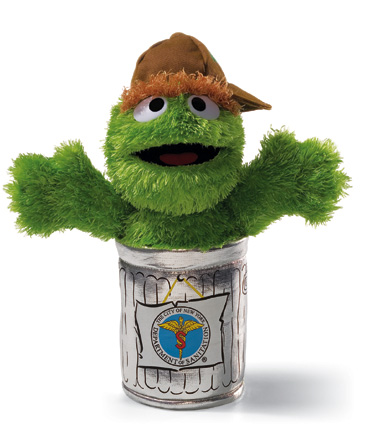
DSNY Oscar
The latest product launch at the City of New York Store is a series of stuffed Sesame Street characters dressed as employees of various city agencies. Oscar is a sanitation worker, of course. And the others seem to have been determined by fur color. Cookie Monster is NYPD blue. Elmo is a red fireman. And Big Bird Drives a yellow cab (which, as the daughter of a retired yellow cab driver I have to say is poor casting. Where the hell is that gritty muppet from the Caper?).
Don’t get me wrong, I know there’s a financial crisis going on and that if this were a Gund campaign to save the pandas, I’d be cooing. There is just something that rubs me the wrong way about all these products going on sale to raise money for city projects. Part of the concern is the commercialization. Sesame Street is one brand, Gund is another that’s two companies mixing with the brand of NYC. This new product line, however, comes at a time when the city is greatly expanding semicorporate ventures in the name of development. Gutting and reconstructing Coney Island, for example. There is something unfair about the sentiment that grit defines this city and removing it is wrong, I know. But there is also something sad about these corporate ventures. They feel to me like giving up, like quick fixes for what local government should be able to do on its own and like poorly thought-through plans that can lead to private interest trumping people’s interests. Like the people who live in Coney Island now.
Anyway, this is a subject I am inarticulate and confused about. What do you think? Is it a good thing that Snapple is the official drink of New York and that somewhere in America, there sits a Taco Bell chair in Women’s Studies? All I know is that I really want an Oscar the Grouch sanitation worker doll and that I really don’t want to want one.
Please enjoy this guest post by our friend Alexandra Ringe:
I spent this past week hunting plastic on the beach of Lauderdale-by-the-Sea, Florida. The Atlantic Ocean has its own version of the Great Pacific Garbage Patch, and I redirected as much plastic detritus as I could from the shore to, well, the landfill.
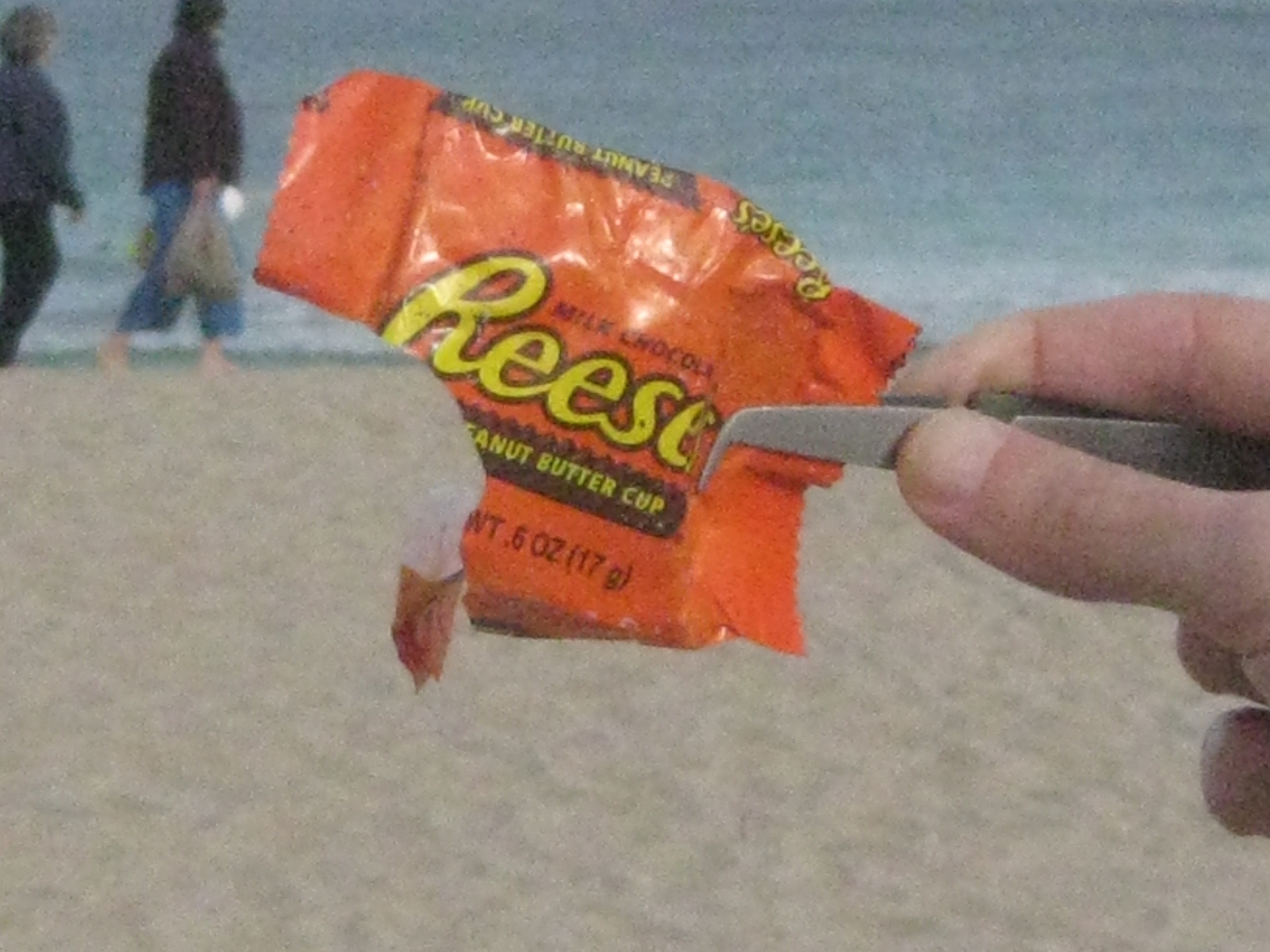
Wish you were here
I couldn’t stand the thought of walking by a plastic bag that would later drift out to the undulating mass of petroleum product sitting in the Sargasso Sea, maybe choking a bird along the way.
I could let you think that this is a new obsession of mine, this attention to the beach’s accumulation of straws, candy wrappers, kegger cups, and everything else we make out of plastic. But that would be wrong. I grew up in Ventnor, New Jersey, about 100 ft. from the boardwalk. Whenever we went to the beach, my mother picked up other people’s litter in addition to our own trash. “Leave it better than when you found it” — that was her response to our neighbors’ quizzical looks.
Although she talked to me and my siblings about the impact of human garbage on marine life, my mom was driven only in part by a concern for the environment. She applied the “Leave it better” principle at the movie theater and the rest-stop picnic table, too — she felt responsible for the experience of the next person to come along. Her approach expands on the hiker’s “pack it in, pack it out” credo — if you bring something into the woods, you are honor-bound to take it out again — in a way that works especially well for the beach.
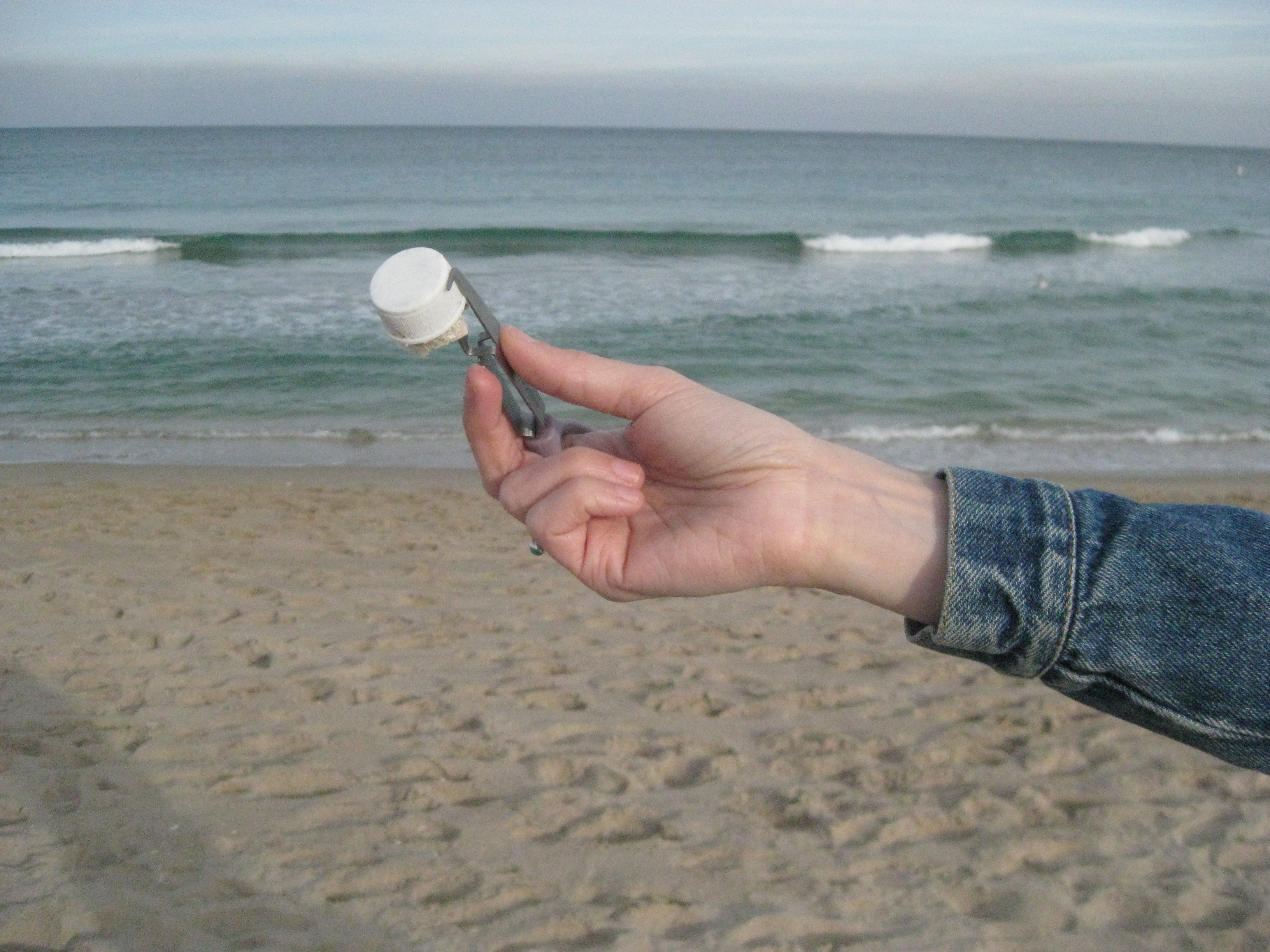
Lauderdale-by-the-Sea, FL
A good deal of the trash I encounter doesn’t belong to negligent beachgoers. It blows in from the streets, floats in from boats and ships, or is too small and light to be caught by the tractor-like beach-cleaning machines that skim litter from the sand. Thanks to my mom, I have always seen this vagabond trash as ours, something I need to help pick up. I wouldn’t have it any other way. It feels too good to keep that chunk of crumbling styrofoam out of the sea.
[This will be a total rewrite, but as I don’t live in the motherland at the moment, I have to rely on larger news outlets. Apologies.]
According to newspaper Svenska Dagbladet, municipal authorities have been getting 17 times as many complaint calls from citizens regarding uncollected garbage bags, following the decision by Stockholm refuse collectors we reported on earlier this month.
In short, a conflict between contractors and their employees has led to a situation in which the refuse collectors refuse to carry more than what is legal, in manners that are legal, as stipulated in the Occupational Safety and Health Act. Trash bags heavier than 33 pounds remain uncollected, as do any bags positioned in a facility behind piles of snow.
City officials are of course blaming the contractors, who seems to have failed to comment properly so far..
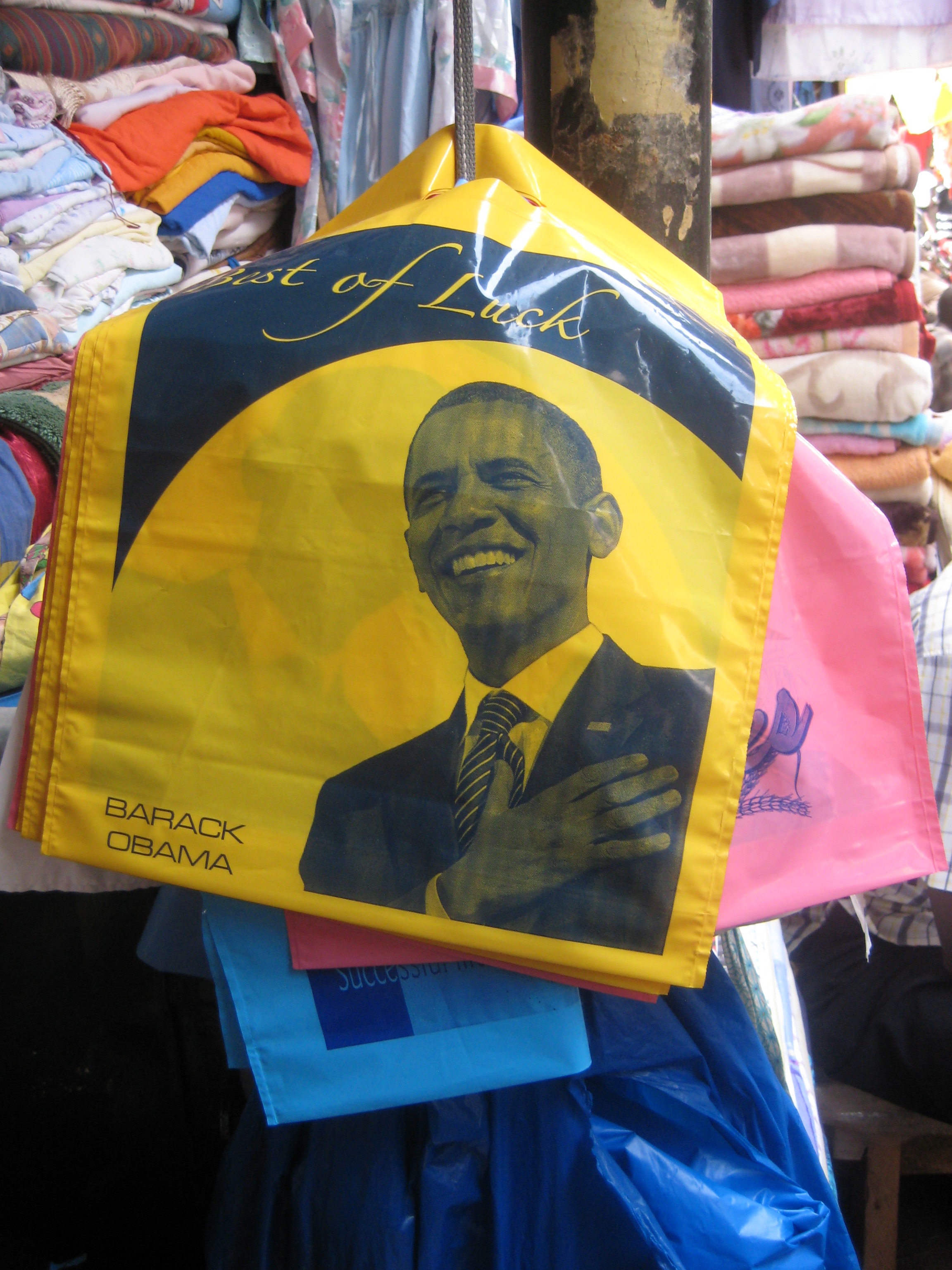
Kampala, Uganda
Sorry for the unannounced hiatus. I’m in Uganda for work. Pushing my way through the narrow aisles of Owino market in Kampala the other day, I turned a corner ot face this: a plastic bag bearing President Obama’s face with “Best of Luck” written accross the top. Profoundly depressing on a number of levels.
More images of Ugandan trash on Facebook.
A quick how-to on making bioplastic in your kitchen via MAKE. Laser cutter not included.
Remember the trash collector wildcat strike that broke out in Stockholm exactly one year ago? Yesterday, the labour court came to a decision on issues in the aftermath. In short, the court ruled in favour of the tra$h company who fired wildcat striking trash collectors who wouldn’t accept a monthly salary, instead of the piece wages traditionally paid in the industry.
The union organizing trash collectors have (in outrage) responded to this by announcing that they henceforth will abide strictly to the Occupational Safety and Health Act, which will be problematic to say the least. Union spokesperson Peder Murell issued the following statement to the Swedish Radio:
We will not haul trash bags heavier than 15 kilograms [33 pounds], we will not handle containers without wheels, we will not collect if snow hasn’t been shoveled away. I expect a lot of stuff will stay where it is.
As context, Stockholm has had its coldest January since 1987 and there is more snow than anyone can remember. To be continued.
 everydaytrash