Bridge day = trash day!

Friday, May 22, 2009 by

My dear folks spend a lot of time at their country house in rural Sweden. This week and weekend, Ascension Day means Thursday off, usually with the effect that everyone claims Friday as bridge day, i.e. day off too, and leave their cities. My folks are no different, how can one deny such a great opportunity to clean out winter trash in the summer house?

Dad reports he thought they would be the only ones being houseproud enough to visit the local town trash deposit this lazy day, but oh was he wrong. There was a cue! Conclusion: Swedes take time off work to drive mile long stretches to recycle. Is this just us? Memorial day is coming up in the US this Monday, does it mean the recycling will overflow in Park Slope? Experienced citizens, pray tell.

EDIT: Dad now reports that Swedish Public Service television news says today is Sweden’s busiest recycling day of the year. All thanks to a legend about the ascent of this guy who preached about “be nice to people”, some 2000 years ago. Who said religion wasn’t useful?

Maintenance

Wednesday, May 20, 2009 by

Yo. After a wildly successful garblogging retreat, we managed to clean up a bit around here. You may have noticed a drastic reduction in the number of trash categories along the sidebar and the fact that links are no longer bold. Please bear with us as we update the archives—most entries are currently uncategorized so if you’re looking for old posts, search is your best bet for the moment. Side note: while we reconciled many of our asthetic differences, we made no attempts to standardize our English. When I spell correctly, it’s in the American. Vic, as a citizen of the EU feels the need to stick the letter u in unlikely places, among other eccentricities. We feel, and hope you’ll agree, that two voices are better than one.

Upcycle my ride

Wednesday, May 20, 2009 by

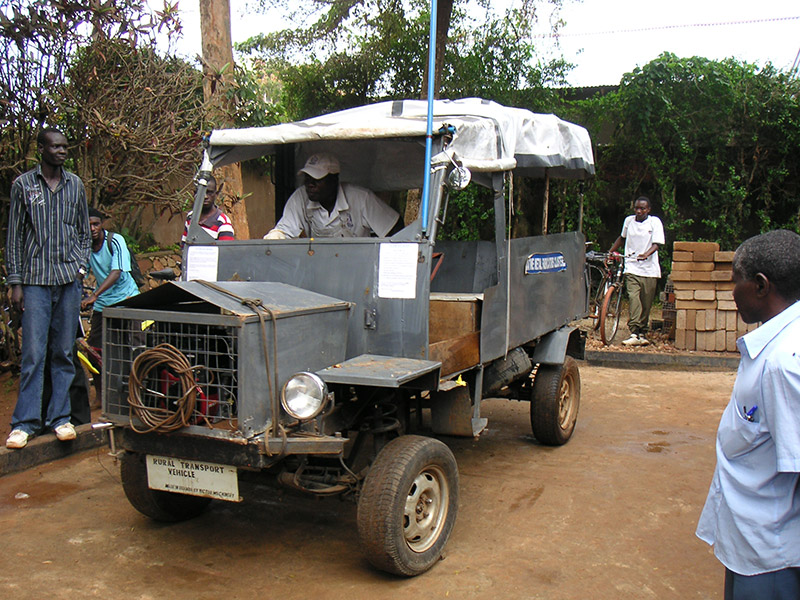
Check it: a group of students from Makerere University in Kampala, Uganda designed this “poor man’s car” from upcycled farm equipment and other salvaged materials, including an engine ripped from an old maize grinding mill.

Photo by  Dr. Yasin Naku Ziraba via Wired.com

Photo by Dr. Yasin Naku Ziraba via Wired.com

Supercool. To all who say Makerere has slipped in quality and no longer deserves the “Harvard of Africa” rep, I have two words for you: pooh and pooh.

Note: I found the Wired.com post about this project via Nubian Cheetah, a blog suggested to me by Google Reader, presumably because of my ever-growing folder of African blogs. Yay technology.

Cabin cleaning goes unpaid

Wednesday, May 20, 2009 by

Flew across a couple of states on US Airways this morning, and learned that the crazy terrible economic turmoil we’re in has effects you wouldn’t know of unless someone told you. When US Airways started suffering from the economy, all cleaning services by employees or contractors ended, and trash is now taken care of by the cabin crew.

Only problem is that the cabin crew only get paid for the hours from the start of taxi until the seat belt-signs are finally turned off (which in itself is mighty weird, as these people are in the aircraft before anyone else, and leave last). The trash management is unpaid, and there are no incentives to clean very detailed, as you might be running to the next flight you work out, or might be going home. Hence, cabins are dirtier nowadays.

For the record, both flights landed ahead of schedule.

Miss Body Plastik

Wednesday, May 20, 2009 by

Last night I saw two amazing short films from Haiti as part of fi:af’s World Nomads program. The first and more trash-relevent of the two was the international debut of a feature directed by Louis Ebby Angel and made in collaboration with his fellow students of Ciné Institute, the island nation’s first and only film school. As the name suggests, plastic is a theme incorporated in the plot. You can watch it in its entirety here.

Vodpod videos no longer available.

During the Q&A that followed, the director mentioned he had friends who use plastic in creative ways to draw attention to Haiti’s land and water pollution. He described elaborate costumes for carnival made of salvaged plastic. Rest assured, I am now on the hunt for images!

The second film was an INCREDIBLE documentary called Mrs. Little Bones (Madame Ti Zo) about a nearly hundred-year-old midwife praciticing in the hills of rural Haiti. It was directed by David Belle, founder of Ciné Institute and contains the most amazing closing credits sequence in the history of film. Track it down.

Guilt personified

Wednesday, May 20, 2009 by

In case you were wondering what $50 worth of flip flops looks like, say hello to my pink rhino. I’ve decided it’s a he and that his name is P.C.

Flip flop rhino

Flip flop rhino

P.S. That rad picture behind P.C. was a present from my wonderful friend Constance who found me the prettiest trash heap in the world. And framed it. As you can tell, she’s an expert gift giver.

Flipping the flop

Tuesday, May 19, 2009 by

While in Kampala a few weeks ago, I stopped in at one of my favorite stores in the world, Banana Boat, and went on a semi-conflicted shopping spree among their fine upcycled crafts made by women’s collectives from all over Africa. I bought up a dozen strands of Ugandan paper beads for my girlfriends, homemade soap wrapped in homemade paper for my colleagues and a collection of small creatures fashioned out of bottle caps including this three piece band, now residing at my friend’s music studio in Brooklyn.

Bottlcap boogie

Bottlecap boogie

Ok, full disclosure. I went more than once and to more than one Banana Boat location during my week in Uganda. I couldn’t help it. While normally I try to buck the inner American, my desire to consume flares at the sight of trash. The the irony of upcylcing is that it makes me want to buy MORE.

The first wave of  my Banana Boat binge was stopped short by the pricetag on a string of plastic foam beads. The moment I saw them, I knew they were made of old flip flops—likely washed up on the shores of Kenya—and, because of this, I grabbed them up. But then I saw they cost roughly $30 U.S. and I looked again and decided, actually, big foam beads on a short choker strand might be a little too UN chic for my blood. So I set down the hideous necklace and made my way deliberately to the woven basket and cardboard diorama section of the store.

It was hard to walk away. Physically hard, because my urge to buy something was so strong it nearly made me twitchy. The little voices in my head debated the novelty of flip flop jewelry versus the reality of its ugliness, the feel good return of purchasing upcyled crafts from women’s collectives versus my uneasiness with the price, the uniqueness of the product versus the fancy UniquEco logo. One of the necklaces had a tag declaring “flipflop (i was)”. I took note of the confirmation that these were indeed flipped flops upcycled by Kenyan fishing communities. And I took note of the all lowercase tagline and pretentious use of parentheses. Ugh, I thought, branding.

I left the store feeling very proud of my resolve.

The next day I dropped $50 on a hot pink rhino doll/statuette from the same company. It’s adorable with a sleek and marbled hide created by a fused pile of flip flops of similar but not identical colors. This, I thought, will liven up my bookshelf. Or hip up my office. It carries a message that is both political and fun. It will make for a cool blog post and spread envy among my friends. I NEED this.

More tales to come of Kenya and consumption.
Unconsumption

Tuesday, May 19, 2009 by

…is now a wiki. Still in fledling stage, but worth bookmarking nonetheless.

Upcylcing on the LES

Tuesday, May 19, 2009 by

Today is the last day to check out entries in the Pratt/Terracycle Upcycling Design Competition hosted by Sustainable NYC. I may try to swing by. Report back if you go.

Trash Rebellion

Monday, May 18, 2009 by

It’s been a trashy day for The New York Times. Here’s another featured item on young yuppies in Pakistan cleaning up the Ghalib Market area in Lahore. They use Facebook to organize Sunday meetings of a club called “Responsible Citizens”. Cool initiative, though I think the story itself stretches it a bit with the political context. See what you think.

Trash on the Tigris

Monday, May 18, 2009 by

Check out this visual diary from the Times. It’s three days old, but I somehow missed it.

No punishment for breaking tra$h laws

Sunday, May 17, 2009 by

The Swedish Public Radio reports that Sweden, after two years, has yet to stipulate punishment levels for breaking the European Union imposed legislation that prohobits tra$h smuggling to developing countries. Hence, there’s no knowing what to do with a container of illegal refrigerators that was confiscated this Friday by border authorities, and no way of knowing what to do with the persons trying to send it off to Uganda. Well done, parliament.

Surge in decorative dumsters sweeps Ontario

Saturday, May 16, 2009 by
Monster dumpsters

Monster dumpsters

This just in, someone’s been dressing dumpsters up like monsters in Canada’s capital. Thanks for the tip, Mod Mischief. Great photos.

Fishing trash bad for fish

Friday, May 15, 2009 by

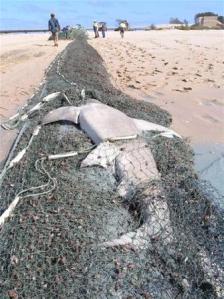
While fishing as such is an agricultural practice with the ultimate goal of catching and killing fish, i.e. not fantastic for fish to begin with, fishing gear dumped at the bottom of lakes and oceans are killing fish even after the actual fishing stops, says a UN report.

Photographer: Jane Dermer, Carpentaria Ghost Nets, ghostnets.com

Photographer: Jane Dermer, Carpentaria Ghost Nets, ghostnets.com

Apparently, discarded fishing gear compromises about 10%, or 640 000 tonnes,  of all sea trash, creating a situation of so-called “ghost fishing”, when innocent maritime  denizens happily enjoying off-season swim into discarded nets and related rubble, ending their lives in highest indignity. In the report, several pressures on fishers are named as contributing to this terrible situation, namely

Enforcement pressure causing those operating illegally to abandon gear; operational
pressure
and weather making it more likely that gear will be left or discarded; economic pressure leading to dumping of unwanted fishing gear at sea rather than disposal onshore; and spatial pressures resulting in the loss or damage of gear through gear conflicts. Indirect causes include the unavailability of onshore waste disposal facilities, as well as their accessibility and cost of use.

As seen, fishing trash management isn’t working out that well. The report suggests preventive efforts and says that mitigation is crucial, etc. We could also just stop fishing, but while poverty exists, one might need to recognize that’s not a very realistic scenario.

Lastly, extracurricular nerd info: The report teaches us a new acronym; ALDFG (Abandoned, lost or otherwise discarded fishing gear)!

Weekly Compactor

Thursday, May 14, 2009 by

This week in trash news: