A Londan binman follows his Indonesian counterpart on his rounds collecting waste and clearing gutters in Jakarta in this BBC News video.
Thanks for the link, Brendan.
A Londan binman follows his Indonesian counterpart on his rounds collecting waste and clearing gutters in Jakarta in this BBC News video.
Thanks for the link, Brendan.
Tuesdays-Saturdays, 11am-2pm, artist Gwyneth Leech sits inside the glass walls of the Flatiron Prow Art Space drawing on used coffee cups. The other night, my friend Phillip and I went to see the film The Artist after which he walked me to the Subway stop just in front of the Flatiron Building. It seemed perfectly appropriate to stumble onto such a whimsical project after seeing such a whimsical film.
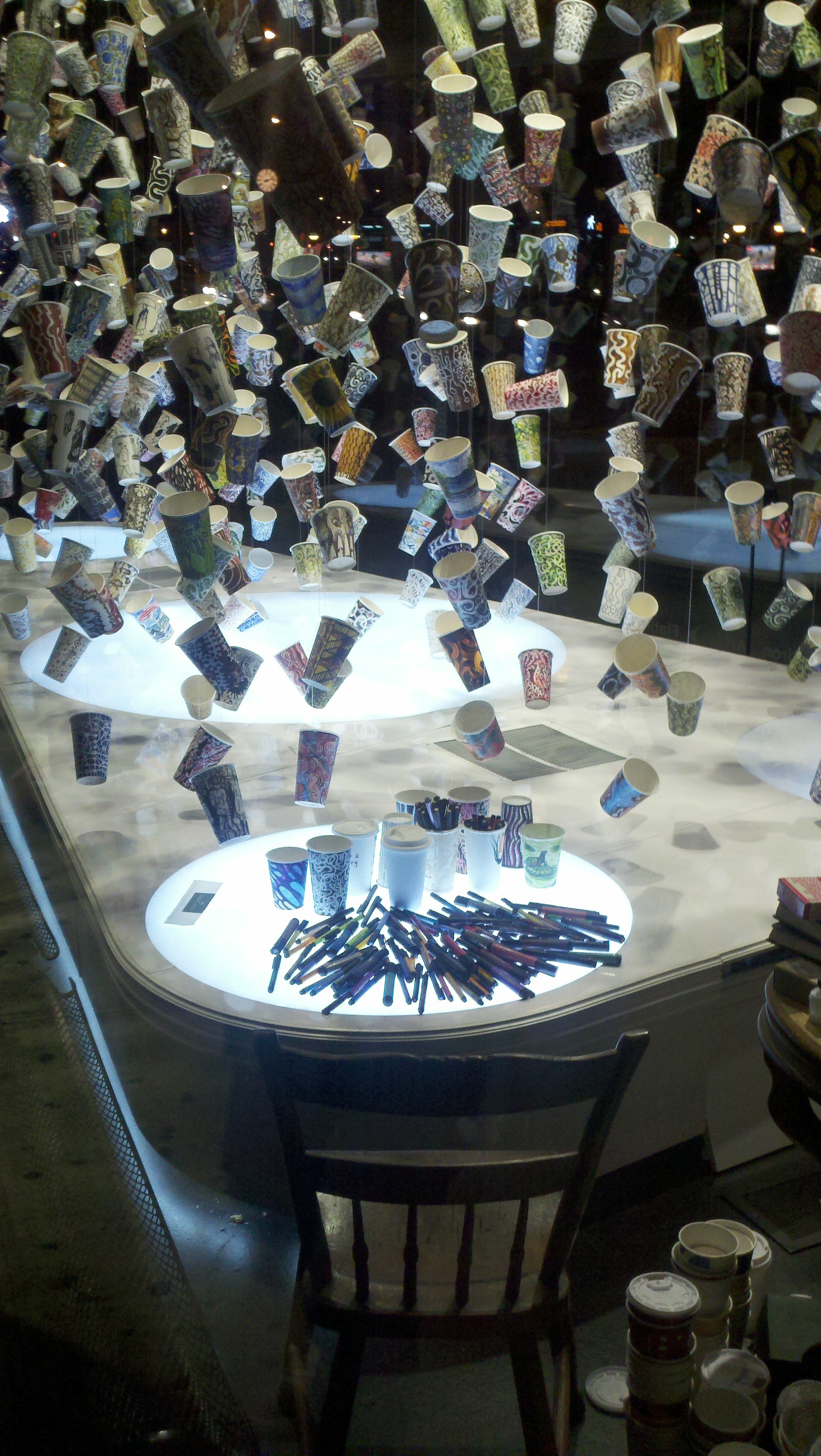
Photo taken by Phillip on his phone. Thanks, Phillip!
The best description of this project (as well as lots of great photos and descriptions of the artist’s other work) can be found on her blog, Gwyneth’s Full Brew in the form of this conversation with a passerby as she was outside wiping finger, nose and palmprints off the windows:
A man came up to me carrying his takeout coffee (small brown cup, flat lid, wrapped in a napkin).
He asked rather belligerently, “What exactly is the point of this installation?”I drew breath. He actually looked kind of angry.“Well,” I said, “it is about the inventive potential of the human spirit. The artist has saved all her used paper coffee cups for years and she has drawn and painted on each one by hand. There must be almost 800 cups hanging in there. And each one is a different.”“Oh!” He said, and stalked off, apparently satisfied.
Over the course of 10 months, Brooklyn-based artist Willis Elkins collected nearly 2000 cigarette lighters from the shorelines of New York City, documented, photographed and mapped them.
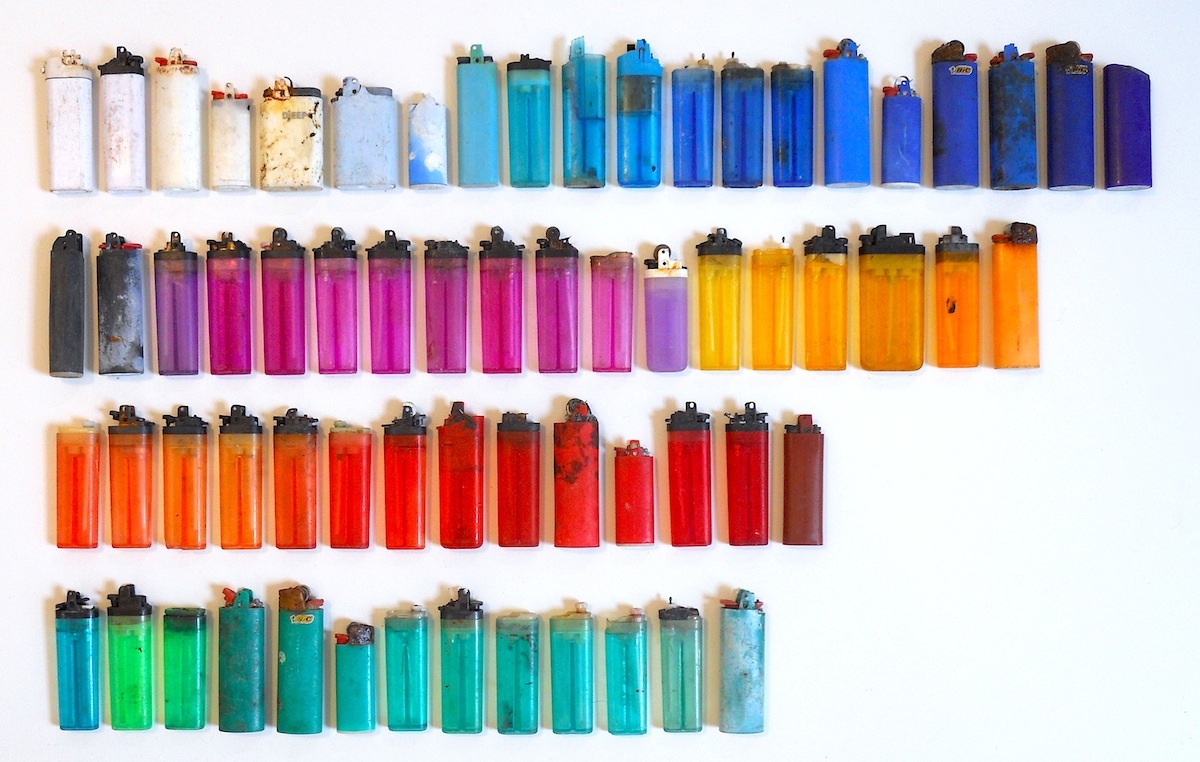
Lighters
Elkins, who describes himself as being “very interested in all facets of consumer culture, product disposability and the waste infrastructure,” has a number of other interesting projects on his site LESS logs. Less stands for Locate Explore Synthetic Sites.
The lighter project in particular reminds me of Norwegian artist Jon Gunderson‘s contribution to the 2008 “Through the Looking Glass: From Found Object to Trash Art” show curated by Samir M’kadmi (and opened with a keynote by yours truly, still one of the coolest opportunities every brought on by everydaytrash). Gunderson presented a series of found briefcases each filled neatly with objects found on walks through Oslo. He had a case filled with pacifiers, one with cigarette lighters and another filled entirely with black shoe soles.
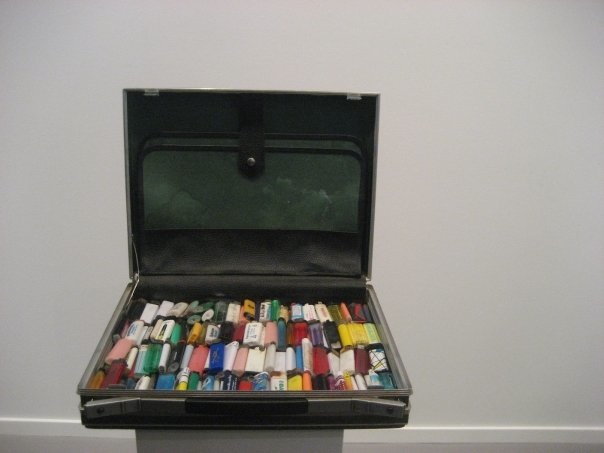
Oslo art show
Somehow organizing these everyday objects in cases and putting those cases on a row of podiums elevated their status from trash to art with social commentary. Elkins’ projects do the same. Check them out!
Semi-related post: Introspective trash.
Local trashies, mark your calendars! Monday, February 20th at 7:30pm our favorite anthropologist in residence Dr. Robin Nagle, an expert in the city’s oldest dumps and a third yet-to-be-named person will speak at this Gelf Magazine event:
If we are what we throw away, then what we throw away is worth a close look. Join Gelf on Monday, February 20, at 7:30 pm at The Gallery at LPR for Geeky Garbage, a look at that most overlooked aspect of the overlooked—civilization’s waste. We’ll have on hand the New York City sanitation department’s resident anthropologist and an expert on some of the city’s earliest landfills to talk about what really happens when we throw something in the trash, and how it impacts everyone.
Everydaytrash will be there.
Urban Omnibus, a project of the Architectural League of New York, has a fantastic series of blog posts and videos out called City of Systems. The final chapter, Waste Removal, came out two months ago, though I hadn’t seen it until today. Thanks, Annie, for posting it to the the Facebook page. The video features an interview with trashie icon Elizabeth Royte, who gives a brief history of solid waste management in New York and shares what motivated her to write Garbage Land, a must-read for anyone interested in trash. Back in 2007, Royte was the first author in a week-long series of author interviews we featured here called Literary Trash. Check out that interview here. Might be time to revive the theme.
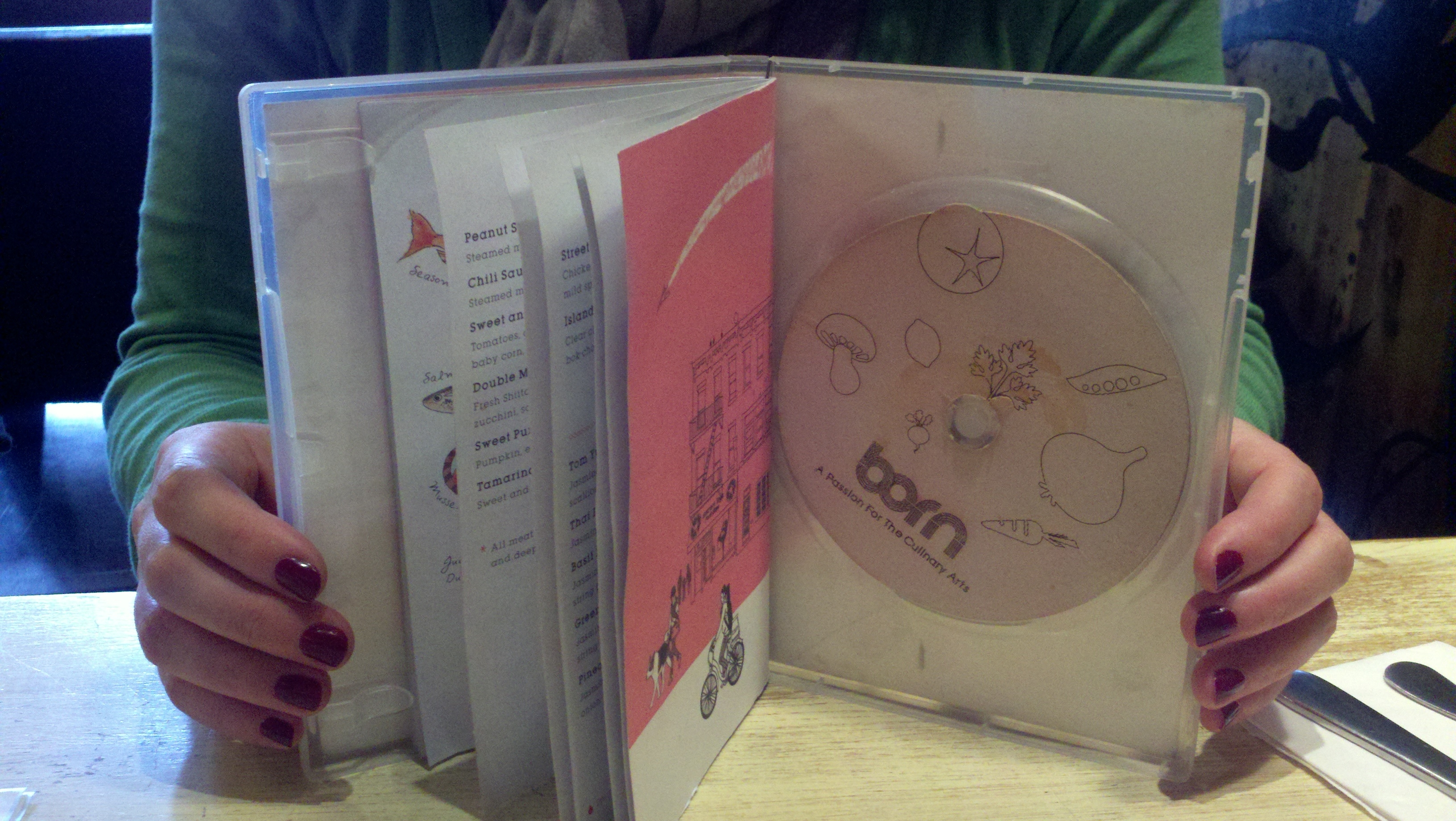
Photo credit: My friend Anna
Like many New Yorkers, I’ve been fighting off a nasty cold for what seems like forever. The other day I ventured out for soup at Born Thai where the food is actually spicy (unlike most places in my neighborhood) and where the menus are adorably upcycled CD ROM cases. Tom yummy in my tummy.
What up, trashies?! Happy (belated) new year! Apologies for light posting in late 2011. Fear not, we’re back with some great stories about garbage and recycling in the works. First up: The Waste of the World is a five-year study funded by the UK’s Economic and Social Research Council. Unlike most research projects, which culminate in sleepy peer-reviewed journal submissions, this crew is putting on a multimedia art show called Everything Must Go.
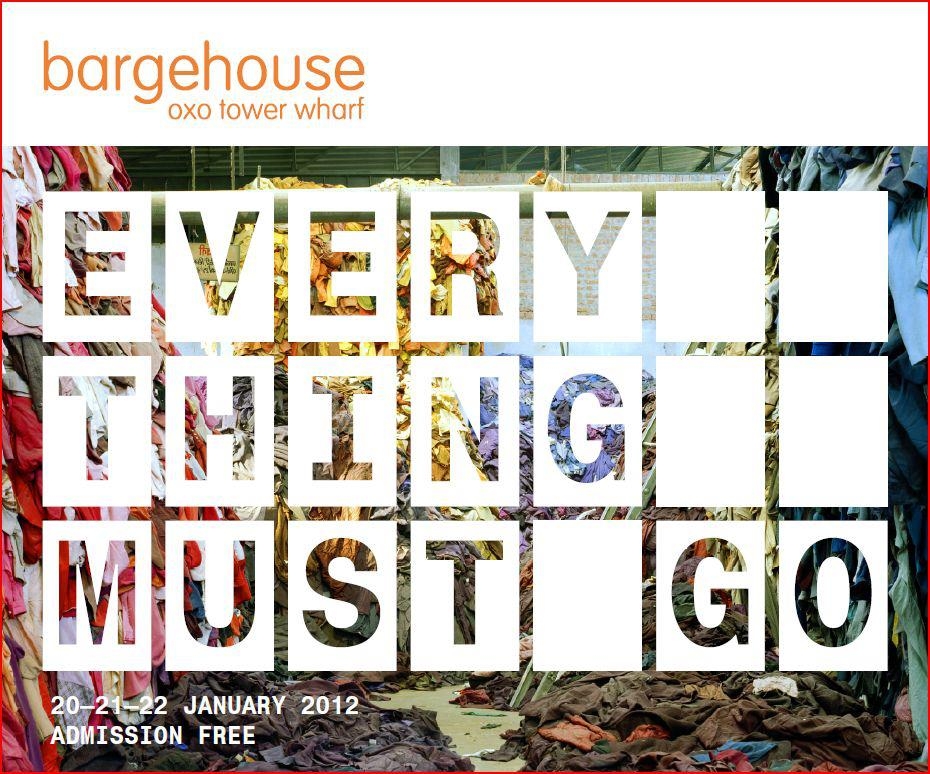
Here’s the flyer description:
Everything Must Go follows the journeys of worn clothing as it is sold for reuse and recycling across the world. This exhibition brings invisible global waste economies into public view, explores the people involved and the impact these businesses have upon their lives, and questions our ability to control, contain and curtail waste.
The exhibition will feature a film, photos, workshops and a textile installation. Londoners can check out the event at the Bargehouse Friday 20–Sunday 22 January, 11–6pm. Free admission.
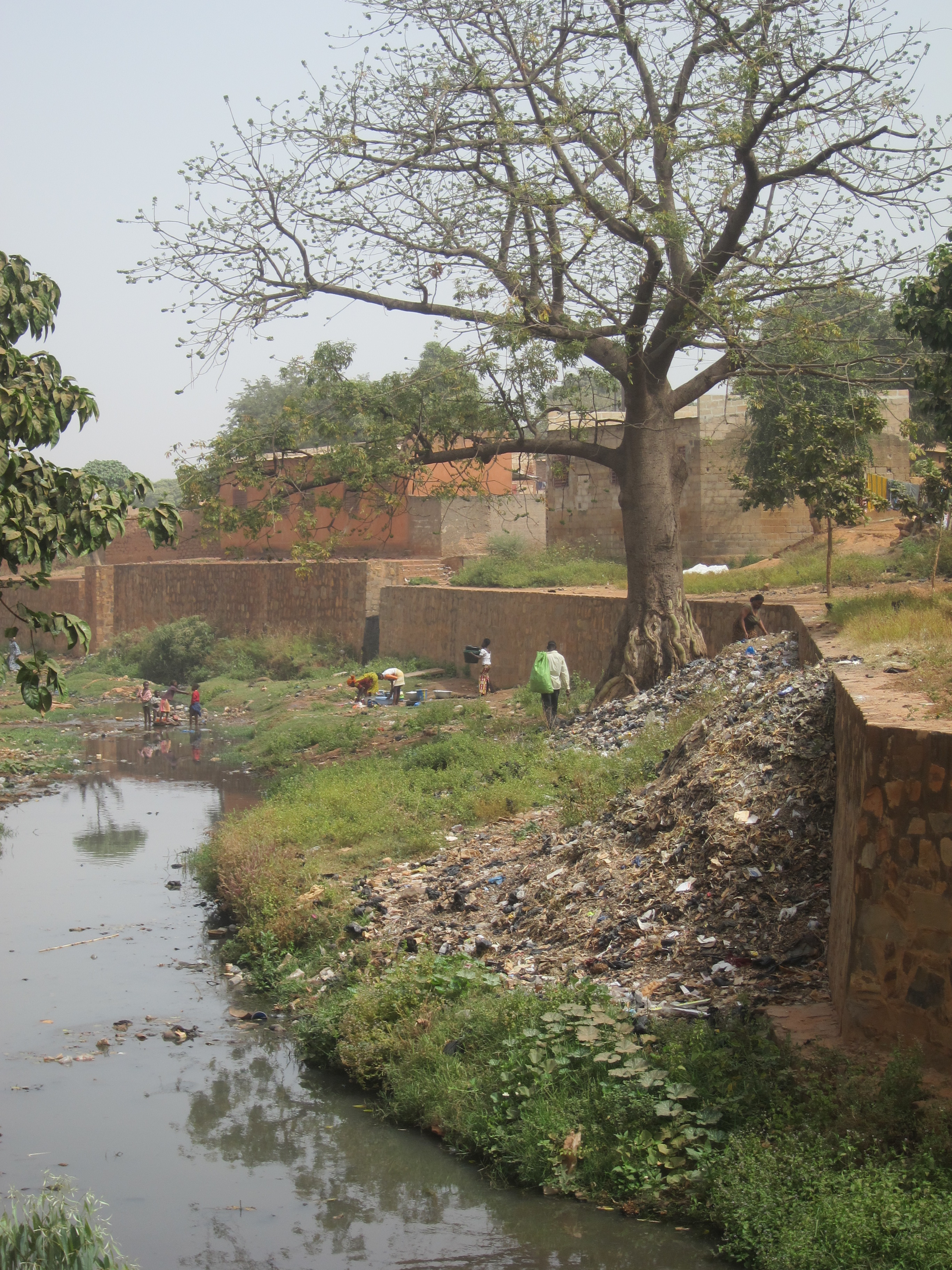
Le vieux quartier

Nescafe cans and flip flops
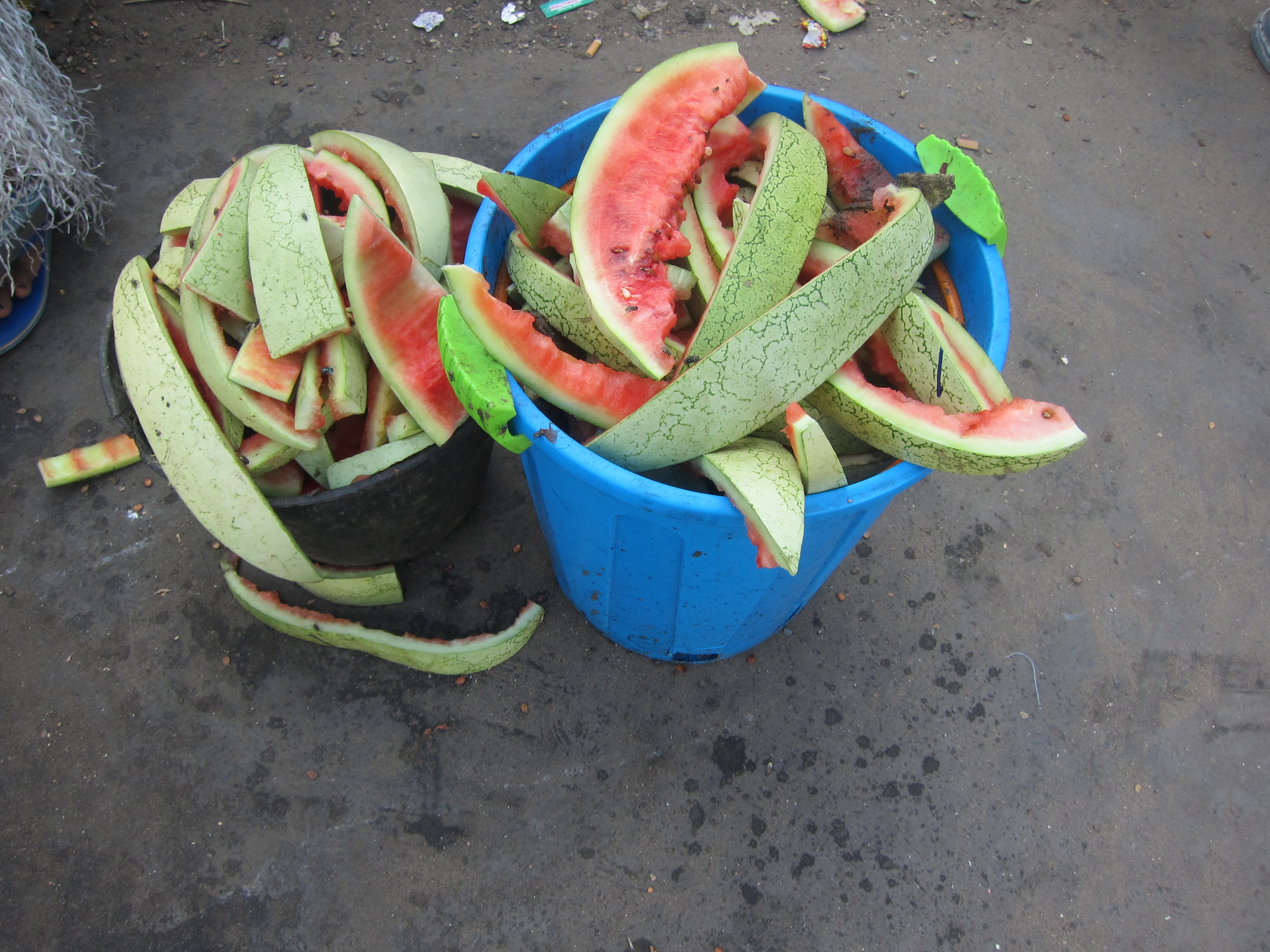
Market, Centre Ville
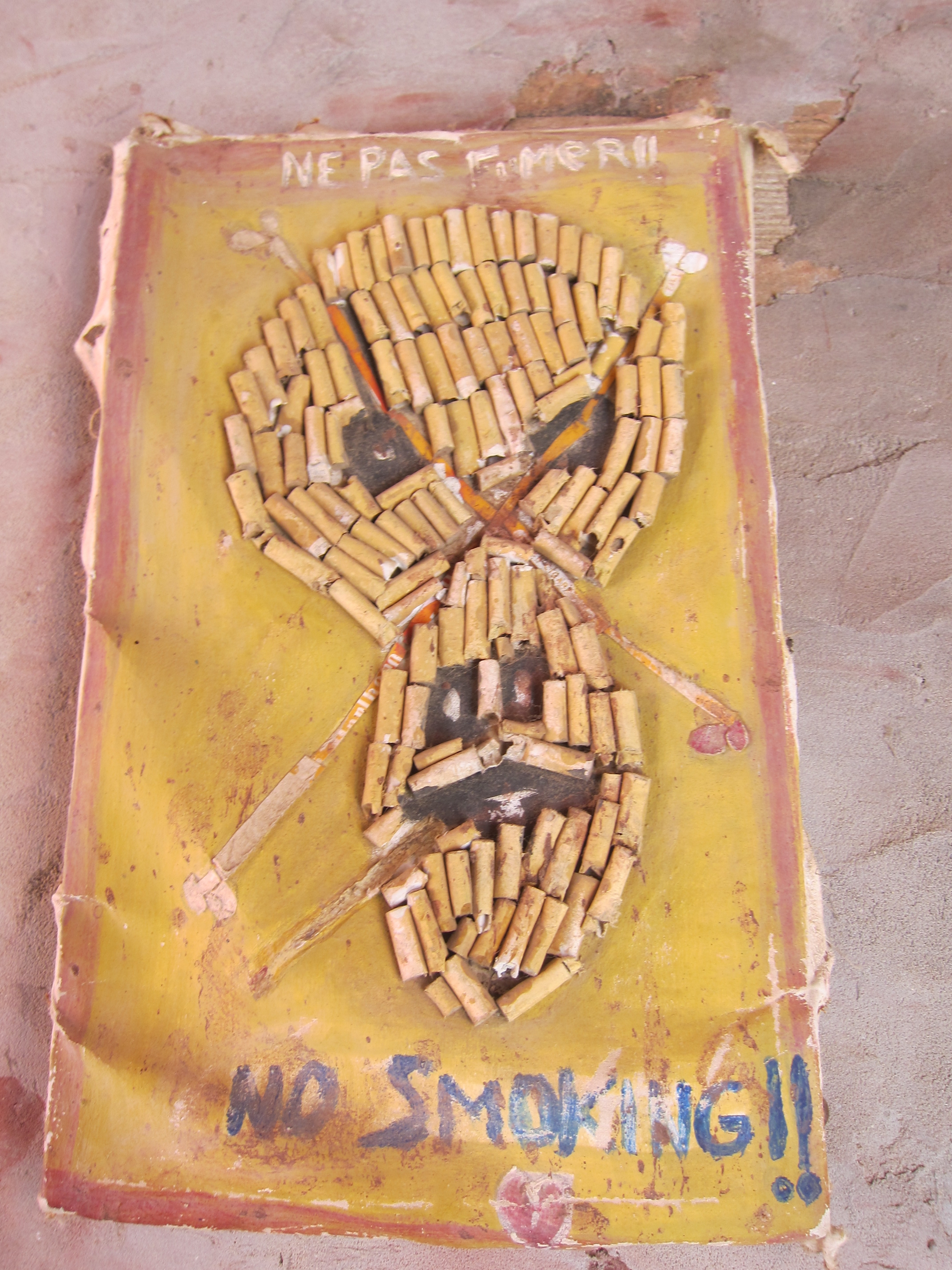
Slave House at Gorée Island
I got all excited when I downloaded the latest Moth podcast this morning and read the description: “A young man struggles with his role in the family sanitation business.” Luckily, this week’s installment lived fully up to those inflated expectations. It’s a sweet New York story and well worth a listen. Thank you, Terence Mickey, for brightening my morning commute. The outro references a novel in the works called The Gleaners. Trashtastic title, can’t wait!
Beirut-based architect Sandra Rishani keeps a blog of her visions of what the city could be. Beirut the Fantastic posts outline proposals for upgrading and greening forgotten and unused spaces or places that have not reached their full potential. Her latest post focuses on the rubble of the 2006 war between Lebanon and Israel and how that rubble could be used to create a beautiful seaside memorial.
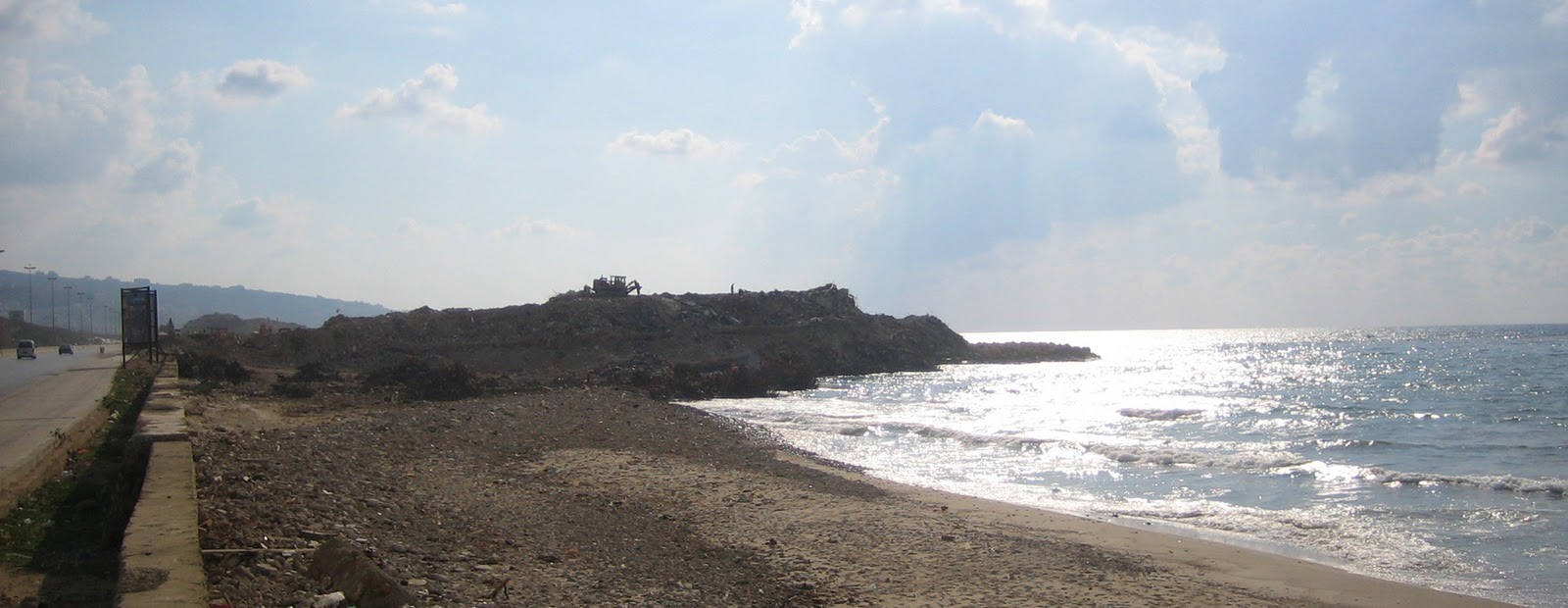
Before

After
What I love about the blog is that Rishani writes about what are ostensibly pipe dream projects, but breaks them down step by practical step. In this case, for example, she goes into the history of the rubble, who dumped it where, current legal ownership of the materials and examples from around the world of war rubble upcycled into public parks and memorials.
Thanks for the tip, Lucy!
A gorgeous installation of faceted glass windows created by artist Duke Riley may now be seen at the Beach 98th Street A/S stop in the Rockaways.
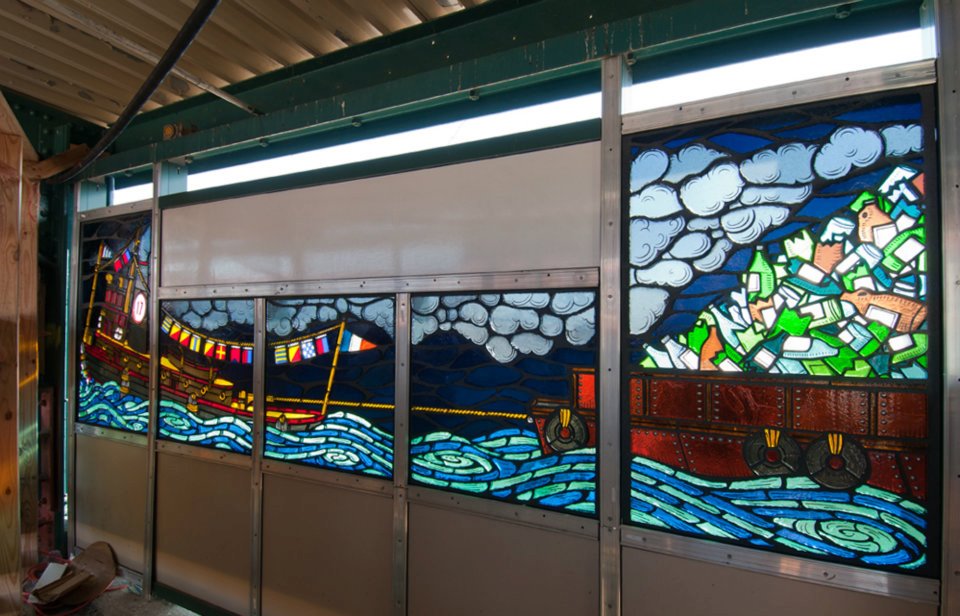
Tugboat hauling a recycling barge.
Check out the full photoset on Facebook and the artist’s site for details on the symbolism, process and realization of this project.
The MTA drawings consist of several symbols local to the Rockaways. The left side of one diptych shows two images of a Piping Plover – an endangered bird that has chosen a section of beach at the Rockaways, just a few blocks south of the 90th Street station as one of its few remaining nesting grounds. The nautical flags spell out the popular phrase “Be Good or Be Gone” which can be seen behind the doors of several pubs and restaurants in the neighborhood. I am using the phrase as a reminder for visitors to take care and appreciate the fragile environment of the area.
This is a wonderful reminder of all the magical places the NYC Subway system can take you. Thanks for the tip, Gillian! Field trip anyone?
A trashtastic example of a decorative dumpster sent in by long lost contributing editor. Tack, Victor!
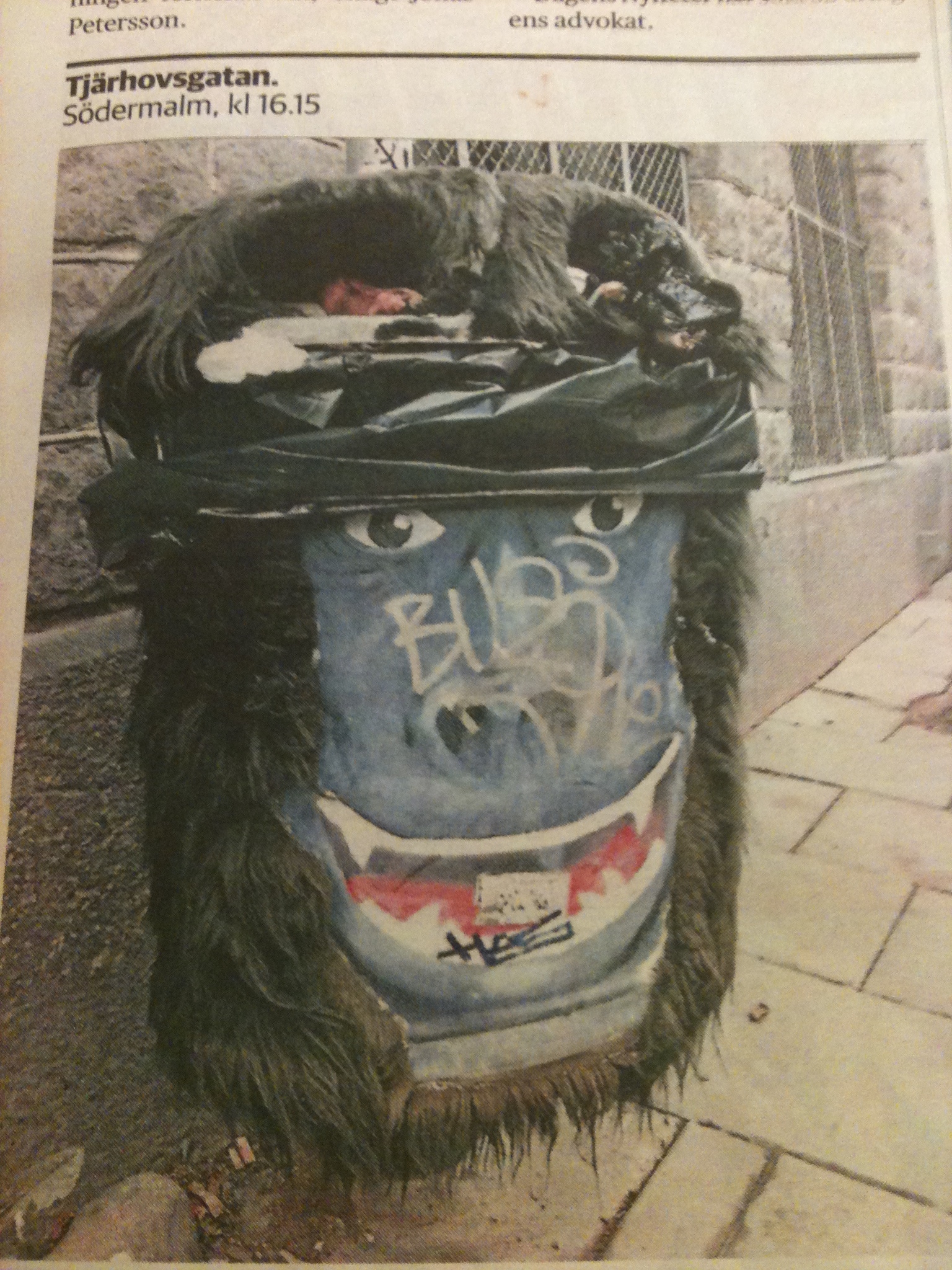
Decorative Dumpster in Sweden
 everydaytrash