Katherine Sharpe‘s “A Week Without Plastic” series comes to an end. Check out her reflections on the experience over at ReadyMade.
Posts Tagged ‘plastic’
Plastic free living
Sunday, August 9, 2009On Henry Hudson and plastic bags
Friday, August 7, 2009For the 400th anniversary of Henry Hudson‘s accidental discovery of the greatest city on Earth, Kathy Ryan, director of photography for The New York Times Magazine has curated a show up now at the Museum of New York City of contemporary Dutch artists asked to update their classical tradition. Behold: The. Very. Best. One.
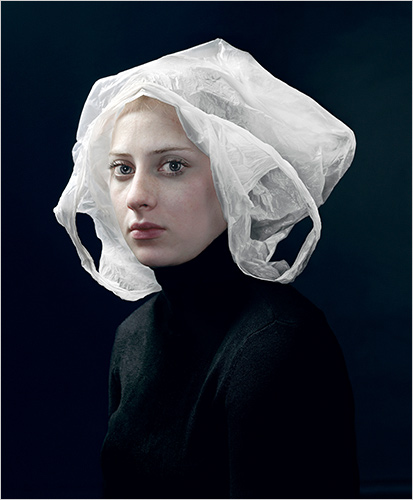
Foam Fotografiemuseum Amsterdam and Robert Mann Gallery via nytimes.com
It’s called “Bag” and is one of several Hendrik Kerstens‘ portraits of his daughter on exhibit.
I humbly suggest that this become a traveling show, because I can think of no more logical future for this collection of works than a sojourn at the Rijksmuseum Amsterdam Schipol.
Thanks for the tip, Alexandra!
A week without plastic
Tuesday, August 4, 2009Katherine Sharpe goes cold turkey over at ReadyMade. Check out Part I of the series. We’re looking forward to the daily updates, especially if they all include neat links like today’s nod to photographer Chris Jordan’s work.
Thanks for the tip, Sarah! I love that the University of Trash workshop last weekend is already yielding new tipsters.
Tappening
Monday, August 3, 2009Just stumbled across this badass anti-bottled water campaign featured on Cool Hunting. If the water companies can twist the truth, environmentalist might just twist it back. Only with more style. Click through for the full CH post. This is my favorite.
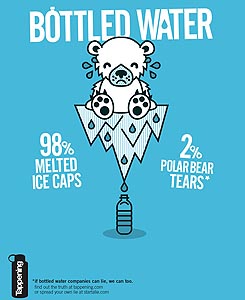
Tappening campaign
More plastic in waters
Monday, July 27, 2009Swedish Public Radio reports today that with the use of a new filter and new methods (such as taking surface water – plastic floats), a research team has found large amounts of plastic fibres in watercourses in Sweden. With previous findings being between 1 and 20 fibres per cubic meter (approx. 35 cubic feet), the preliminary results of 10,000 fibres per cubic meter are alarming, to say the least.
The research team is currently working on a theory which explains the existence of such high quantities with rubber tyres and synthetic clothes, giving off the fibers. Regarding natural clothes (cotton etc.), they too come steeped in plastic fibres these days, says Fredrik Norén, part of the research team. (Which incidentally is why I wash new clothes before I wear them, letting the big machines at the local laundromat worry about the problem…)
The clothes theory gives a troubling insight into exactly how much plastic we use these days, and for what. It also pushes us to ask “why though?” Any takers on that, feel free to post comments. When the research project is finished, I hope to follow this up.
[As a side note for the linguists out there, can you tell where in this post you find UK English? I had fun writing this up.]
La victoire sur les sachets
Monday, July 20, 2009To commemorate the 60th anniversary of the Universal Declaration of Human Rights last year, the office of the High Commissioner of Human Rights at the UN collaborated on an Art for the World project to make a series of videos inspired by that document. This environmentally-themed clip highlights the reuse of plastic bags in Africa to create traditional Djembe drums: 2,000 drums = 20 tons of recycled plastic and offsets 20 tons of wood, which would otherwise have been used to make the instruments.
13,699
Saturday, July 11, 2009Thirteen thousand, six hundred and ninety-nine people die each day from preventable diseases related to water. Artist Christine Destrempes decided to represent this daily loss of human life by stringing together 13,699 clear plastic bottle caps and arranging them in a powerful installation.
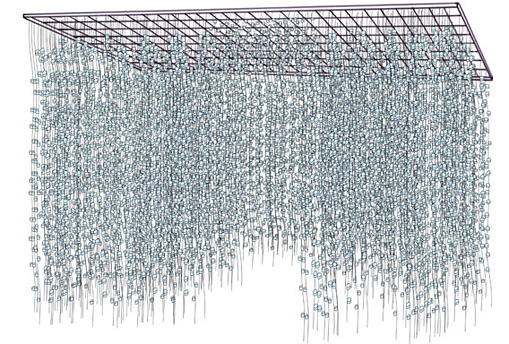
13,699
According to the artist:
The choice of using plastic bottle caps calls attention to other related environmental issues surrounding bottled water, such as privatization, depletion of aquifers, the environmental impact of plastic waste, the use of fossil fuels in making plastic, the carbon footprint of shipping bottled water, and the leaching of plastic into our water sources. Purchasing bottled water turns a basic human right into a commodity, affecting access for people in developing countries, as well as here in the United States.
Photos of the actual installation are available here. Thanks to Elizabeth Royte—author of the must-read Bottlemania: How Water Went on Sale and Why We Bought It—for the informaiton on this project.
Weekly Compactor
Friday, June 19, 2009This week in trash news:
- A trash bag kills whales off the coast of South Carolina;
- Also in South Carolina, the unemployed find temp work cleaning up nuclear waste;
- We are reminded that garbage soup swirls in the Atlantic ocean, too;
- Vermonters recycle a restaurant;
- Frenchies produce an average of 7 tons of trash per person per year; and
- The UK explores the power of poo.
Weekly Compactor: Summer Fun Edition
Thursday, June 11, 2009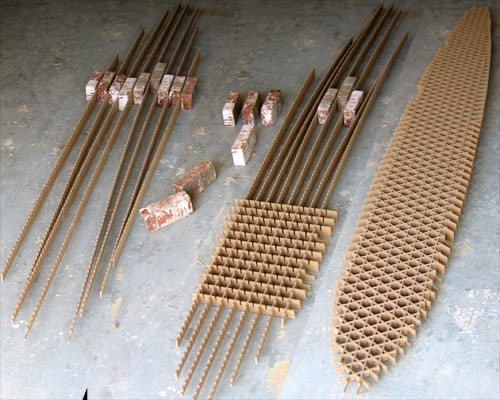
Cardboard surfboard frame via MAKE
This week around the garblogosphere:
- MAKE shows us how to upcycle cardboard into surfboards;
- Wired makes juicers from old water bottles (via unconsumption); and
- Last Night’s Garbage captures a summer scene after curtain call;
Trash = Class
Friday, June 5, 2009The headline to the latest Guardian UK photo series In Pictures says it all: “World’s poor overwhelmed by rubbish.”
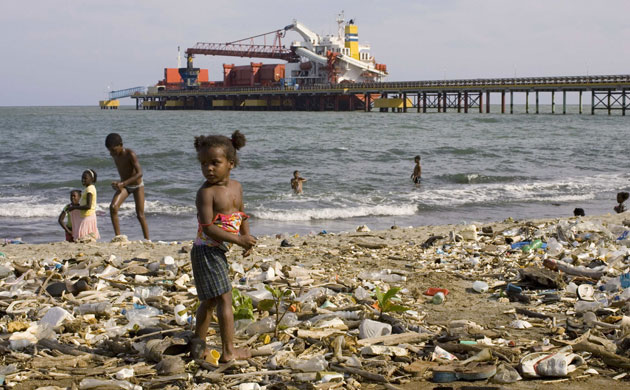
Photograph: Eduardo Munoz/Reuters
UPDATE: See also this horrifying slideshow in e-waste in West Africa via Waking Vixen‘s Facebook page.
Ride the Subway
Wednesday, May 27, 2009Remember Joshua Allen Harris‘ adorable air bear, air giraffe and eclectic air zoo? If the plastic bag polar bears in this Ad Council bit aren’t Harris’ work, they are based directly on it. It looks like air animals have gained an even more overt political voice—promoting public transport—than the obvious and embedded message (don’t litter).
I discovered this clip over on GreenMuze while browsing for more photos of the fabulous giant orange recycled bunnies I’d seen on Olympia Dumpster Divers this morning. Check them out.
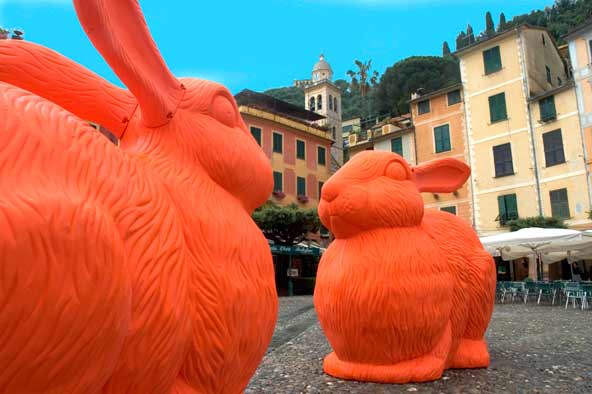
The Big Rabbits in Portofino, Italy via GreenMuse
Plastic Vortex
Tuesday, May 26, 2009A group of scientists wants to get to the bottom of the Great Pacific Garbage Patch. The AFP reports that the great swirling mass of plastic and other trash between Hawaii and mainland US will be the destination of a 50-day expedition from San Francisco to the Eastern Garbage Patch and back.
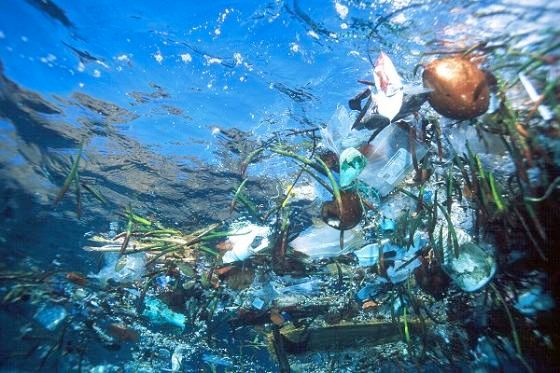
Underwater trash photo via RedOrbit
The scientists will take special nets with them designed to scoop up samples of even the tiniest plastic debris and will treat their voyage to the vortex of plastic beneath the sea like a journey into space.
According to RedOrbit:
The United Nations Environment Program has estimated that some 13,000 pieces of garbage exist in every square kilometer of the ocean, but the issue becomes magnified in these ocean vortexes.
Leaders of the trip said the particles have composed a toxic gumbo that threatens the wellbeing of fish in the region.
“That means the little piece of plastic the fish eats is actually a little toxic bomb,” said Doug Woodring, an entrepreneur and conservationist who lives in Hong Kong and will lead the expedition.
Miss Body Plastik
Wednesday, May 20, 2009Last night I saw two amazing short films from Haiti as part of fi:af’s World Nomads program. The first and more trash-relevent of the two was the international debut of a feature directed by Louis Ebby Angel and made in collaboration with his fellow students of Ciné Institute, the island nation’s first and only film school. As the name suggests, plastic is a theme incorporated in the plot. You can watch it in its entirety here.
Vodpod videos no longer available.
During the Q&A that followed, the director mentioned he had friends who use plastic in creative ways to draw attention to Haiti’s land and water pollution. He described elaborate costumes for carnival made of salvaged plastic. Rest assured, I am now on the hunt for images!
The second film was an INCREDIBLE documentary called Mrs. Little Bones (Madame Ti Zo) about a nearly hundred-year-old midwife praciticing in the hills of rural Haiti. It was directed by David Belle, founder of Ciné Institute and contains the most amazing closing credits sequence in the history of film. Track it down.
Flipping the flop
Tuesday, May 19, 2009While in Kampala a few weeks ago, I stopped in at one of my favorite stores in the world, Banana Boat, and went on a semi-conflicted shopping spree among their fine upcycled crafts made by women’s collectives from all over Africa. I bought up a dozen strands of Ugandan paper beads for my girlfriends, homemade soap wrapped in homemade paper for my colleagues and a collection of small creatures fashioned out of bottle caps including this three piece band, now residing at my friend’s music studio in Brooklyn.

Bottlecap boogie
Ok, full disclosure. I went more than once and to more than one Banana Boat location during my week in Uganda. I couldn’t help it. While normally I try to buck the inner American, my desire to consume flares at the sight of trash. The the irony of upcylcing is that it makes me want to buy MORE.
The first wave of my Banana Boat binge was stopped short by the pricetag on a string of plastic foam beads. The moment I saw them, I knew they were made of old flip flops—likely washed up on the shores of Kenya—and, because of this, I grabbed them up. But then I saw they cost roughly $30 U.S. and I looked again and decided, actually, big foam beads on a short choker strand might be a little too UN chic for my blood. So I set down the hideous necklace and made my way deliberately to the woven basket and cardboard diorama section of the store.
It was hard to walk away. Physically hard, because my urge to buy something was so strong it nearly made me twitchy. The little voices in my head debated the novelty of flip flop jewelry versus the reality of its ugliness, the feel good return of purchasing upcyled crafts from women’s collectives versus my uneasiness with the price, the uniqueness of the product versus the fancy UniquEco logo. One of the necklaces had a tag declaring “flipflop (i was)”. I took note of the confirmation that these were indeed flipped flops upcycled by Kenyan fishing communities. And I took note of the all lowercase tagline and pretentious use of parentheses. Ugh, I thought, branding.
I left the store feeling very proud of my resolve.
The next day I dropped $50 on a hot pink rhino doll/statuette from the same company. It’s adorable with a sleek and marbled hide created by a fused pile of flip flops of similar but not identical colors. This, I thought, will liven up my bookshelf. Or hip up my office. It carries a message that is both political and fun. It will make for a cool blog post and spread envy among my friends. I NEED this.
More tales to come of Kenya and consumption.
Reblogging: We are what we eat
Monday, December 1, 2008Anna over at Bring Your Own is one of the first green bloggers I started to follow when I launched everydaytrash over two years ago now. BYO focuses on our disposible culture and its consequences. It was through trading links with blogs like BYO that I came to the self-realization that my own blog had an environmental—and not just political and artistic—theme. Anyway, Anna took a short break from updating BYO last summer in order to sail accross the Pacific Ocean on JUNK, a ship made of plastic bottles. The stories she and her colleagues returned with are both fascinaitng and devastating. Check out this post on the growing problem of plastic winding up in the bellies of fish. Here’s a photo ripped from that post, click through for the full thing complete with a video from the ship.
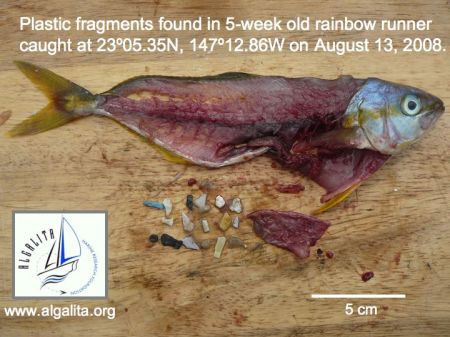
While the photo is kind of gross, I find the rainbow of plastic bits morbidly pretty. Someone should make awareness-raising jewelry out of this stuff, like post-apocalyptic pearls. Or maybe not. Wouldn’t want to start a for-profit plastic fish frenzy. Just from eyeballing the fragments in this sample, it looks like this fish ate pieces of over a dozen different plastic things that ended up floating in the ocean. It’s strange to imagine where those bits started out: action figures, food containers, toothpaste caps…
 everydaytrash