Weekly Compactor

Wednesday, September 27, 2006 by

swine.jpg    This week in trash news:

  • Moved by Bill Clinton, Wal-Mart promises to cut down on packaging over the next five years;
  • Also linked to the Clinton Global Initiative, a green knight pledges $3 billion to make fuel from corn;
  • An equity firm in Chicago buys a piece of Waste Management;
  • Jamaica’s fraud investigation of its solid waste authority gets so tense, some officials are offered body guards for thier own protection;
  • The Big Apple gets its first green building (and Rosebud was the sled);
  • In an ironique twist of fate, the toxic sludge that sent thousands of Ivorians to the hospital will be shipped to France for treatment; meanwhile the men responsible for the illegal dumps plot their escape; and
  • Indiana creates a “swine zone” hoping to harness the power of the hog.

bullshit and libertarianism

Wednesday, September 27, 2006 by

pennteller.jpg  The Justice Talking trash special got me thinking about the recycling episode of Penn and Teller’s Showtime series Bullsh*t.  In it, the comic magicians make an argument similar to the one the Adrian Moore of the Reason Foundation made on the radio this week.  Essentially, they think recycling is too complicated, costly and inefficient and the only way to make it worthwhile would be to follow the money.  Either offer cash incentives for recycling by buying back reusable trash or charge people for the amount of trash they generate (thereby offering a cash disincentive to create waste in the first place). 

While I’m all for big government, mandated recycling and corporate responsibility, the bottom line is the bottom line: money talks.  The most effective arguments for recycling aren’t that we’re running out of space for trash or that gasses and other polution will harm the environment.  These are longer-term issues most are happy to pass on to our grandchildren.  Proving that reusing products saves money, on the other hand, or that recycling can generate income or threatening to charge big wasters their fair share of trash hauling costs are arguments more likely to resonate with the mighty.  And the frugal.  One cost-benefit analysis is worth a thousand soapbox speeches. 

just trash

Tuesday, September 26, 2006 by

radio.jpg The folks at Justice Talking, the NPR news magazine that examines global issues through a legal lens, took a long, hard look at trash this week. Of particular note are a liberal-Libertarian debate on whether to mandate or pay people to recycle and commentary from a trash lawyer. Check out the program’s website for an interview with trashie author Elizabeth Royte on exporting and reducing trash, lessons from Colorado on defining and building a “zero waste” community and a fantastic sidebar of recommended reading.

the temas blog

Monday, September 25, 2006 by

casa.jpg  In case you haven’t noticed, the real value in everyday trash isn’t the content of the posts per se, but the wonderfully dense sidebar of wide-reaching resources in garbology.

Today’s recommended click-through is The Temas Blog where environmental issues affecting Latin America are broken off into bite-sized chunks and translated for our convenience by fellow garblogger, Keith R.

Check out his recent post on casa PET in Brazil where two-liter soda bottles are recycled as building materials for homes.   

composting toilets

Monday, September 25, 2006 by

toilet.jpg  After running in Prospect Park yesterday morning, a friend and I noticed a series of signs for an exhibit on refugees and displaced persons organized by the relief organization Doctors Without Borders.  We followed the signs arrived just in time for the first guided tour of the morning through a mock refugee camp set up in the park.  A volunteer doctor who had just returned from his second year in the Sudan walked us through stations set up demonstrate the different areas of a refugee camp.  They had built examples of the plastic-tarp covered tents or shanty-town shacks one might see in a rural or urban camp.  They had packages of emergency food bars one might drop from a plane to starving people caught up in war zones that the doctor passed around and allowed us to taste.  They had a water station to show how water is pumped, treated and distributed.  They had a latrine and picture books to explain what a latrine was and how to use one for those who had never seen one before.  They had clinic tents and  displays on vaccination, malnutrition and treatment for cholera. 

Overall it was a fascinating exhibit and more than a little depressing since posters all around announced that there are 33 million people in the world currently displaced by conflict and these displays of food, shelter and medical care represented only what those people in countries with aid workers are receiving (to say nothing of those living in areas too violent for help to reach them).

At the water station, the doctor asked the women in particular to lift a five gallon jug plastic water to imagine waiting lugging the beast around a camp.  Apparently the ideal camp provides five gallons per person per day to cover washing, cooking and drinking needs and the women of the family wait in line for this water and bring it back to where they sleep.  I could barely lift one jug.

According to the doctor-tour guide, Americans use an average of 100 gallons of water per day.  A Brooklyn mother on the tour was outraged by this fact and as we walked from the water pump to the latrine she asked how much of that water was from flushing toilets.  She and I got to talking about composting toilets, which are less disgusting than they sound.  I had heard of these devices before, toilets that don’t use much or any water, but had never actually considered how these might work.  I’m still not quite sure how a regular household or business could effectively use one of these things.  They are large and hold waste in a chamber where it breaks down over time until it is no longer smelly and can be used as fertilizer.  Removing the fertilizer and tossing peat moss into the toilet after using it instead of flushing don’t seem very practical for indoor use, though.  It seems that in places where outhouses and portable toilets exist, these are high-class latrines that would be ideal.  I’m curious what others think.

cartoneros

Sunday, September 24, 2006 by

cartoneros.jpg The cartoneros of Argentina are poor people who travel by night to richer neighborhoods where they scavenge the trash for things to reuse and sell. A friend who has spent time in Argentina recommended I post something about their struggle as one of the populations hit hardest by Argentina’s economic collapse five years ago. Rather than attempt to describe their story myself, I direct you to this powerful World Press Review photo essay by Andrea Di Martino (who also took this picture of a young woman leaning against a wall).

crayella: the umbrella of the future

Saturday, September 23, 2006 by

crayella.jpg  Just when I was getting into the hang of voting online every morning, the Umbrella Inside Out has chosen a winner.  Now what will I click back to for entertainment?
waste crimes

Friday, September 22, 2006 by

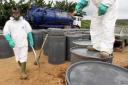
ivorycoast.jpg  The French officials responsible for illegally dumping toxic sludge from oil tankers around the Ivory Coast could get as many as 20 years behind bars.  So far seven people have died from exposure and more than 60,000 have ended up in the hospital.

Related posts: Weekly Compactortoxic slop smells like rotting eggs

information diving

Friday, September 22, 2006 by

dive1.jpg On the far-less-commendable side of dumpster diving, information diving is the practice of salvaging (presumably personal) data from discarded hard drives. Luckily, there also appear to be do-gooder types out there saving the computers. Wikipedia lists several organizations who reuse computers, including Geeks Into The Streets, who bill themselves as “an opportunity for people who love computers to bring them to people who might otherwise not have access to them.” Rock on.

plenty on freeganism

Friday, September 22, 2006 by

freegan.jpg Plenty Magazine printed a story on freegans in its last issue and continues the informative coverage on-line. The blog post is less of a social commentary and more of a how-to, but fascinating nonetheless if you follow along in the comments and see all the freesources out there.

black my story: metaphorical trash

Thursday, September 21, 2006 by

samson007_big.jpg  “Black My Story” is a series of photographs taken by Malawian artist Samson Kambalu when he first moved to Amsterdam and found inspiration amid the trash heaps of his new home.  His and many other artists’ stories can be found online at the Dutch website the Virtual Museum of Contemporary African Art; including this short essay on sea containers loaded with used materials from Holland that end up in Ghana and the art they inspire along the way.

wine-in-a-box

Thursday, September 21, 2006 by

wine.jpg  My friend, salmon, recently informed me that wine-in-a-box can be purchased in individual portions, like jumbo juice boxes for grown-ups.  I keep meaning to tell my grandmother this.  For a short time after they retired, she and my grandfather had a small vineyard in New Jersey.  They made and bottled their own wine, mostly drunk by our immediate family but also tasted at local get-togethers with other farmers struggling to make grapes happy on the East Coast.  Grandma has told me more than once that wine-in-a-box, or more specifically wine-in-a-bag-in-a-box, is a better way to store wine over a long period of time without losing flavor. 

It appears that vintners in Canada agree with her as several wineries have foregone traditional glass bottles in favor of the box.  Usman Valiante, a contributor to Canada’s Solid Waste and Recycling Magazine, weighs the environmental and viticultural pros and cons of this decision on the blog he keeps off the magazine’s Web site.  Aside from trashing the taste of the wines he sampled, Valiante explains that the materials used to store the drinks aren’t as green as the vineyards imply.  He also points out the irony in the label “Recyclable–where facilities exist.”  I guess I’ll have to stick to sangria in a thermos at picnics. 

kinda like an ant farm

Wednesday, September 20, 2006 by

rats.jpg  At the Brooklyn book fest this past weekend, Rats author Robert Sullivan informed the crowd that the clear plastic garbage bags favored by downtown establishments post 9-11 now allow the casual observer an unobscured view of rats eating dinner and therefore a better understanding of the rodent’s relationship with trash.

high return on renewable energy

Wednesday, September 20, 2006 by

report.jpg The World Watch Institute at the nonpartisan Center for American Progress released a new report today on American investment in and consumption of energy. The document states that: “Next to the Internet, new energy technology has become one of the hottest investment fields for venture capitalists.” Investment in ways to use vegetable oil and waste as fuel has quadrupled over the last several years; and more people seem to be recognizing the potential of harnessing the gasses found in much of what we landfill.
iTunes and AOL give rise to CD Coasters

Wednesday, September 20, 2006 by

various_aol_cds_with_packaging_removed.jpg I remember in college when the show Futurama came out, many people I know were very excited. Some of them even convinced me to watch the first episode of the cartoon to see if, indeed, it was as funny as The Simpsons (I will refrain from live-linking here on the assumption that most readers are familiar with the show).

Not being a huge fan of The Simpsons, it’s not surprising that I didn’t end up following Futurama. I will never foget, however, a brief flash in one scene to a planet piled high with thousands of AOL CDROMs (and nothing else) as a nod to the fact that 1) everyone throws them away and 2) that’s where all our trash might end up some day.

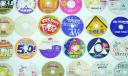
So imagine my amusement when, years later, I came accross this CD coaster craft project on About.com. It’s one of hundreds of “Trash to Treasure” projects compiled on the site ranging from corny (avoid the “blue jean” section entirely) to inspired (see above). In fact, an entire section is devoted to ideas for those soon-to-be-obsolete disks once used to store music in the Global North and still used to ship research at cheap rates to the South.