Dumpster divers on the high art seas

Wednesday, June 10, 2009 by
trashraft

Photo via New York Magazine

As you may have heard, a crew of 30 artists, gearheads and dumpster divers from Brooklyn rolled up to the Venice Biennial in a fleet of vessels made of New York City trash. They built the boats to resemble one the street artist Swoon saw in a dream.

While I have mixed feelings about the often self-congratulatory artistic happenings that come out of North Brooklyn and the street art scene in general, I can appreciate that my skepticism is both a bit knee-jerk and shared by the practictioners themselves. For example, I first learned about Swoon when I heard her speak on a panel on street art where divirsity came up a lot (in that self-conscious way it tends to in academic settings referencing hip hop culture), as did the fact that the mostly white street art scene (born of art schools) benefits from the same badass caché now afforded to grafitti (born of the ghetto) while the “risks” taken by the “outlaw” artists of today’s movement don’t match those taken by the bombers of the 80’s. Not by the farthest stretch of the imagination. Case in point: you’ll notice the NY Mag article uses Swoon’s real name repeatedly. Let’s see if she gets arrested for vandilism.

That said, potential jail time isn’t a prerequisite I use when judging art I like. And I truly enjoy the wheatpaste prints Swoon puts up around town. Sometimes, art is just pretty and fun. Bonus points for using trash.

“The culture of eating and building out of Dumpsters is not an endpoint, not what any of us wants to be doing,” Swoon says. “It’s about living off a bad culture that we wish didn’t exist and making the resources that contribute to that situation no longer available to you.”

For more on Swoon, I recommend searching the lovely and amazing clearinghouse, Wooster Collective. That’s how I found this Walrus TV video.

Hey, Victor, note that they may take these trash ships to the Copenhagen climate change meeting. Now that might spice things up!

Can’t get enough? More photos are over at PSFK.

Its up to your landlord!

Tuesday, June 9, 2009 by

Treehugger reports that proposed legeslation in San Francisco opens for harsh fines for residential and commercial building owners who fail to make sure trash from their tenants is recycled, and recylced properly. According to Treehugger, such legislation exists in several places already in the US, but not with fines.

Makes me think of yesterday, when a note was posted at my front door. Intrigued as you always are by notes, I read it, although it was addressed to my landlord. It turned out to be notice of a $300 fine for placing plastic for recycling on the curb on the wrong day of the week.

This focus on building owners is very different to my homeland of Sweden, where, as I have described earlier, the responsability for recycling lies with the individual person. And they say we’re the commies..

Trash = Class

Friday, June 5, 2009 by

The headline to the latest Guardian UK photo series In Pictures says it all: “World’s poor overwhelmed by rubbish.”

Garbage-A-girl-stands-on--021

Photograph: Eduardo Munoz/Reuters

UPDATE: See also this horrifying slideshow in e-waste in West Africa via Waking Vixen‘s Facebook page.

Landfill lovin’

Thursday, June 4, 2009 by

Robin Nagle, anthropologist in residence for New York City’s Department of Sanitation, is giving a talk on the Freshkills landfill as a sacred space. This extraspecial event will take place on the North mound at said landfill on Saturday, June 20th, starts at noon. New Yorkers, follow the link to RSVP.

Sweden decides on long term nuclear trash storage

Wednesday, June 3, 2009 by

Today the Swedish Nuclear Fuel and Waste Management Co (SKB), the entity tasked with finding out where and how to store Sweden’s ultra dangerous radioactive trash, decided on where they will recommend the construction of the long term repository. The winner is Östhammar, a municipality with just over 21,000 inhabitants in southeast Sweden.

At today’s press conference, representatives of the municipality were serious-looking and happy, having beat the municipality Oskarshamn in the race to become nuclear trash spot no 1, they of course talked wide about cooperation, but it’s an ill kept secret that people in power back in Östhammar are jubilant over this decision.

One might find it odd that two municipalities would compete and advocate that they have the best mountain core for nuclear trash, but it just goes to show the power of tra$h, I guess, nuclear being the ultimate trash after all. That, or people are just outright bonkers. To learn all about how the final disposal will happen, check out the 101 on nuclear trash storage at the SKB website.

UPDATE: Follow this link to Swedish newspaper Uppsala Nya Tidning to see pix of Östhammar storage site boss celebrating with cake. The local government commissioner cried tears of joy (yes, she did). Then take a look at the most important YouTube clip ever about #cake. (Many thanx to @gerontedodedon for inspiration.)

Indonesian beats, upcycled

Sunday, May 31, 2009 by

This is a post about upcycling old music into new beats. It is long. Skip to the end if you’re only interested in the sounds. There, you will find a free download. For those curious about how this amazing beat came to be, this is the story:

In October, I spent a week in Jakarta for work. The day job, of course, consumed the majority of my time, but I did manage to make the most of  my one afternoon off that week while my colleagues were busy working on presentations and setting up meetings for the following day.

“I want to buy records,” I told our Indonesian consultant who, after some clarification that I meant vinyl and not compact discs, instructed the driver to take me to the antique market.
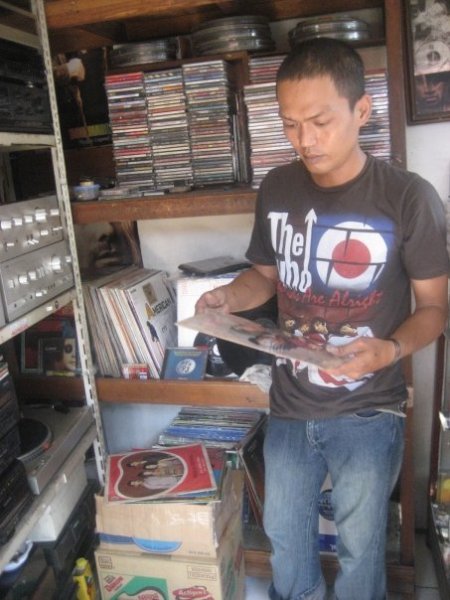
Jakarta antique market

Jakarta antique market

Looking for records while traveling is a hobby I picked up from my friend Flex Unger, whom you may remember as the Brooklyn musician fond of upcycled drum machines. It is also easier said than done, at least in Africa, where I normally go for work. In Lusaka, the only records I could find were a newly released Whitney Houston album on sale at the mall and the vinyl glued to the door of a local radio station. I was on my way to that radio station on the last day of my trip—thinking I could track down the DJs responsible for the decor and ask them where to find records—when I noticed a huge curl of smoke in the air above the center of downtown. We tuned the radio to the station we were on our way to visit and got nothing but static. The station had caught fire, taking the entire building down in flames.

In Lagos, when my friends and colleagues failed to lead me to the records, I dragged several of them out to Fela Kuti‘s Shrine, the famous nightclub run by his son, Femi Kuti. There, we spent the afternoon drinking beers amidst the schwag fumes of the local Rastas, but got no closer to locating the Lagosian record trade. I tried once again to no avail last month in Kampala, where my Ugandan radio friend insists you can’t even buy a record player (though he has promised to help track down local collectors).

Digging for records in Indonesia was much easier than in Africa. Almost too easy. After a mere half hour in local traffic, the car pulled up to a row of the fanciest outdoor market stalls I have ever seen. In fact, they weren’t outdoor at all, but a pint-sized strip mall of shops selling colonial era furniture and Indonesian knickknacks. They even had doors. One of those shops sold nothing but records. I couldn’t believe it. I passed some time there, limiting my search to Indonesian music instead of my regular preference of R&B instrumentals since I only had a couple hours to spend at the market. After the mini-shop, I walked through the less built-up side of the market—open-air stalls selling greasy appliance parts and random chotchkies. There, I found two more record sellers, one of whom even had a turntable set up. I asked him to play me the records I had just purchased and bought one more from him, just to be polite. In the end this is what I took home:

Some finds from Jakarta

Finds from Jakarta

Three Indonesian pop albulms from the 1960s and 70s and one two-disc traditional compilation full of old opera and gamelan music. My favorite—both for the cover and what’s actually on the record—is the center album above. It’s called (in Indonesian) Andrianie Beladjar Sepeda, which my Indonesian friend (the one who helped me find the antique market in the first place, THANKS IWU!!!) told me  means Learning to Ride a Bike. It’s got a kind of  Gainsbourg/Bardot feel, excellent sounds to blog to.

All told, I spent $1.20 on that shopping spree: Twenty cents each for the three pop records, forty cents on the double album of traditional music and twenty cents on a lovely lunch of fritters, samosa and a banana dessert cooked in banana leaves.

Not pictured, one croquette already consumed

Not pictured, one croquette already consumed

Though I mentioned to Flex Unger that I had picked up some records in Indonesia and even sought his advice on the purchase of a portable record player to enjoy them in Brooklyn, I never showed him these albums or brought them to his studio. My great and fruitless musical safari through Zambia, Nigeria and Uganda had carried with it the specific mission of finding African music that he might enjoy or be able to sample. Before I left on each of those trips, Flex specifically asked me look for music for him. But when I went looking for music in Jakarta, it wasn’t as much to run home to impress my DJ friend as it was to seek out personal souvenirs of a fascinating trip.

As it turns out, impressing my DJ friend happened anyway. A couple weeks ago, Flex was over at my apartment and spotted the alluring cover of Learning to Ride a Bike. “What are these??” he cried, sifting through the small stack of Jakarta finds. Since then we have spent some hours at his studio in Sunset Park transferring the records to electronic format, breaking up the fun and strange songs into smaller pieces and feeding them into Flex’ drum machine to mix and match the noises and layer them with new ones. Or rather, he has done all of that while I have looked on, pressing the occasional button on the soundboard when instructed to do so. It feels like I’ve learned something while observing the process—a vague something about timing, Pro Tools, hip hop and Southeast Asia.

More importantly, the end results have been fantastic. Check out the first finished beat. It is entitled “Steamed Bananas” after that tasty Indonesian snack and because Flex is working on a larger, super-market-themed album for which all beats must have food names. Consider this a sneak peak.

“Steamed Bananas” mixed by DJ Flex Unger

Kind of makes you want to dance, doesn’t it? For comparison, here is the original track from Learning to Ride a Bike.

“Kedjam” from the album Andrianie Deladjar Sepeda sung by Eddy & Siam

Impressive, non? Check out Flex’ label Black Rhombus for more fun tunes. And send us your stories of upcyled music and musical upcycling. I’m all about musical trash posts this summer, especially since I just figured out how to upload mp3s.

Also, this whole process has renewed my entusiasm for figuring out where they hide the records in Africa. Stay tuned. And speaking of African music, Brooklynites mark your calendars for June 25th and seek me out in Prospect Park!


Rubbish to Renewables Act of 2009

Friday, May 29, 2009 by

Pending legislation a long way off from law, but interesting nonetheless. Thoughts on waste to energy incentives?

First look at SMART Art finalists

Friday, May 29, 2009 by

Trash to treasure report via finalist Mark Lukach‘s blog.

UPDATED: SMART Art site links to winners and finalists.

Bottle bill mania and RFK Jr.

Thursday, May 28, 2009 by

bottled-waterBottlemania author Elizabeth Royte‘s waste and water blog has been pretty juicey lately. When it comes to single serving water packaged in plastic, the only thing more disturbing than how many plastic bottles are out there is how few people own them. That is, until they sell them to us and the problem of disposing of them becomes someone else’s problem. The question up for debate is whose problem is it? New York’s State Assembly is negociating the answer to that question now with a bottle bill that Royte points out has taken 20 years to see the light of day. But if you’ve been reading the news, you might have noticed that an unlikely pair have teamed up to sue the state over the bill: megaconglomerate Nestle and Riverkeeper Bobby Kennedy Jr. Very curious. Royte explains the drama in a recent post and subsequent update.

See also RFK Jr.’s op-ed in yesterday’s New York Times.

Decorative dumpsters abound

Wednesday, May 27, 2009 by

Decorative dumpsters are like Burberry scarves. Once you notice them, you start to see them everywhere. This morning while perusing my blog reader and doing my standard searches not one but two decodumpster items caught my eye. Behold.

Photo by Sandord Myers for The Tennessean

Photo by Sandord Myers for The Tennessean

Young artists in Tennesse decorate dumpsters for a new recycling center. The article that goes with this photo is actually kind of grumpy, pointing out that the opening of the recycling center had to be delayed in order to work out the logistics of getting the kids in to paint the dumpsters. Whatevs. It’s open now and I bet those good looking containers subtly reinforce visits to the center thus increasing recycling rates and offsetting any loss caused by the delay. That’s my theory and I’m sticking to it.

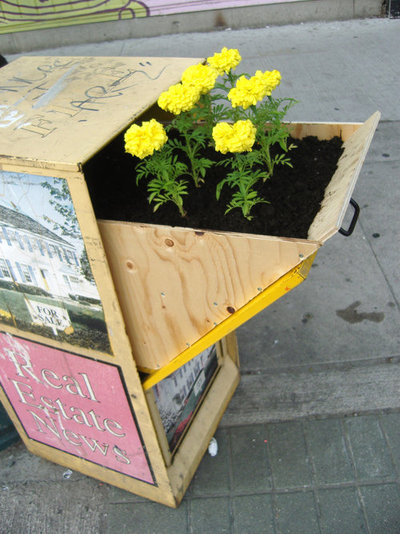
Flyerbox to planter box by Posterchild's Blade Diary

Flyerbox to planter box by Posterchild's Blade Diary

And check this out, Posterchild’s Blade Diary converts an old flyer dispenser into a flowerbox (discovered via Unconsumption). A loose interpretation of decorative dumpster but valid, I believe, since we’ve all seen empty flyer boxes stuffed with trash.

UPDATE: Trash asthetics must be in the air. Bed-Stuy Banana just posted this.

Ride the Subway

Wednesday, May 27, 2009 by

Remember Joshua Allen Harris‘ adorable air bear, air giraffe and eclectic air zoo? If the plastic bag polar bears in this Ad Council bit aren’t Harris’ work, they are based directly on it. It looks like air animals have gained an even more overt political voice—promoting public transport—than the obvious and embedded message (don’t litter).

I discovered this clip over on GreenMuze while browsing for more photos of the fabulous giant orange recycled bunnies I’d seen on Olympia Dumpster Divers this morning. Check them out.

The Big Rabbits in Portofino, Italy via GreenMuse

The Big Rabbits in Portofino, Italy via GreenMuse

Most horrific trash pix to date?

Tuesday, May 26, 2009 by

GigaPica, a Dutch website honoring the art of photographic journalism (firmly asking you not to post their pictures on your blog, how very 90’s) has what I believe to be the worse images of trash yet published. It’s just horrible, but really worth a look.

Plastic Vortex

Tuesday, May 26, 2009 by

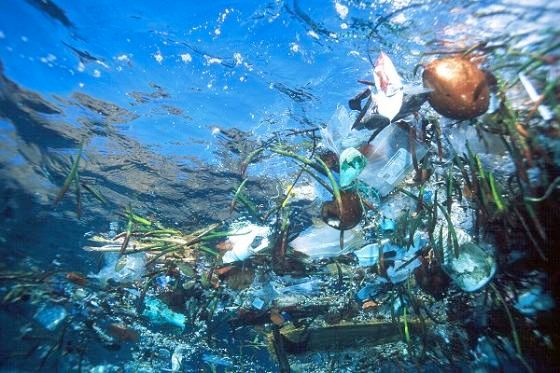
A group of scientists wants to get to the bottom of the Great Pacific Garbage Patch. The AFP reports that the great swirling mass of plastic and other trash between Hawaii and mainland US will be the destination of a 50-day expedition  from San Francisco to the Eastern Garbage Patch and back.

Underwater trash photo via RedOrbit

Underwater trash photo via RedOrbit

The scientists will take special nets with them designed to scoop up samples of even the tiniest plastic debris and will treat their voyage to the vortex  of plastic beneath the sea like a journey into space.

According to RedOrbit:

The United Nations Environment Program has estimated that some 13,000 pieces of garbage exist in every square kilometer of the ocean, but the issue becomes magnified in these ocean vortexes.

Leaders of the trip said the particles have composed a toxic gumbo that threatens the wellbeing of fish in the region.

“That means the little piece of plastic the fish eats is actually a little toxic bomb,” said Doug Woodring, an entrepreneur and conservationist who lives in Hong Kong and will lead the expedition.

A world of shocking odors

Monday, May 25, 2009 by
Shawn Baldwin for The New York Times

Shawn Baldwin for The New York Times

Great Zabaleen article in the Times accompanied  by a short video and these stellar images by photographer Shawn Baldwin.

It is a world of shocking odors and off-putting sights. But it is their world, the world of the zabaleen, hundreds of thousands of people who have made lives and a community by collecting Cairo’s trash and transforming it into a commodity.

The future is here!

Saturday, May 23, 2009 by

They have been sweeping the streets of South Korea. They have disintegrated dust in Japan. They have gathered garbage in Italy. Now, in the Swedish town of Örebro, they will patrol the streets and put terror in the eyes of trash. I speak, of course, of DUSTBOT!

Dustbot

Dustbot

Dustobot is what we’ve all been longing for ever since we met R2-D2 and the other droids in Star Wars. Small, cute and friendly looking robots, slowly finding their way around on wheeled legs, doing stuff for us. Like taking out the trash. The Dustbot aims higher than just convenience though, it’s a one of these super-sophisticated tech project, funded by the European Commission, loads of researchers involed, development of new technique, etc.

Which of course is all very well. I however believe that the citizens of Örebro will not discuss the details too much, but instead enjoy the future that you can send a text message to Dustbot, and wait for the little bot to come rolling to you, happily swallowing whatever there is you want to get rid of (just don’t forget to tell the Dustbot what it is you’re throwing away, through clicking around for a while on it’s display).

Swedish newspaper Dagens Nyheter reports that Dustbot will roll out in Örebro at the end of July. For those who want more of the research, visit the (surprisingly super-ugly) website for project Dustbot.