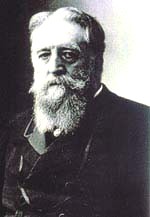
 Professor Dick Porter was out of the country when I first put out the call for literary trash participants. He’s back, and I’m happy to share this week his follow-the-money perspective on waste problems in America and the road to their realistic solutions. His is an approach not seen very often in the green blogosphere: ECONOMIC.
—
everydaytrash: Why do you think environmental policies so often fail to address environmental problems?
Dick Porter: Because legislators are more interested in collecting money and votes than in “catering” to “extremists”.
everydaytrash: What are some of the hidden costs of American garbage collection?
Porter: The whole cost is hidden since the amount of taxes you pay is totally unrelated to the amount of trash you generate (except for the few communities that have pay-by-the-bag systems).
everydaytrash: What are a few of the creative solutions you’ve come across in your research in which communities have succeeded in addressing their waste problems economically?
Porter: Pay-as-you-throw systems are becoming so popular that it is hard to call them “creative” anymore. How about actually fining people who fail to sort out their recyclables? Is this done anywhere (“courtesy tags” don’t count as fines in my book)?
everydaytrash: Are there any creative international interventions/donor initiatives you’ve come across that are working to build up developing world cities’ capacity to deal with their trash?
Porter: In my experience, when agencies get involved with 3rdworld trash, bad things happen—like giving them great big garbage compaction vehicles that don’t fit onto the roads in the poorer sections of the city, or offering to set up a “modern” recycling center (i.e. MRF) when currently thousands of people are already recycling far more than Americans do and they are doing it without government budget, just for a living.
###
You can preview and purchase The Economics of Waste, Porter’s book on trash and cash, via Google Books. I have to say, one of the things I admire most about this books is its lack of a pretentious subtitle.
*BONUS MATERIAL*
The following is an op-ed of Porter’s written in 2003, but which continues to resonate with current NIMBY debates on the business of exporting trash. Porter calls his “a minority viewpoint” and asks us to consider what about somebody else’s trash makes it so much worse than our own. I’ll let you draw your own conclusions:
Nothing Wrong With Trash Trade
Richard C. Porter
Ann Arbor News
29 June 2003
Hardly a week goes by without a headline like “Lawmakers Seek Waysto Block [Toronto] Trash”. It is true that Toronto sends its municipal solid waste to the Carlton Farms landfill in Sumpter Township (and used to send it also to the Arbor Hills landfill in Salem Township), each only 20-30 miles from Ann Arbor. A less well-known fact is that Michigan turns around and ships over 50,000 tons of hazardous waste to Canada for disposal there. In short, NAFTA applies to waste as well as cars.
Indeed, all trash is traded. Hardly anyone buries it in the back yard. Ann Arborites used to trade our solid waste to the City landfill at Platt and Ellsworth. Now that the city landfill is closed, we trade it to the very same landfill that Toronto uses.
Why is it traded further away now than it used to be? A few decades ago, every town had its own “dump” with its attendant litter, smell, fires, and vermin. No more. Over the last few decades, the Environmental Protection Agency (EPA) has required landfills to clean up their act. The engineers, lawyers, and lobbyists needed to operate a proper modern landfill are beyond the abilities of most small, and even medium, size cities. Per ton of waste handled, large landfills have become much cheaper than small landfills. As a result, in the 1970s, there were some 20,000 landfills in the United States; today there are 2,000. Ann Arbor’s landfill closing is typical of thousands of American towns. Urban sprawl has ensured that even for cities with their own landfills, the landfill will now be further from the center of the city. The average household is a lot further from the nearest landfill than it used to be.
And transport costs for trash have fallen a lot, too. Now, household trash is compacted at the curbside and then further compacted at the transfer station – which didn’t exist 30 years ago – and then is shipped in large semi-trailers to the landfill. Landfill charges and transport costs together are about the same for New York City no matter whether it buries its trash near the City or sends it some 300 miles away – New York would probably send its trash to Michigan, too, if Virginia and Pennsylvania weren’t a tad nearer.
Increased waste trade is happening, but that doesn’t make it a good thing. Landfills may be much better run today, but they still generate some noise, congestion, and litter, and there is always a risk that their plastic liners and careful monitoring will fail and contaminate the groundwater that provides well water to households. Economists call these “external costs” – they are real social costs that are not paid for by either Toronto or Carlton Farms but are foisted onto the unwilling – and sometimes unknowing — neighbors of the landfill.
These external costs have been much reduced by EPA regulation, but the landfills themselves do much to assuage neighbor discontent. They acquire acceptance of the small remaining risk in the old-fashioned way, by paying “host fees” to the neighboring towns. Both Arbor Hills and Carlton Farms pay over $300 per capita per year to the “host” townships, plus of course free solid waste disposal. Since the size of these fees is based on the volume of waste interred, it is no accident that Sumpter Township residents are rarely among those demonstrating to stop importing Toronto trash.
Maybe the SumpterTownship residents are short-sighted, and there really is a dangerous amount of trash being buried in Southeastern Michigan. What should we do about it? First of all, we must realize that what is dangerous is trash, not Toronto trash. How should we arrange to reduce the amount of trash being buried in Michigan? The reason so much is buried here is that it is cheap, barely $10 per ton — that’s one half cent per pound. (Do you remember when we thought we were running out of landfill space? We weren’t.) One of the best ways to discourage an activity that generates external cost is to tax it. But Michigan is the only state in the Great Lakes region that does not tax waste disposal. That’s the main reason why trash disposal is so cheap here.
Why not just tax non-Michiganders’ trash and spare Michiganders the burden of more expensive solid waste disposal? (A $4 per ton trash tax would cost the average Michigander about a penny a day.) Two reasons. One, we can’t do that; and two, we don’t want to do that. Can’t because the U.S. Supreme Court and the U.S. Constitution forbid state taxation of interstate trade. And don’t want to because, if trash creates external costs for Michiganders, Michiganders who generate trash should also be encouraged to reduce their waste. Higher landfill taxes will eventually show up in Michigan’s cities and towns as heightened recycling efforts and perhaps trash collection charges.
Richard Porter is Professor Emeritus of Economics at The University of Michigan and author of The Economics of Waste, published by Resources for the Future.
 This week in trash news:
 Here’s a little more information on
  Tamar, Everydaytrash’s Parisian bureau chief, sent in a few fun links this morning (or afternoon, depending on your global perspective).
 The city
  Looks like the everydaytrash rant slamming Staten Islanders and the city’s pilot program recycling bins are making the rounds through the blogosphere.
  British theatre troupe, the
  This week in trash news:
 I’m glad to hear
  San Franciso’s so green,
  If, like me, you’ve been neglecting your extended family on Staten Island, you may not have noticed the recent installment of recycling bins at the ferry terminals. It appears that the City is running a
  everydaytrash