Tonight I finally took a freegan trash tour, something I’ve been meaning to do for months. I’m glad I waited for two reasons. One, it’s Ramadan, a time of year when I’m especially conscious of food, its overabundance in my daily life and temporary absence during fasting. Two, tonight’s trash tour took place in Morningside Heights, which afforded me a fresh view of my childhood neighborhood.
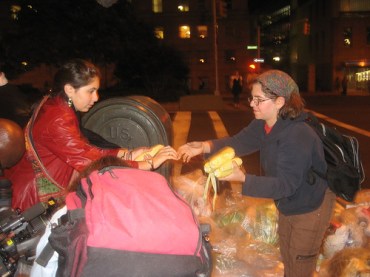
Freegans
From what I understand, the “freegans” of freegan.info see themselves as a sort of public relations arm of a larger movement aimed at reducing society’s waste and making use of discarded food. The group takes advantage of the relative freedom of New York City to dumpster dive and forage openly and with little interruption from store managers or the police. Members of the media and those new to freeganism are invited to rummage through garbage bags on street corners during trash tours (held several times a month) and to dine communally on the booty at occasional “freegan feasts.” In addition, their Web site deals with a variety of issues ranging from what we eat to a concept called “voluntary joblessness.”
What interested me was the chance to spend an evening more or less practicing what I preach here about ways to combat the overwhelming swell of city garbage. While it’s too late in the evening to process what I learned, I can share with you a little of what I experienced.
Meeting up with this evening’s tour proved easy enough. I showed up at the designated street corner where a Japanese cable access film crew, a student camera crew and a still photographer from Newsweek had already begun to document events. Right away I recognized at least three faces in the crowd from past media stories on freeganism. One of the organizers, a young woman in rubber-like protective bike gear and a bandanna, kicked off the tour with a short speech about privacy (for the benefit of the media present) and the importance of leaving places as clean as we found them. And we were off.
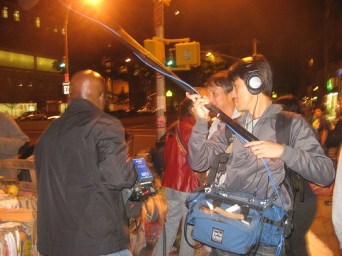
Obligatory Japanese film crew
I accompanied the tour to three nearby sites: two grocery stores and one bagel joint. The first stop yielded less than expected (many present were collecting goods for a freegan potluck feast later in the week)—some bruised fruits and vegetables, mostly onions, made their way into tote bags and backpacks. As one freegan put it “it looks like pretty trashy trash this evening”.
The second stop, a high-end grocery known for poor labor practices and beautifully arranged if unaffordable produce, provided more in terms of both food and spectacle. Large plastic trash bins brimmed with overripe avocados, broken carrots and a hodgepodge of fancy greens. As the freegans went to work sorting and the accompanying media fell over themselves recording, a number of passersby stopped to stare, question and even join in the foraging. The event organizers quickly passed out calendar flyers, recited talking points and collected email addresses (I relay this not so much sarcastically as in awe of such tightly organized media strategy).
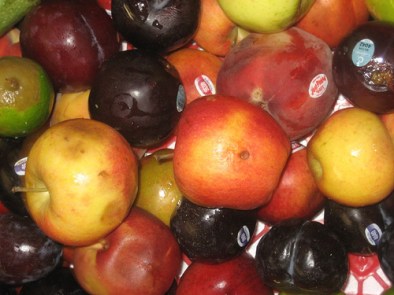
Rescued fruit
As one young man tipped a bin of wet produce into another empty container to sort through the carrots and berries at the bottom, a thickly accented voice piped up from across the sidewalk: “animals eat.” I turned around. Apparently an employee of the store, the man with the accent—Turkish it turns out—had stood watching the sorting and documenting from the doorway to the grocery for quite some time before offering this key intelligence. In broken English, the informant explained to me that the trash had been sorted into real trash (collected nightly by a waste hauler), cardboard (collected every other night by a separate recycling hauler) and slops, collected nightly by a private company that drove it to an animal farm in New Jersey. One organizer muttered to another that perhaps this store should be dropped from the tour, seeing as the organic waste they were picking through might not truly be “trash”.
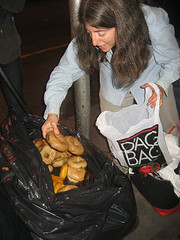
Bagels!
After about an hour of rummaging and a brief display of yam juggling, the woman pictured above stood before an impressive array of produce, bread and half a salami and spoke on a melange of topics including excess waste, fossil fuels, war, labor abuses and rain forest cutting in Central America.
Next, it was on to bagels. I accepted a nearly-whole, perfectly good looking carrot from one of the bins (that by now may be on its way to feed Jersey pigs), peeked into a bag full of bagels from the shop next door and, plucking a pumpernickel for the road, thanked the organizers and headed on my way.
As I walked past the Turkish grocery man again, he asked “going home?”
“Yes,” I said, “thanks again for the information.” He had given me the name of the food waste collection company used by the store. “Wait, I get you sample,” he said. In chatting about garbage collection, we had established the Middle Eastern connection. When I said my family was from Iran, his eyes lit up. He had seemed grateful for a familiar term of reference after watching middle class whites root through would-be-pig-slops for so long. Now, he slipped into the store and returned with a lush container of fresh fruit cup (complete with papaya!), a plastic fork and a plastic bag to carry it in.
“For my neighbor,” he said. I thanked him profusely, considered refusing the bag, but in the end tucked the whole collection into my tote along with my partial carrot and stale black bagel, all to be sampled pre-dawn before another long day of fasting and meditating on food and waste.
 Just got a tip from Maxwell about an international gathering of trash pickers hosted by the Bogotá Association of Recyclers (ARB).
 Check out this TreeHugger post on
  I gotta tell you, since starting this blog I have noticed that a disproportionate percentage of the innovative trash solutions projects on this planet originate in Toronto. Ah, Canadians. Check out the
  Check out the “
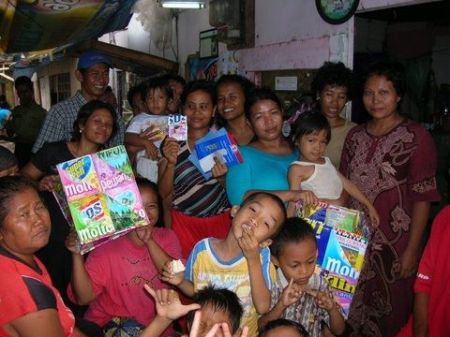 I discovered the small company of
 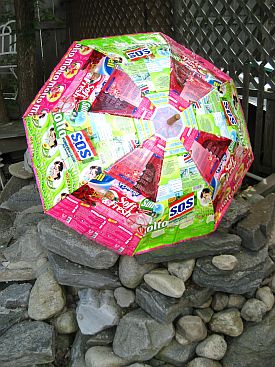 The umbrellas and other recycled wares—bags, waste baskets, wallets—are made with discarded packaging collected by scavengers in Indonesia and double as awareness-and-fund-raising tools for the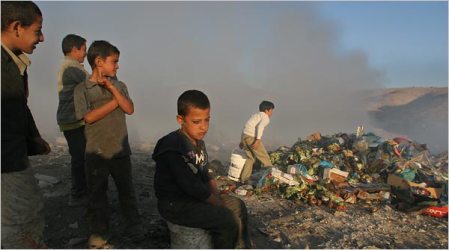

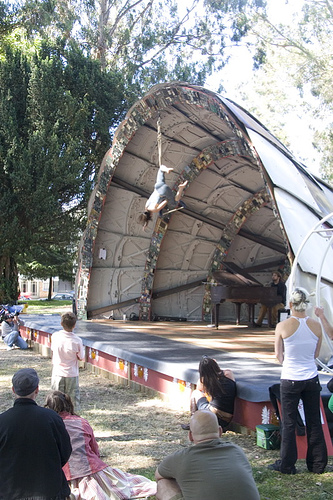
 This back-to-school season, Bay Area residents of all ages can take part in a “new workshop about old things” at the Cataclysmic Megashear Ranch in the Bayview neighborhood. Among other things, the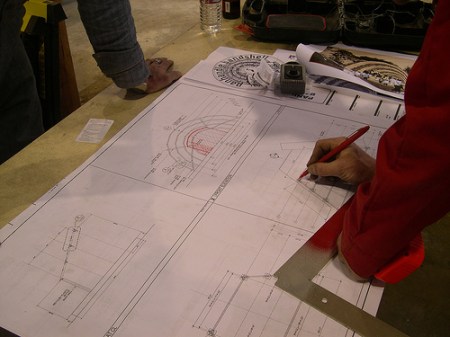

 everydaytrash
