Author Archive

Home Dome

Thursday, February 26, 2009

Check out 12-year old Max Wallack’s winning invention from Design Squad’s Trash to Treasure competition. It’s a homeless shelter made from trash (specifically shipping pallets and packing peanuts).

Man these kids today. Remember the teen who discovered the cure for plastic?  Thanks for the tip, Joerg.

UPDATE: If you’re craving more on Max, check out the MAKE blog; and this photo set, via the MAKE flikr pool.

Trashtastic Thursday with Cynthia Korzekwa

Thursday, February 26, 2009

For the latest installment of our periodic Tuesday (and sometimes Thursday) series of trash talks, I caught up with artist, activist and garblogger Cynthia Korzekwa of Art for Housewives—one of the first sites to blogroll everydaytrash back in the day.  And a constant source of inspiration since.

cynthia

Cynthia Korzekwa

everydaytrash: What is bricolage?

Cynthia Korzekwa: Bricolage is taking something old and, via context, making it new. It comes from the French verb bricoler meaning “fiddle, tinker.” A person who engages in bricolage is a bricoleur. And a bricoleur has the capacity to take available materials and, using hands and imagination, give them a new identity.

The French anthropologist Claude Lévi-Strauss used the word bricolage to explain a means of acquiring knowledge and, in particular, mythical thought. Because mythology dabbles with existing knowledge to create new meaning.

However, my interest for the term came from reading the biologist, François Jacob, and his idea that evolution is a tinkerer. Because, to evolve, nature adapts what already exists.

And it is the spirit of the bricoleur that we must have in order to transform our trash into a resource. Why make things using virgin materials when there is so much that we throw away that we can use instead. The mind of the bricoleur is not standardized. Not producing in mass, he does not use have an assembly-line approach to creating. He creates what he needs with what he has.

Bricolage makes the useless useful. In terms of trash, a bricoleur can transform vice into virtue.
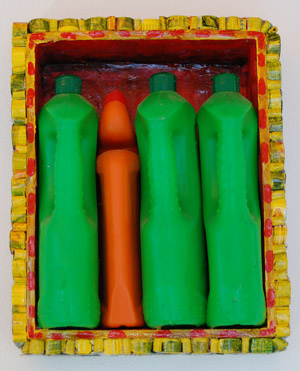
Orange, Cynthia Korzekwa

Orange, Cynthia Korzekwa

everydaytrash: How many Web sites do you have ?

Korzekwa: I don’t know how many websites I have. When I first became interested in internet and websites, I signed up for all the freebie spaces available and began experimenting. Being a technological illiterate, I signed up for A Quicky Course on how to make websites and just started making them. Very primitive stuff (and basically, they still are). But the only way to evolve is to experiment. And that’s what I did. Now, of course, I have a different rapport with internet. And the yin yang of content and form has shifted its weight. Content interests me more thus I no longer feel the need to make more websites. Unless, of course, there’s not a particular need as was the case with MAKE ART, NOT TRASH.

everydaytrash: What motivated you to start Art for Housewives the blog?

Korzekwa: Several years ago, I read “1992 World Scientists’ Warning to Humanity” and literally felt sick to my stomach after reading it. Some 1,700 of the world’s leading scientists, including the majority of Nobel laureates in the sciences, felt the need to get together to declare their concern for our future. Their statement begins with:

Human beings and the natural world are on a collision course. Human activities inflict harsh and often irreversible damage on the environment and on critical resources. If not checked, many of our current practices put at serious risk the future that we wish for human society and the plant and animal kingdoms, and may so alter the living world that it will be unable to sustain life in the manner that we know. Fundamental changes are urgent if we are to avoid the collision our present course will bring about.

Very spooky stuff. My immediate concern was for Sergio and Chiara, my children. I felt the need to react. And that’s how my blog, Art For Housewives, began. And the time, I already had a blog, Obliterated, that focused on the idea that making things with your hands was a form of active meditation. So basically, I kept that idea but added a new element—that of making things from trash. My blog, Art For Housewives, is almost 6 years old now. In the beginning it was quite difficult to find on-line examples of recycling to make objects that were not only useful but beautiful as well. The only women whom seemed interested in the use of trash to make something were those of Third World countries. Women who had no money to buy “art supplies.”
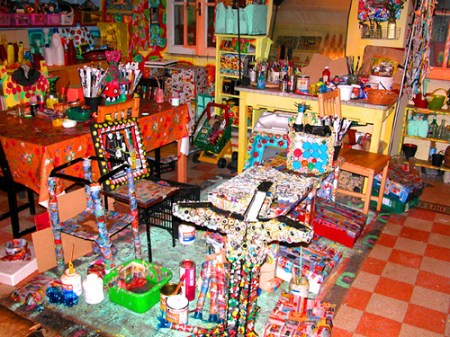
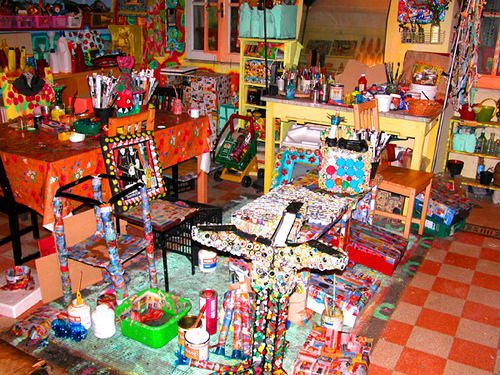
Cynthia Korzekwa's studio

Cynthia Korzekwa's studio

My blog had immediate success–6 to 10,000 visits per month. But what helped me a lot, visit wise, was that a kind of Neo-Domesticity began to flourish after September 11th. Women began giving value to the home and thus to crafts which had been abandoned in favour of “emancipation.” And so they began knitting like crazy and starting blogs to exchange patterns and info. Martha Stewart also animated alot of female souls. With her, it became trendy to care about your home. Related blogs began cropping up all the time. Now there are so many women out there making things and blogging about it. They are making art that is so much more exciting than that alienating conceptual stuff mainstream art caters to.

everydaytrash: I heard you are working on Art for Housewives, an illustrated essay in the style of Marjane Satrapi’s graphic novel Persepolis. How’s the project going?

Korzekwa: After a couple of years blogging Housewives, I decided to publish an illustrated essay based on the information I had collected, ARTE PER MASSAIE (“art for housewives” in Italian). The text and artwork was no problem but, living in Italy, I had to write in Italian. Never having studied it, my Italian is a bit folkloristic. Luckily, there’s a decent English translation at the end of the book.
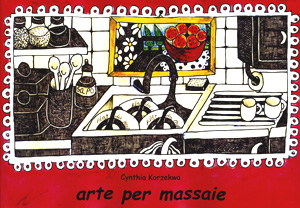
bookcover

book cover

everydattrash: How did MAKE ART, NOT TRASH come about?

Korzekwa: Last year, I decided to try a bit of activism and this led to MAKE ART, NOT TRASH, a site with links to some of my favourite examples of how to transform trash. You know, bricolage. Then I printed 300 stickers and put them on the dumpsters in the area of my studio, San Lorenzo (Rome). The stickers had a drawing of a bunny encouraging people to think before throwing something away.
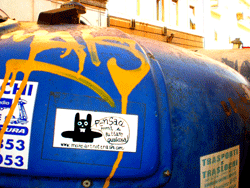
bunny sticker in the wild

bunny sticker in the wild

Critical mass is fundamental for change. Take Kerala, India, for example. Being a very poor state with a high birthrate, the local government tried convincing women to practice contrapception and men to be sterilized but with little success. Then a major emphasis was placed on education and everyone sent to school. As a result, today the citizens of Kerala are 100% literate, an anomaly in India. As a result, the birth rate has drastically dropped. Once you are educated, no one needs to convince you what is the right thing to do because you know on your own.

Awareness helps one make the right choices.

(Photos via Korzekwa’s many Web sites)

Learn Japanese: Pink Chirashi

Tuesday, February 24, 2009
Indecent Fliers Box

Indecent Fliers Box

That mischievous Little Shiva just posted this link to my facebook page, in which Tokyobling’s blog describes a special trash can (shown here) for “pink chirashi” or adult fliers.

If you are morally offended by the hand outs for adult shops and strip clubs, but too polite to say no to the smiling touts, feel free to use this trash can on your next visit to Tokyo.

Amazing.  Thanks Little Shiva and Tokyobling!

And speaking of the Japanese and their crazy ways, how awesome was Kunio Kato’s “Domo Arigato, Mr. Roboto” reference while accepting the Oscar for best animated short?

Botas Dacca

Tuesday, February 24, 2009
fused plastic boots

fused plastic boots

In two-plus years of garblogging, I’ve seen my share of fused plastic craft projects.  I have to say, though, that these rockin little boots by Chilean designer Camila Labra are some of the cutest.  Her label is called Dacca and boasts a range of styles from fun polkadots to the obligatory upcycling of Target bags.  My favorites are these green two-tones—found via the spectacular Art for Housewives.

These might look hot with a customized messenger bag.

Make Art, Not Trash

Monday, February 23, 2009

I’m not quite sure how to describe Make Art Not Trash links.  It’s an online collage, a blog in one page and a time-sucking portal for any trashie.  Here are some things I’ve discovered via this…installation.

Made in the Philippines

Made in the Philippines

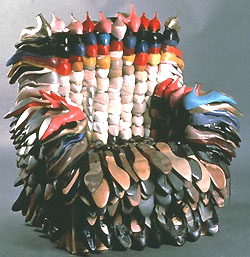
A chair made of shoes.

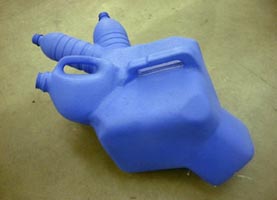
Untitled, plastic bottle with Bondo glue and paint, 2000

Untitled

Blob-like sculptures made of plastic bottles.

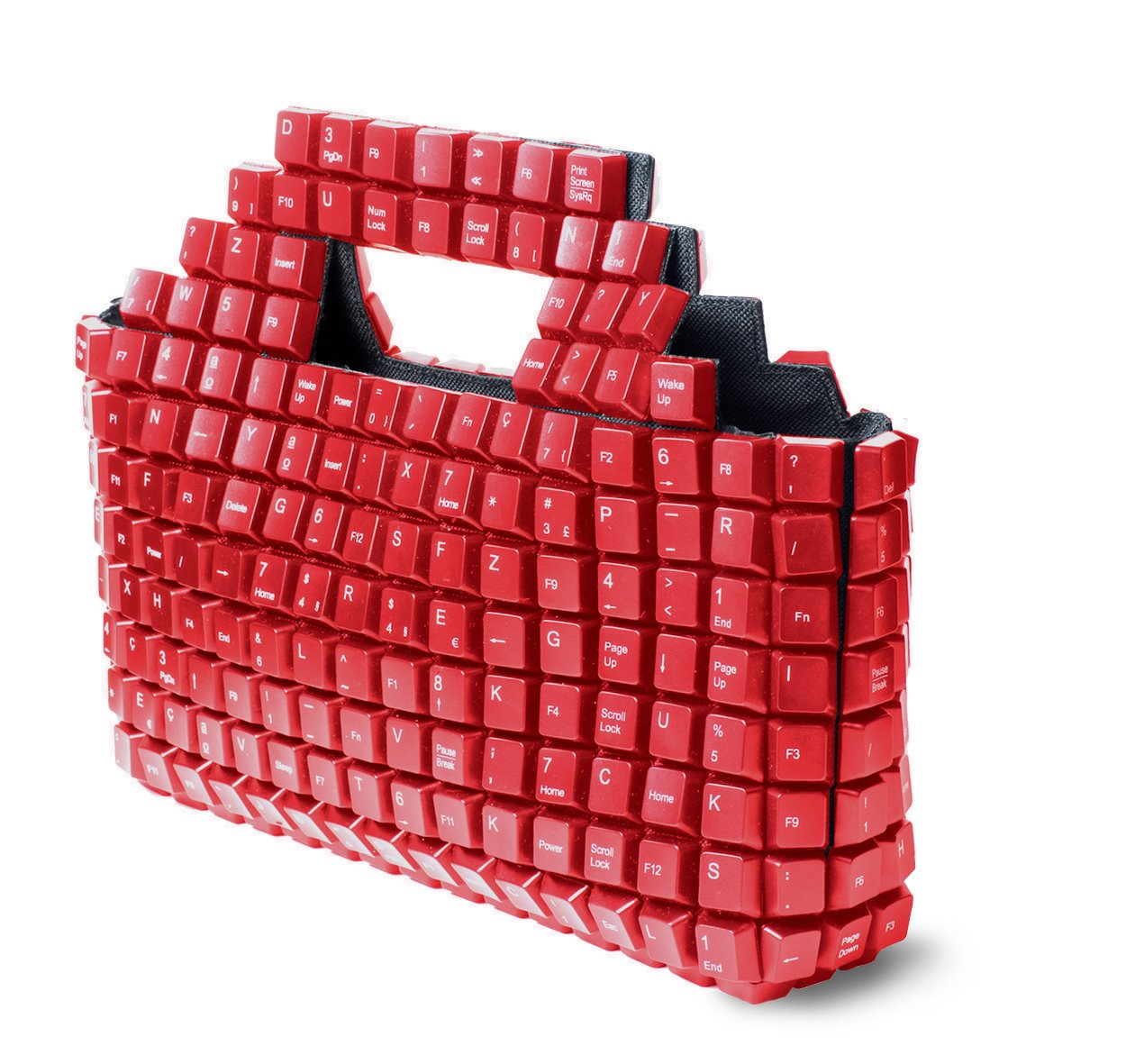
Keybag Red

Keybag Red

A keyboard turned handbag.

maison martin margiela

maison martin margiela

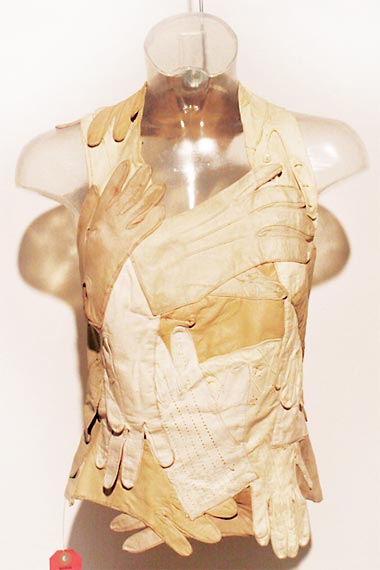
A halter top fashioned from vintage gloves.

Cassette Wallet

Cassette Wallet

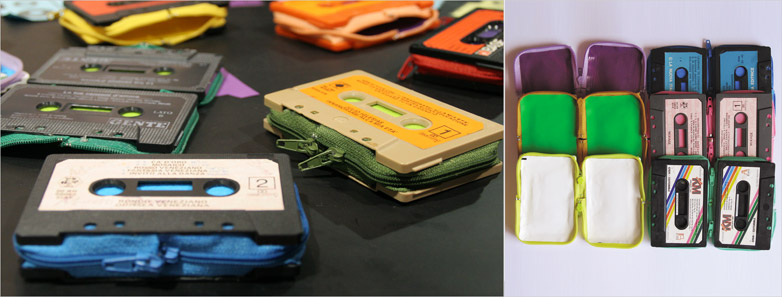
And wallets made out of old cassette tapes. Those last two items are both via design boom, a site to bookmark for a day when the economy bounces back (or to keep an eye on now for DIY knock-off inspiration).

Here’s that Make Art Not Trash link once again.  Happy Web surfing.

UPDATE: just figured out that Make Art Not Trash links is just one page of the site Make Art Not Trash run by Cynthia Korzekwa of Art for Housewives fame.  What a Web presence!

Celebrity Trash

Saturday, February 21, 2009
jake_compost11

Jake, composting

Have I mentioned lately how much I enjoy ecorazzi, the green gossip blog?

Weekly Compactor

Friday, February 20, 2009
BBC News

BBC News

This week in trash news:

  • Bill Gates invests more in trash hauling;
  • Engineering students in Texas brush up on skills by recycling appliances; and
  • Philly artists host a “pimp my recycle bin” event.

Space Trash

Friday, February 20, 2009

Scientific American has a very bloggy post up on space trash full of live links to past articles and tidbits sourced to a Wired reporter’s Twitter feed.  The question: will orbiting debris from interspace smash ups and other intergallactic junk endanger scheduled repairs to the Hubble?

ABC News

ABC News

Side note:   If Wikipedia and I have the count right, this will be the fifth mission to repair the space telescope.  I remember when the Hubble first launched and started sending blurry photos back to Earth. I was gifted one of the best telescopes under $200 for the time and I started looking for space debris more than stars after that. I think I was in the sixth grade, just old enough to figure out that adults had very little figured out.

Worm Potluck

Wednesday, February 18, 2009

worm Sounds like the Sustainable Flatbush crew had fun at their worm composting potluck this Sunday.

Locals can find out more about the Flatbush Supper Club here and more about urban composting here.

This reminds me, I really want to go to a how-to workshop on worm composting at home.

Japanatrash Art

Monday, February 16, 2009

Every once in a while, I search YouTube for “trash art”.

Not sure what this clip is all about, but I am confident that if I spoke Japanese I would declare it blogworthy.  It involves some sort of talent or game show and Jean-François Millet’s iconic painting “The Gleaners”.

Zero Waste Pasta

Sunday, February 15, 2009
Frittata di Maccheroni

Frittata di Maccheroni

My sister and I share an apartment, but rarely share meals.  When we do, they alternate between Thai take-out and pesto pasta.  The former, even if you implore the restaurant to include NO UTENSILS, creates an ethically uncomfortable amount of waste (and leads to bickering as I, in obnoxious big sister fashion, police the trash can and recycling bag to make sure packaging ends up in its proper place).  The latter leads to heartbreaking food waste.  Neither of the sisters Darabi is capable of making just the right amount of pasta.  Inevitably, we end up with a dry lump of basil-flecked noodles in the fridge, where it lives optimistically for a week until our biweekly purge.

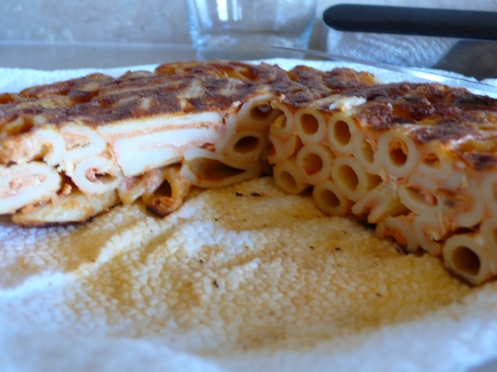
Luckily, I know a pasta expert.  My friend Virginia has an amazing food blog called Italicious where she recently posted the perfect solution to left-over noodles: Frittata di Maccheroni. Those crafty Neopolitans.  It’s resourcefulness like this that must have seen them through the trash crisis last year.  I can’t wait to see if this works with cavatappi and pesto.  Oh, and do share if you have other past rejuvination ideas.

Recycle for London campaign goes mobile

Friday, February 13, 2009

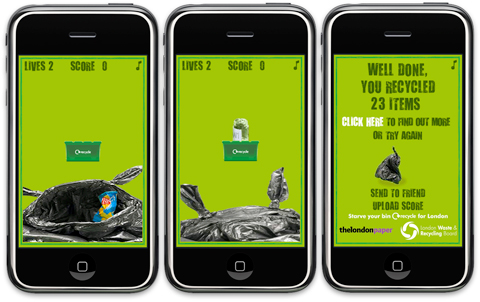
londonmobileThe ever clever Recycle for London program is promoting its “Starve your bin” campaign with a mobile download game for Brits on the go.  The object of the game is to block items from reaching the hungry trash bag by catching them first in a green recycling bin.    Or rather, the object of the game is to raise awareness about the massive amounts of recyclable materials that end up in the trash.  Londoners can download the game by texting a special number and oh so special iPhone users can get the game directly from the Apple store.

Your very own iPhone app?  Very slick, Recycle for London.  As a new media geek, I’m impressed.  But really, you had me at viral video.

Weekly Compactor

Friday, February 13, 2009

fail-owned-recycle-failThis week in trash news and around the garblogosphere:

California knows how to…recycle

Friday, February 13, 2009

newyork

Men’s Health has ranked America’s cities on how well they recyle and three out of the top ten are in California.

Wichita and Las Vegas lead the worst.

Click here for a neat interactive map of the results.

Here’s how the editors explain their methodology:

To determine how well cities reuse their refuse, we started by asking them whether recycling is mandatory. Next we looked at how easy the cities make it for residents to recycle: No need to sort? Wonderful. Curbside pickup? Great. Then we added up the variety of materials that are recycled, giving bonus points to those places that go beyond paper, plastic, and glass. Lastly, we factored in the percentage of households that actually take advantage of the program their city offers, courtesy of SimplyMap.

NYC ranked an unimpressive 17th.

Reblog: Suzanne Proulx’s Dust Bunnies

Sunday, February 8, 2009
Bunnies made of dust

Bunnies made of dust

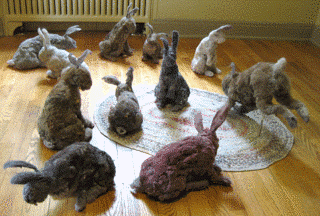
Yup, that’s right, these bunnies are literally made of dust.  They’re part of an installation by the artist Suzanne Proulx.  More on the project here.

Via Olympia Dumpster Divers via Art for Housewives