Still having photo issues. I did, however, find a website for the paper people!
Author Archive
-1000 words
Thursday, October 19, 2006elephant dung paper
Wednesday, October 18, 2006


Update: photos!
Excuse the delay, I’ve returned in a daze from Malawi and my jet-lagged brain is having trouble re-sizing photos for everyday trash.
So trust me when I say I have pictures of elephants and of their dung and of that dung being processed and of the beautiful handmade paper that results from the process.
The elephants I saw at a well-stocked game park called Liwonde. The paper-making from their dung I saw in the city of Blantyre, a pleasant little town with purple flowering trees and even a side-walk or two (in sharp contrast to the dirt roads throughout the rest of the country).
PAMET is an NGO in Blantyre set up by a British woman and now Malawian-run that collects discarded bits of paper and cardboard and shreds it, along with plan fibers, elephant dung, burlap sacks and baobab bark to make thick and delicate sheets of paper from one or all of those ingredients. They also have an educational program whereby they teach others to make paper or briquettes to heat their homes by packing it all into disks. I took a photo of an old school exercise book on the floor of the old paper stock room waiting to be made into pulp for new stationary. It’s a wonderful cycle if you think about it: making new paper out of an old exercise book in order to sell and then be able to afford school fees and a new exercise book.
I made a solo roadtrip to the rural north of the country and along the way talked to many, many Malawians, all of whom mentioned bad economy and expensive school fees as factors holding them and their country as a whole back in this world.
Oh, and no I didn’t see Madonna. In fact, Madonna didn’t come up once in conversation while I was there except in the form of emails from home.
Photos coming soon. And by the way, it’s nice to blog again. I missed you all!
trash hiatus: check back on October 17th
Tuesday, October 3, 2006everyday trash might not be so everyday while I head to Malawi for two weeks. In the meantime, check out the much toted sidebar of friends, colleagues and bizarre resources. I promise to bring back fascinating stories of African trash. Oh, and did you see the Herbert op-ed in the Times this weekend?
white trash wedding
Monday, October 2, 2006 I met fellow garblogger Diane Kurzyna virtually last week, through blog comments and email after we were both mentioned and thrown some web traffic by the cleaver and creative site, Art for Housewives.
Diane’s artistic alias is Ruby Re-Usable and her art is all about giving a second or third life to junk materials. Perhaps because I have spent the past five days in the Mid-West taking part in a wedding (a very classy affair, I should make clear—this is not a true comparison), but I’ve been particularly charmed by the series of small sculptures entitled White Trash Wedding.
Minnesotans against trash
Friday, September 29, 2006 While in Minneapolis for a friend’s wedding, I was standing in line at a gift shop when I noticed a green guide to the Twin Cities. The guide compiled tips on organic shopping, along with coupons for local green vendors. I noticed a promo for the Web site reduce.org and decided to check it out when I got home. As it turns out, reduce is a great site chock full of simple tips for cutting down on waste at home and at the office. You gotta hand it to those (sometimes) progressive upper Mid-Westerners! And the advice isn’t specific to Minnesota, it could be follwed anywhere in the U.S.
trash politics in the keystone state
Thursday, September 28, 2006 Trash will be a deciding factor in Pennsylvania’s 6th district race. And according to the Philadelphia Inquirer, it all comes down to one county. It appears that good ol’ Reading, Pennsylvania—known for that one railroad in the game of Monopoly and, if you’ve ever been there, for its mafia-owned and migrant-operated mushroom farms—is at the eye of a trash storm these days.
The Humanure Handbook
Thursday, September 28, 2006 After writing here about composting toilets, I felt a little guilty about dismissing them as yuppy outhouses so I decided to look just a little more into home and office use. After contemplating a place to begin research, I found the answer right here on the sidebar: howtocompost.org. In the comments, I also found a link to The Humanure Handbook by Joseph C. Jenkins, a catch-all volume with punny chapter titles with tons of information about the ecological, practical and spiritual benefits of turning human feces into soil fuel (I recommend the section entitled “Deep Sh*t” in which he speaks to a humble nunnery).
But are these composting toilets practical?
In a later chapter, Jenkins predicts: “The toilets of the future will also be collection devices rather than waste disposal devices. The collected organic material will be hauled away from homes and composted under the responsibility of municipal authorities, perhaps under contract with a private sector composting facility.”
Until then, we city dwellers might have trouble fitting a bulky toilet with a composting chamber into our tiny apartments and anyone without a serious compost pile will have some serious problem solving to do when it comes time to empty the john (you farm people, however, had best get to it setting a green example). Advocacy step one includes community composting and adding human waste in municipal recycling collection.
sanitation artist in residence
Thursday, September 28, 2006 I had heard that the Department of Sanitation had a volunteer artist in residence, but I didn’t realize that Mierle Laderman Ukeles, the woman who has held the job for the past thirty years, had also written a series of radical manifesti (scroll down for Maintenance Art Manifesto 1969). Curious what the city’s public artist has to say after all these years on the job? As luck would have it, Ms. Ukeles spoke about reclaiming the land at the New School in May and that conversation is available for download. The talk was part of a cycle on “Forgiveness” at the New School. I’m not sure what that means, but it sure sounds cool.
Weekly Compactor
Wednesday, September 27, 2006 This week in trash news:
- Moved by Bill Clinton, Wal-Mart promises to cut down on packaging over the next five years;
- Also linked to the Clinton Global Initiative, a green knight pledges $3 billion to make fuel from corn;
- An equity firm in Chicago buys a piece of Waste Management;
- Jamaica’s fraud investigation of its solid waste authority gets so tense, some officials are offered body guards for thier own protection;
- The Big Apple gets its first green building (and Rosebud was the sled);
- In an ironique twist of fate, the toxic sludge that sent thousands of Ivorians to the hospital will be shipped to France for treatment; meanwhile the men responsible for the illegal dumps plot their escape; and
- Indiana creates a “swine zone” hoping to harness the power of the hog.
bullshit and libertarianism
Wednesday, September 27, 2006 The Justice Talking trash special got me thinking about the recycling episode of Penn and Teller’s Showtime series Bullsh*t. In it, the comic magicians make an argument similar to the one the Adrian Moore of the Reason Foundation made on the radio this week. Essentially, they think recycling is too complicated, costly and inefficient and the only way to make it worthwhile would be to follow the money. Either offer cash incentives for recycling by buying back reusable trash or charge people for the amount of trash they generate (thereby offering a cash disincentive to create waste in the first place).
While I’m all for big government, mandated recycling and corporate responsibility, the bottom line is the bottom line: money talks. The most effective arguments for recycling aren’t that we’re running out of space for trash or that gasses and other polution will harm the environment. These are longer-term issues most are happy to pass on to our grandchildren. Proving that reusing products saves money, on the other hand, or that recycling can generate income or threatening to charge big wasters their fair share of trash hauling costs are arguments more likely to resonate with the mighty. And the frugal. One cost-benefit analysis is worth a thousand soapbox speeches.
just trash
Tuesday, September 26, 2006 The folks at Justice Talking, the NPR news magazine that examines global issues through a legal lens, took a long, hard look at trash this week. Of particular note are a liberal-Libertarian debate on whether to mandate or pay people to recycle and commentary from a trash lawyer. Check out the program’s website for an interview with trashie author Elizabeth Royte on exporting and reducing trash, lessons from Colorado on defining and building a “zero waste” community and a fantastic sidebar of recommended reading.
the temas blog
Monday, September 25, 2006 In case you haven’t noticed, the real value in everyday trash isn’t the content of the posts per se, but the wonderfully dense sidebar of wide-reaching resources in garbology.
Today’s recommended click-through is The Temas Blog where environmental issues affecting Latin America are broken off into bite-sized chunks and translated for our convenience by fellow garblogger, Keith R.
Check out his recent post on casa PET in Brazil where two-liter soda bottles are recycled as building materials for homes.
composting toilets
Monday, September 25, 2006 After running in Prospect Park yesterday morning, a friend and I noticed a series of signs for an exhibit on refugees and displaced persons organized by the relief organization Doctors Without Borders. We followed the signs arrived just in time for the first guided tour of the morning through a mock refugee camp set up in the park. A volunteer doctor who had just returned from his second year in the Sudan walked us through stations set up demonstrate the different areas of a refugee camp. They had built examples of the plastic-tarp covered tents or shanty-town shacks one might see in a rural or urban camp. They had packages of emergency food bars one might drop from a plane to starving people caught up in war zones that the doctor passed around and allowed us to taste. They had a water station to show how water is pumped, treated and distributed. They had a latrine and picture books to explain what a latrine was and how to use one for those who had never seen one before. They had clinic tents and displays on vaccination, malnutrition and treatment for cholera.
Overall it was a fascinating exhibit and more than a little depressing since posters all around announced that there are 33 million people in the world currently displaced by conflict and these displays of food, shelter and medical care represented only what those people in countries with aid workers are receiving (to say nothing of those living in areas too violent for help to reach them).
At the water station, the doctor asked the women in particular to lift a five gallon jug plastic water to imagine waiting lugging the beast around a camp. Apparently the ideal camp provides five gallons per person per day to cover washing, cooking and drinking needs and the women of the family wait in line for this water and bring it back to where they sleep. I could barely lift one jug.
According to the doctor-tour guide, Americans use an average of 100 gallons of water per day. A Brooklyn mother on the tour was outraged by this fact and as we walked from the water pump to the latrine she asked how much of that water was from flushing toilets. She and I got to talking about composting toilets, which are less disgusting than they sound. I had heard of these devices before, toilets that don’t use much or any water, but had never actually considered how these might work. I’m still not quite sure how a regular household or business could effectively use one of these things. They are large and hold waste in a chamber where it breaks down over time until it is no longer smelly and can be used as fertilizer. Removing the fertilizer and tossing peat moss into the toilet after using it instead of flushing don’t seem very practical for indoor use, though. It seems that in places where outhouses and portable toilets exist, these are high-class latrines that would be ideal. I’m curious what others think.
cartoneros
Sunday, September 24, 2006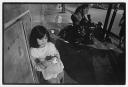 The cartoneros of Argentina are poor people who travel by night to richer neighborhoods where they scavenge the trash for things to reuse and sell. A friend who has spent time in Argentina recommended I post something about their struggle as one of the populations hit hardest by Argentina’s economic collapse five years ago. Rather than attempt to describe their story myself, I direct you to this powerful World Press Review photo essay by Andrea Di Martino (who also took this picture of a young woman leaning against a wall).
crayella: the umbrella of the future
Saturday, September 23, 2006 Just when I was getting into the hang of voting online every morning, the Umbrella Inside Out has chosen a winner. Now what will I click back to for entertainment?
 everydaytrash