Archive for the ‘Artistic Trash’ Category

Reblog: Wallpapered Dumpsters

Tuesday, March 10, 2009

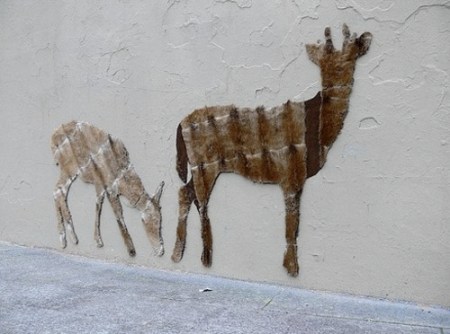
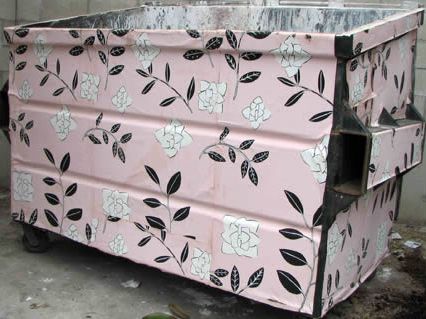
Check out C. Finley’s clever and trashy street art, wall papered dumpsters.

C. Finley

C. Finley

Via Wooster Collective

On a mostly unrelated note, I saw a racoon (at least I hope it was a racoon, it could have been a very large possum or a big freaky rat on steroids) at the corner of Smith and Bergen last night. It looked like it was about to walk down the steps to the F train platform, but some people walked by (without noticing it) so it ran under a car instead. I imagine it was checking out curbside dining options from all the restaurant trash bags on that block. I’ve seen racoons in Brooklyn before, but never one that looked like it might get on the Subway.

Found on Vimeo

Sunday, March 8, 2009

Check it, a trashy Donky Kong-esque game some guy made for a school project on the environment. I hope he got an A.

Vodpod videos no longer available.

more about "Found on Vimeo", posted with vodpod

Trash Into Treasure: SMART Art Competition

Tuesday, March 3, 2009

Calling all trash arstists!

Enter the Adventure Ecology and Sculpt the Future Foundation’s SMART ART ‘TRASH INTO TREASURE’ competition.

Show the world how discarded items can be redesigned, reused and re thought by turning every day waste into works of art and everyday functional items.

Via MAKE

Trashtastic Thursday with Cynthia Korzekwa

Thursday, February 26, 2009

For the latest installment of our periodic Tuesday (and sometimes Thursday) series of trash talks, I caught up with artist, activist and garblogger Cynthia Korzekwa of Art for Housewives—one of the first sites to blogroll everydaytrash back in the day.  And a constant source of inspiration since.

cynthia

Cynthia Korzekwa

everydaytrash: What is bricolage?

Cynthia Korzekwa: Bricolage is taking something old and, via context, making it new. It comes from the French verb bricoler meaning “fiddle, tinker.” A person who engages in bricolage is a bricoleur. And a bricoleur has the capacity to take available materials and, using hands and imagination, give them a new identity.

The French anthropologist Claude Lévi-Strauss used the word bricolage to explain a means of acquiring knowledge and, in particular, mythical thought. Because mythology dabbles with existing knowledge to create new meaning.

However, my interest for the term came from reading the biologist, François Jacob, and his idea that evolution is a tinkerer. Because, to evolve, nature adapts what already exists.

And it is the spirit of the bricoleur that we must have in order to transform our trash into a resource. Why make things using virgin materials when there is so much that we throw away that we can use instead. The mind of the bricoleur is not standardized. Not producing in mass, he does not use have an assembly-line approach to creating. He creates what he needs with what he has.

Bricolage makes the useless useful. In terms of trash, a bricoleur can transform vice into virtue.
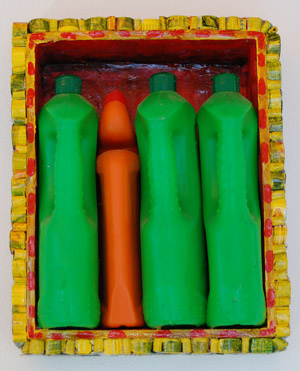
Orange, Cynthia Korzekwa

Orange, Cynthia Korzekwa

everydaytrash: How many Web sites do you have ?

Korzekwa: I don’t know how many websites I have. When I first became interested in internet and websites, I signed up for all the freebie spaces available and began experimenting. Being a technological illiterate, I signed up for A Quicky Course on how to make websites and just started making them. Very primitive stuff (and basically, they still are). But the only way to evolve is to experiment. And that’s what I did. Now, of course, I have a different rapport with internet. And the yin yang of content and form has shifted its weight. Content interests me more thus I no longer feel the need to make more websites. Unless, of course, there’s not a particular need as was the case with MAKE ART, NOT TRASH.

everydaytrash: What motivated you to start Art for Housewives the blog?

Korzekwa: Several years ago, I read “1992 World Scientists’ Warning to Humanity” and literally felt sick to my stomach after reading it. Some 1,700 of the world’s leading scientists, including the majority of Nobel laureates in the sciences, felt the need to get together to declare their concern for our future. Their statement begins with:

Human beings and the natural world are on a collision course. Human activities inflict harsh and often irreversible damage on the environment and on critical resources. If not checked, many of our current practices put at serious risk the future that we wish for human society and the plant and animal kingdoms, and may so alter the living world that it will be unable to sustain life in the manner that we know. Fundamental changes are urgent if we are to avoid the collision our present course will bring about.

Very spooky stuff. My immediate concern was for Sergio and Chiara, my children. I felt the need to react. And that’s how my blog, Art For Housewives, began. And the time, I already had a blog, Obliterated, that focused on the idea that making things with your hands was a form of active meditation. So basically, I kept that idea but added a new element—that of making things from trash. My blog, Art For Housewives, is almost 6 years old now. In the beginning it was quite difficult to find on-line examples of recycling to make objects that were not only useful but beautiful as well. The only women whom seemed interested in the use of trash to make something were those of Third World countries. Women who had no money to buy “art supplies.”
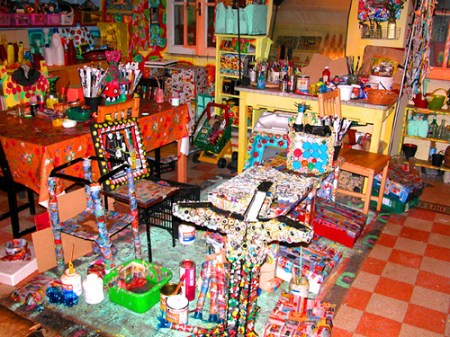
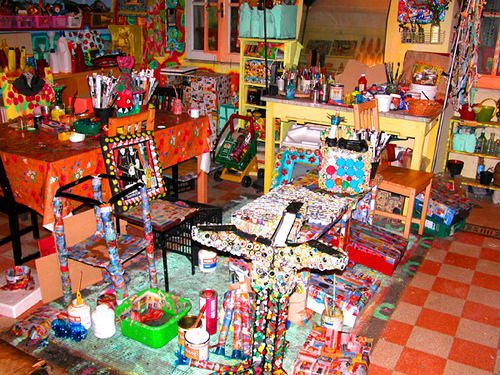
Cynthia Korzekwa's studio

Cynthia Korzekwa's studio

My blog had immediate success–6 to 10,000 visits per month. But what helped me a lot, visit wise, was that a kind of Neo-Domesticity began to flourish after September 11th. Women began giving value to the home and thus to crafts which had been abandoned in favour of “emancipation.” And so they began knitting like crazy and starting blogs to exchange patterns and info. Martha Stewart also animated alot of female souls. With her, it became trendy to care about your home. Related blogs began cropping up all the time. Now there are so many women out there making things and blogging about it. They are making art that is so much more exciting than that alienating conceptual stuff mainstream art caters to.

everydaytrash: I heard you are working on Art for Housewives, an illustrated essay in the style of Marjane Satrapi’s graphic novel Persepolis. How’s the project going?

Korzekwa: After a couple of years blogging Housewives, I decided to publish an illustrated essay based on the information I had collected, ARTE PER MASSAIE (“art for housewives” in Italian). The text and artwork was no problem but, living in Italy, I had to write in Italian. Never having studied it, my Italian is a bit folkloristic. Luckily, there’s a decent English translation at the end of the book.
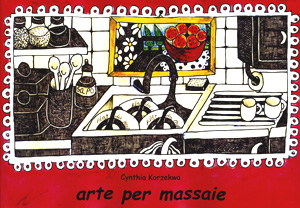
bookcover

book cover

everydattrash: How did MAKE ART, NOT TRASH come about?

Korzekwa: Last year, I decided to try a bit of activism and this led to MAKE ART, NOT TRASH, a site with links to some of my favourite examples of how to transform trash. You know, bricolage. Then I printed 300 stickers and put them on the dumpsters in the area of my studio, San Lorenzo (Rome). The stickers had a drawing of a bunny encouraging people to think before throwing something away.
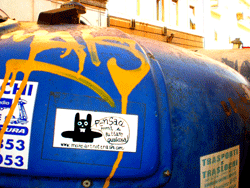
bunny sticker in the wild

bunny sticker in the wild

Critical mass is fundamental for change. Take Kerala, India, for example. Being a very poor state with a high birthrate, the local government tried convincing women to practice contrapception and men to be sterilized but with little success. Then a major emphasis was placed on education and everyone sent to school. As a result, today the citizens of Kerala are 100% literate, an anomaly in India. As a result, the birth rate has drastically dropped. Once you are educated, no one needs to convince you what is the right thing to do because you know on your own.

Awareness helps one make the right choices.

(Photos via Korzekwa’s many Web sites)
Make Art, Not Trash

Monday, February 23, 2009

I’m not quite sure how to describe Make Art Not Trash links.  It’s an online collage, a blog in one page and a time-sucking portal for any trashie.  Here are some things I’ve discovered via this…installation.

Made in the Philippines

Made in the Philippines

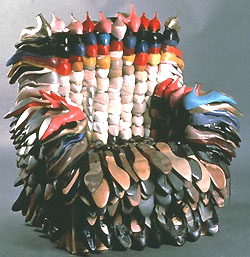
A chair made of shoes.

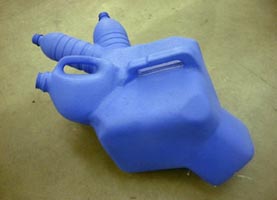
Untitled, plastic bottle with Bondo glue and paint, 2000

Untitled

Blob-like sculptures made of plastic bottles.

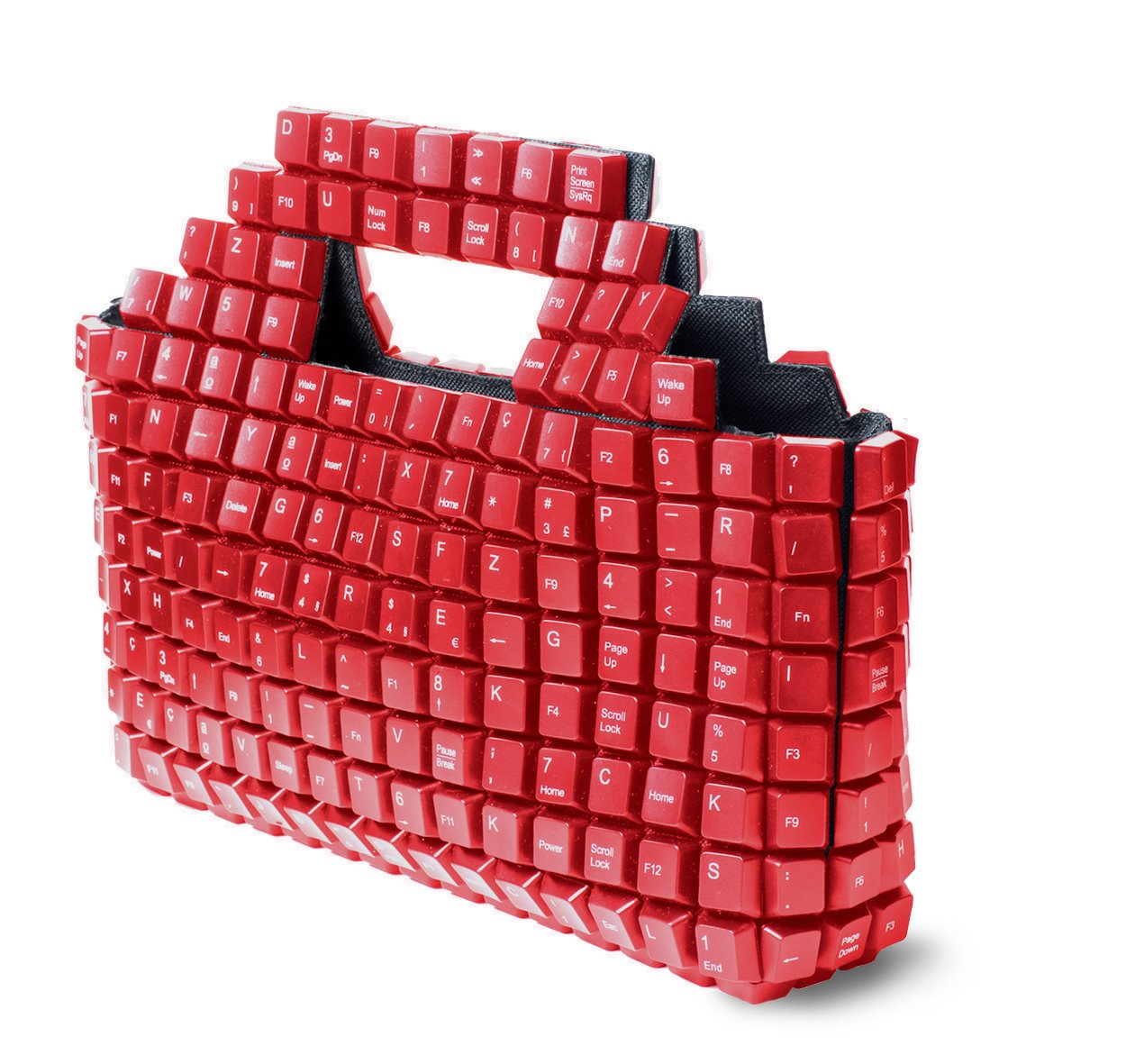
Keybag Red

Keybag Red

A keyboard turned handbag.

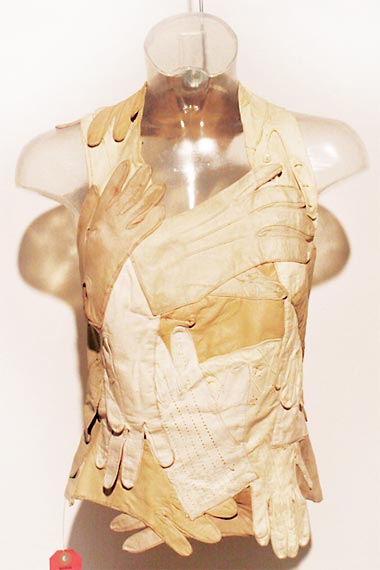
maison martin margiela

maison martin margiela

A halter top fashioned from vintage gloves.

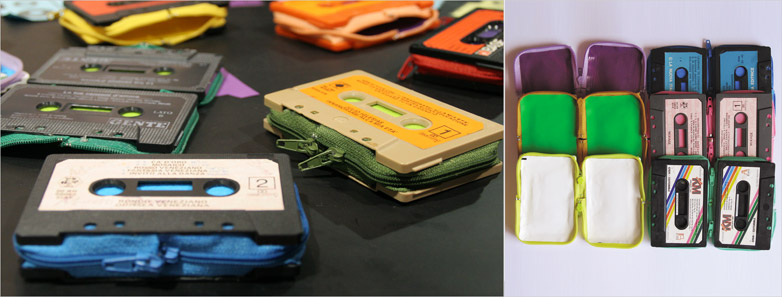
Cassette Wallet

Cassette Wallet

And wallets made out of old cassette tapes. Those last two items are both via design boom, a site to bookmark for a day when the economy bounces back (or to keep an eye on now for DIY knock-off inspiration).

Here’s that Make Art Not Trash link once again.  Happy Web surfing.

UPDATE: just figured out that Make Art Not Trash links is just one page of the site Make Art Not Trash run by Cynthia Korzekwa of Art for Housewives fame.  What a Web presence!

Japanatrash Art

Monday, February 16, 2009

Every once in a while, I search YouTube for “trash art”.

Not sure what this clip is all about, but I am confident that if I spoke Japanese I would declare it blogworthy.  It involves some sort of talent or game show and Jean-François Millet’s iconic painting “The Gleaners”.

The Office 3.0 – Silent Art

Friday, February 13, 2009

This week I had an errand at the Stockholm based communications agency Futurniture. Founder and CEO Jakob Lind took the opportunity to give us a little tour of an art exhibition they currently host: The Office 3.0 – Silent Art, a reference to the 1963 classic Silent Spring, written by Rachel Carson. The exhibition is made up of work from several artists, my favourite being Johanna Gustafsson Fürst’s art, which is all made from two weeks of trash from the Futurniture office.

Gustafsson Fürst has covered all door handles in newspaper, hidden their aquarium (normally sporting a couple of plastic dishgloves flying around inside…) beneath a heap of I-don’t-know-what, taped flattened milk cartons to the floors, etc. It’s all over the place really, but since the office is such a busy creative creator’s space anyway, it takes a while before you realize what was actually there before Gustafsson Fürst’s takeover. I like it! Another, more serious, part of the exhibition, is a group of watercolour paintings made with toxic water, composed by Jan Stene Markus Anteskog. All curated by Jan Stene. Provocative as only art can be.

Reblog: Suzanne Proulx’s Dust Bunnies

Sunday, February 8, 2009
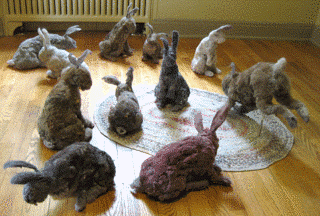
Bunnies made of dust

Bunnies made of dust

Yup, that’s right, these bunnies are literally made of dust.  They’re part of an installation by the artist Suzanne Proulx.  More on the project here.

Via Olympia Dumpster Divers via Art for Housewives

Upcycling

Sunday, February 1, 2009

Upcycling.  It’s all the rage.  Want proof?  Just take a click through the internet this week.

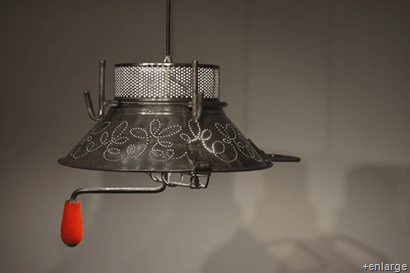
Curbly posted on recycled kitchenware lighting, via the fantastic garblog Green Upgader.

Colander lamp by French designer "Garbage"

Colander lamp by French designer "Garbage"

The Temas Blog did a video roundup of Brazilian trashion.  This clip of looks fashioned from drink can tabs is my favorite.

Wooster Collective found not one, but two posts worth of fur coat upcycling by street artist Neozoon.

Upcycling ala Neozoon

Upcycling ala Neozoon

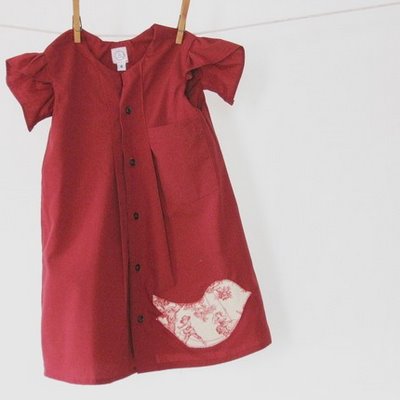
And the crafty mavens of Etsy shared all kinds of DIY upcycling for Valentine’s.  I love this men’s shirt turned party dress.

shirt-dress

Upcycled shirt dress

Also, the heart jean skirt is literally badass.

Unsolicited Fashion

Wednesday, January 14, 2009

This sassy little number—a dress beautifully crafted from junk mail—has made the rounds of the internets.  My friend Rachel saw it on A Dress A Day via Recycle Runway.

Fan mail dress by Nancy Judd

Fan mail dress by Nancy Judd

According to the designer’s site (from which I ripped these photos):

“Colorful junk mail (catalogues, solicitations, newspaper ads) were folded into fans and sewn onto a skirt and dress made of scrap canvas and a mantilla for the hair. The vintage shoes are covered with old postage stamps. The inspiration for this outfit came from the origami peacock earrings- Nancy Judd made them in 1988 when she designed and sold origami jewelry for a summer job.”

She pairs her piece with some helpful info on how to reduce your junk mail.

Thanks for the tip, Rachel!

Trashtastic Tuesday with Kuros Zahedi

Tuesday, January 13, 2009

I posted a week or two ago that Sustainable Dave‘s recycling materials might be made into a work of art.  It was something I’d read on 365 Days of Trash, making a mental note to follow up and find out just who the artist could be.  As luck would have it, that artist found me first.

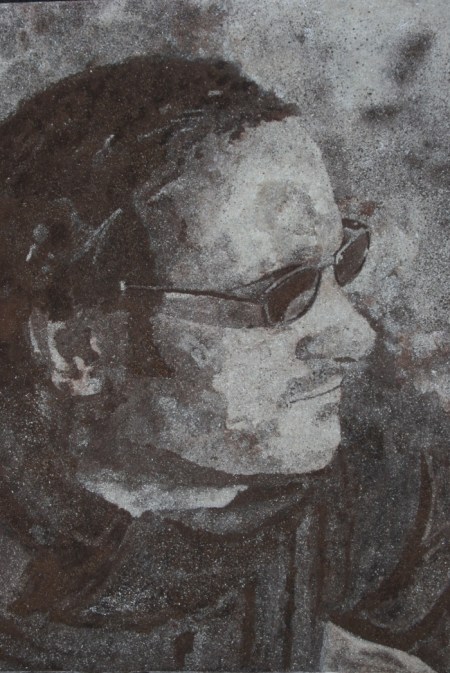
Kuros Zahedi, self portrait in powdered alder wood and bark on paper

Kuros Zahedi, self portrait in powdered alder wood and bark on paper

His name is Kuros Zahedi and he comes with excellent credentials: experience in working with recycled materials, an ongoing project to turn Ari Derfel of Save Your Trash‘s trash into a work of art  and a kick ass Persian name (we’re partial to Iranian-Americans around here).

What better way to kick off the first Trashtastic Tuesday of the new year?

everydaytrash: How did you link up with Ari Derfel?

Zahedi: Ari was looking for an artist to turn his collection into a work of art.  He looked the monster in the eye and by doing so put the whole phenomenon of garbage under a lens for everyone.  Ari was Finding Away.  That is title of the art work.

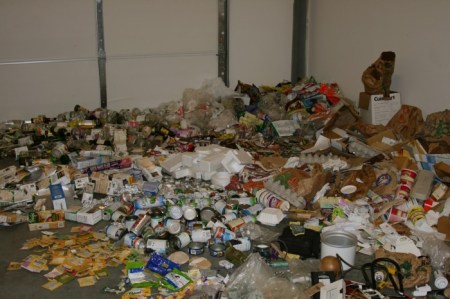
I was involved with a project for a great group in Seattle called Sustainable Capitol Hill.  One of the organizers had a friend who was friends with Ari.  One year’s worth of trash!  What a potent collection to work with, I thought!   I emailed and shared my work.  Ari wrote back.  We talked on email.  We talked on the phone.  I liked Ari immediately.  I liked his energy, his upbeat positivity, spirituality and openness… and the next thing I knew, I was on my way to Oakland.

Ari's trash

Ari's trash

everydaytrash: What are your plans for his trash?

Zahedi: I have counted, weighed and thoroughly documented Ari’s trash and am now starting to take it apart.  It will get crushed, cut and pulped.  It will be totally transformed.

Ari Derfel’s collection brings Trash itself into unusual focus.  Looking deeply into the essence of waste reveals much more than the filth of landfills.  Trash is the precipitate of a much larger reaction.  It stands as a symbol of civilization’s disjointedness and as an emblem of our historic destructiveness and greed toward each other and the earth’s precious ecology.  Today, not only are the earth’s biological systems on the verge of breaking down, but many raw natural resources that civilization depends on are becoming increasingly rare.  EITHER there will be terrible fighting for these resources, leading to suffering on a unimaginable scale, OR there will have to be some sort of major shift in human consciousness, a general enlightenment.

The art work I am developing is a metaphoric vision of this shift.  It will depict humanity collectively rising and working together transform ugliness into beauty, the damaging into the beneficial, and the fragmented into the whole.

everydaytrash:
What other work have you done with rubbish materials?

Zahedi: I have an ongoing series called Urban Alchemy in which I pick up litter from the streets, often with the help of communities, and then transform the collected trash into art.  My fascination with using trash has a lot to do with its iconic status as the lowest of low and the powerful symbolism of turning it into a work of art.  Often, by the time a piece is finished, the place which was cleaned for it has started to become dirty again, but like an acupuncture needle, a subtle good has been done there. The gesture of cleaning a place and turning the garbage into art is tiny in relation to the enormous challenges facing humanity today, but the project is a metaphor, it is a symbolic act of healing.

"Garden of Hope," created from Seattle street litter, staples, and shellac on recycled doors

"Garden of Hope," created from Seattle street litter, staples, and shellac on recycled doors

everydaytrash: I hear you might do a similar project with Sustainable Dave‘s recycling.  Any teasers you can share about what that project might be like?

Zahedi: I am excited that Dave is planning on sending me his recycling!  His trash is going on permanent display at the Garbage Museum, but I will get his recycling.  Though I have many ideas, I don’t know what I will do with it yet…but using just recyclable materials will present an interesting conceptual challenge.

Lisa Bagwell

Sunday, January 11, 2009

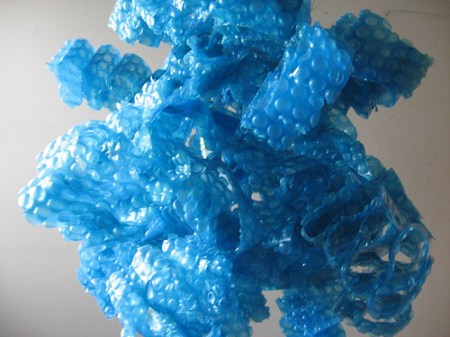
bubblewrap1My little speaking gig at the Princeton Environmental Film Festival led to a wealth of blogable discoveries (thank you Susan Conlon for organizing such a fantastic event).

First up, we have Lisa Bagwell, a trash artist in the audience whose “deepest intention remains to raise people’s awareness of the wasteful and destructive lifestyle lived by most Americans.”  Lisa just  since sent me links to her lovely site and wonderful Flickr pool of sculpture, lamps and mobiles.  I dig the slightly creepy mobiles and this intimidating bottle blimp.

And are those recycled pistachio shells on that lamp shade?  Iranians of the world, take note!

Tits and Trash

Thursday, January 8, 2009

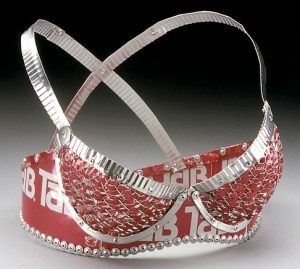
I’ve been getting an eyeful of  lingerie made of trash by keeping up with fellow garbloggers Little Shiva over at Visible Trash and Ruby Re-Usable of Olympia Dumpster Divers who each highlighted this recent Wall Street Journal article.  Thought I’d share:

pink-tab-bikini-top

This image of a fabulous  number in Tab tabs by eco-artist Ingrid Goldbloom Bloch was ripped from the WSJ article.

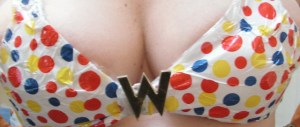
wonderbra-by-ruby-re-usable

And Ruby herself constructed this wonderous wonder bra.  For more on Ruby’s work,  check out the Trashtastic Tuesday Q & A she graciously granted everydaytrash back in ’07.

For more on the fun and exciting world of garblogging, come check out my talk at the Princeton Public Library at 4pm today, part of the Princeton Environmental Film Festival.   The trashy lineup includes my talk and a trashy film screening, all opening acts for that trailblazing trashie, Elizabeth Royte.  Any readers out there from Jersey?  Hope to see you at the library this afternoon.  Everyone else stay tuned for the recap.

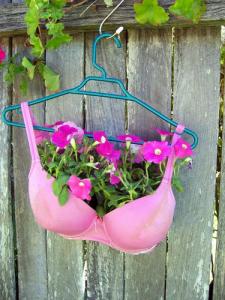
UPDATE:  Tits and trash are in the air.  Just found this pic of a brassiere planter to raise awareness of, you guessed it, breast cancer on Esther’s blog over at Je me recycle.

bra

Organ Donor

Tuesday, January 6, 2009

My friend Flex Unger has a small recording studio in Brooklyn full of broken toys and good intentions.  A lover of to-do lists, Flex recently went around the studio taking pictures of the things he’d like to fix or convert in the coming months, which he posted on his blog along with short descriptions of the forthcoming projects.

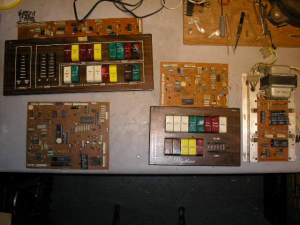
organparts2

Organ parts

[NOTE: This post has been updated to correct gross errors in my understanding of all things technical.  Despite years of wood shop, metal shop, power shop, a class on bike repair and accelerated physics, I still don’t quite get how to take things apart or put them back together again.  Apologies if you rushed out to try these projects at home between 5 and 11pm EST.]

My favorite of these resolutions is the master plan to deconstruct and recycle an old Viscount organ (shown above, in pieces) to make a portable drum machine and build an amplifier and a mini organ.  Inspiration for extracting the organ’s drum machine came from the YouTube clip below; and from a primal calling to amass the world’s largest collection of portable beat-making devices.  The hope is to use a 1/4 inch jack from the organ’s circuitry so that the device can be output into an amp.

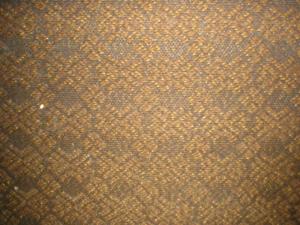
Project #2 is an amplifier that will serve purposes equal parts form and function.  Flex has an oven range—rescued from the trash!—attached to a wall that is supposed to reverberate for an echo effect.  If I understand correctly, by extracting the organ’s speaker and its covering, he can a) preserve the attractive vintage fabric look of the Viscount and b) use it to build a makeshift PA that will carry sound over to the oven range.

organ-fabric

Organ fabric

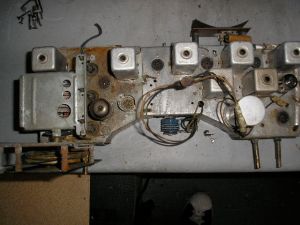
Project #2 has the added bonus of incorporating this rad-looking Zenith tube radio found on the streets of Brooklyn, which will serve as the amplifier.

tuberadio1

Tube radio

For the third and final project, Flex plans to collect the remaining parts and put them back together in the form of a mini-organ.

Stay tuned for progress reports.  And if, by chance, you’re in the market for a green recording studio for your next creative audio project, consider Clean and Humble, a trash and artist-friendly space.

Teddy bear trash bags!

Thursday, December 18, 2008

Dear Santa…

teddy

Via Dinosaurs and Robots