Archive for the ‘TRA$H’ Category

Counterbalance

Friday, November 6, 2009

New Yorkers, save the date for November 14th. Quad Cinema will screen Counterbalance, a new film about waste pickers in Dehli as part of the 8th Annual Mahindra Indo-American Arts Council (MIAAC) Film Festival. Event starts at noon. $15 general admission, $12 students and IAAC members. Purchase tickets here. Check out the Facebook invite for details here.

wastepickers

Wastepickers, photo via Chintan

Here’s a description:

Every day, tens of thousands of waste pickers and waste recyclers in Delhi earn their income from collecting, selling and recycling trash. Their work, measured to be highly efficient, has not only been undervalued but even marginalized with the introduction of large private companies. This is the story of two municipalities in Delhi: one that has incorporated the work of the waste recyclers as part of the formal waste system, while the other has taken another direction.

Counterbalance is the product of a partnership between the video advocacy group WITNESS and the Indian environmental group Chintan. You can watch an interview with Bharati Chaturvedi, the film’s director and the founder and director of Chintan, here and here.

And for more about WITNESS, click here. For more about Chintan Environmental Research and Action Group, click here.

Thanks for the tip, Elizabeth!

International electronic tra$h crimes 101

Wednesday, November 4, 2009

We probably missed it (released in June 2009) due to not being on the send list, but now we’ve read it and it is high time we introduced to you the INTERPOL report Electronic Waste and Organized Crime – Assessing the Links.

The report goes in to some depth analysis of electronic & electric tra$h, highlighting facts such as the annual turnover of the UK market; UK£2 million (US$ 3,3 million), using the example to paint an overview. Most intriguing conclusion is that actors in the legal market claim that contractors offering free recycling of toxic electronic products probably also operate illegally, as profiting otherwise wouldn’t be possible.

Further, the report gives an image of the incentives of entering the illegal market: Tra$h fat cats buy (for example) an old TV, with the promise that their company will recycle it and sell the parts for profit, but instead sells it in a developing country. Buying the unit will cost US$4 or so, and sell for US$8.

Last but not least, the people behind the report call for more research in order to cast light over these shadowed activities. We most certainly agree to that. Increased efforts of recycling must not be the source of growing international crime (and with that, increased numbers of non-recycled electronics and electrics spewing out toxins once their capacity to entertain finally stops).

Sweden: Export an illegal fridge and go to jail

Thursday, October 29, 2009

The Swedish Government seems to want to make an example, as the Cabinet later today will initiate drafting of a new law that would make it easier to send illegal exporters of electric and electronic tra$h, which we know is a global and profitable business, to court. The new law is also supposed to make it easier for law enforcement to press charges against individuals in the tra$h business for attempted smuggling (right now, the tra$h must leave Sweden for things to become illegal, making it a lot more complicated process for authorities to engage in).

While there will be a while before we see actual proposed legislation, I applaud this, but think that we should also recognize that this is a symptom that cooperation between police forces of involved countries should be strengthened. We can’t just add new legislation to cure an inefficient collaborative environment. International Trash Police Summit now, please!

Recycling of clunker$ not happening at neck-brake speed

Monday, October 26, 2009

In August, we asked ourselves what in the world would happen to 750,000 clunker$ that were expected to be the outcome of the Cash for Clunkers programme (or as it’s actually called, the Car Allowance Rebate System; CARS), i.e. the old cars that americans have been allowed to trade in for a cash bonus, with the condition that the car would be subject to recycling, when buying a new car. A couple of months down the line, the New York Times alert us that all is not well:

Under the program, the cars are required to be crushed or shredded within six months of the date the vehicle is transferred from the dealership. Recyclers say the deadline, even a few months away, will be hard as they try to remove spare parts like transmissions, front and rear axles, starters and alternators.

Clearly, there are consequences that were not really thought of, although how on earth you can do policy implementation analysis this poor is beyond my wits. It seems as if deadlines will now be extended, but it proves that just because you have a great political idea that people agree with (not that CARS is one of them, but that’s another discussion), it doesn’t mean that things will automatically fall into place. Or in short, a society with less waste requires excellent civil servants in order to be sustainable. Municipal architects of the world, please report.

happen to 750,000 clunker$?

Solar Cities

Monday, October 19, 2009

Since the Egyptian government killed all their pigs, the Zabaleen trash picking community of Cairo have had no use for the organic waste they used to collect as food slops, thus creating a trash crisis for the city at large. NPR reports on a couple of positive developments. One, the Zabaleen neighborhoods now smell better (though other parts of Cairo now stink more) and an organization called Solar Cities has been building bio-gas and solar fueled heaters for the Zabaleen providing hot water to a community that has never had it before and creating a use for some of the organic waste plaguing Cairo.

Listen to the Weekend Edition clip and check out production assistant Kimberly Adamspost on NPR’s blog Soapbox describing her recent trip to Egypt and Solar Cities’ work there.

EcoATM

Thursday, October 8, 2009

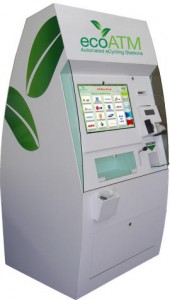
Tested in Omaha and coming soon to a city near you, EcoATM is a vending machine that takes gadgets and dispenses coupons, vouchers and cash. The working prototype takes only old cell phones, but the company plans to add mp3 players, digital cameras and more to the list of recyclables.

EcoATM

EcoATM

Via MyGloss

Gasification

Monday, October 5, 2009

The nytimes.com blog Green Inc. reports that:

Enerkem, a green energy company based in Quebec, has developed an alternative approach to mining the carbon out of non-recyclable plastics, construction waste and other materials found in the municipal waste stream.

The company says it has pioneered a gasification technology that processes waste into a synthetic gas that can be converted into liquid fuels and biochemicals, and it has entered a 25-year deal with the City of Edmonton to purchase the trash left over after glass, metals, paper and recyclable plastics have been removed.

Upcyled fire hoses

Friday, October 2, 2009

via Neatorama

World’s deepest trash can

Friday, October 2, 2009

via MAKE via Neatorama

Trash advocates gossip

Thursday, October 1, 2009

Having lived in the US for six months now, I’ve learned that one of the big things people do here is debt, which for many leads to bankruptcy. It seems that the turn has come to the advocacy agency National Recycling Coalition (NRC, the major umbrella for people in trash and recycling), which must be in financial peril I guess, reading a report from Waste & Recycling News.

Apparently, a vote to file for Chapter 7 has been temporarily suspended, while developing a reorganization plan and negotiating with creditors. Consolidation plans and ideas for restructuring however, seem to have been going on for some while, but without success. Just a month ago, a membership vote rejected the plans to merge with Keep America Beautiful (KAB). Two weeks later, KAB announced that they had hired three former executives from NRC.

What lies behind all this we don’t really know, but if anyone does know, feel free to tip us of, in open or behind the curtains…

Cairo without pigs

Friday, September 25, 2009

As you probably read in last week’s Sunday Times, the Egyptian government may now regret having killed all the pigs in Cairo in a misguided effort to prevent the spread of  Swine Flu. With no pigs to feed, the Zabaleen have no reason to go door to door collecting food scraps anymore, which means more trash ends up in the streets.

Garbage Dreams poster

Garbage Dreams poster

Filmmaker Mai Iskander emailed me after the piece ran to remind me that her documentary Garbage Dreams about three young men growing up in Cairo’s trash picking community touches on one of the core issues of the day: source separation.

It’s an interesting lens to put to the developed world. What distinguishes modern countries from those struggling to “catch up” isn’t just the fact that we have high-tech recycling facilities, it’s that we are more or less willing to sort our trash in our own homes.

The Zabaleen hope that by encouraging their neighbors to pre-sort trash, they can hang on to a piece of the profits from the waste industry before foreign waste hauling companies eclipse the need for local trash pickers. And it looks like their campaign is finally getting some buy-in from local authorities.

Sadly, there no longer seems to be much call to sort out food waste as well. Let’s hope the increased trash in the streets at the very least serves as a political tool encouraging Egyptians to think about what happens to trash after it leaves the home and what they might do to reduce waste and recycle more.

Food trash insanity rant

Wednesday, September 23, 2009

Back from the motherland, thinking “honestly, what are they thinking?”

Background: Swedish Public Radio are reporting today on food waste. Previously, this discusson has been focusing mainly on households (who throw out about 11 pounds of edible food every week). Today our lovely radio turned the attention to supermarkets: Annualy, supermarkets in Sweden (population 9 million) throw away 110 000 us short tonnes of perfectly edible food. Value US$ 292 million. Food giants are saying that they only do what customers want them to do, and that putting “old” food on sale is bad for their corporate image.

Again: What are they thinking? (I’m thinking I should resaddle and head into the food business. There’s obviously lots of tra$h to collect.)

For those of you who now feel guilty, check out Love Food Hate Waste, a nice little UK resource on how to at least avoid this in your home. They have recepies!

The most carcinogenic place on the planet

Tuesday, September 1, 2009

Via Unconsumption, found this well produced news piece from CBS 60 Minutes on global tra$h. Among other interesting details, I recommend it for the tracing of high-lead monitors from supposedly super ethical US recycling company Executive Recycling, via the Hong Kong harbour, the Hong Kong mayor and into gangster tra$h land, where the local industry has transformed the community to the most carcinogenic in the world.

As the piece concludes however, Executive Recycling are not the only ones in this dirty business. Apparently, the feds are on the case. Tra$h Cops, gotta love them!

Cash for clunkers, Portland version

Wednesday, August 12, 2009

Having cooled down a bit after my latest rant about Cash for clunkers I am happy to see that there are other responses to this folly. Unconsumption reported yesterday about a bike shop in Portland who have taken the matter into their own hands with a Cash for clunkers bike version programme. Only, they upcycle the usable parts of the clunker bikes, instead of throwing them away. What an idea, huh?

What will happen to 750,000 clunker$?

Friday, August 7, 2009

About a week ago, it looked like Cash for Clunkers (or as its actually called, the Car Allowance Rebate System; CARS), i.e. the US government program through which car-owners rich enough to buy a new car if promising not to sell the old one but rather have it demolished, was up for a lot more funding. This has now come to pass.

According to washingtonpost.com, a quarter of a million new cars have been sold through this program to date. The program has been running since early July, so I’d say that a lot. Another half a million “environmentally friendly” cars are expected to hit the roads by Labor* Day. I’m still wondering who the fat cats in the sudden demoli$hing of 750,000 old cars are, and what they are doing to take care of the lead, sulphuric acid and mercury.

[*Linguistic bonus treat of the week: I really do want to spell this “Labour”, but since its actually the name of a holiday, I’ll make an exception.]