Waste Management thinks the energy plan should include giving them money to convert trash to energy. What do you think?
Hat tip: Amy.
Waste Management thinks the energy plan should include giving them money to convert trash to energy. What do you think?
Hat tip: Amy.
makeITfare, SwedWatch, the Church of Sweden and the Fair Trade Centre have produced a fairly substantive report on electronic tra$h flows from the European Union to developing countires. Speaking the language of the European Commission, the report uses the amusing term “Waste from Electrical and Electronic Equipment” (WEEE), but that’s where the fun stuff ends.
Quick facts: About 50 million tonnes of WEEE is produced annualy, and in the EU as a whole, only about a third is collected for recycling. Much of this is toxic and hazardous to handle, and even though some of the worst chemicals are no longer used in the EU, we can expect that most of the EU-WEEE predates July 2006, which is when regulations where tightened. As an example, an avarege cellphone contains about 200 chemical compounds.
According to the report, the flow of elctric trash from the EU to countries such as Pakistan, Ghana, China and the Philippines comes in many shapes. Three main routes can however be identified. First, there the tra$h that we are used to, garbage as an international commodity, on a market where the price of a laptop can be about US$ 10. Secondly, there’s the black market tra$h, which essentially is the same thing, only more illegal. Thirdly, there’s the export of used but fully functional computer, fridges, cell phones etc. from the global North to the global South.
When it comes to legal and illegal tra$h, the report points at the problem not really being whether what’s sold generates proper VAT, the problem is that regardless of who sells and buys, there are not adequate systems available when the tra$h reaches its final destination – it is taken care of by children and people living in poverty. The result is spelled in raised levels of led in their blood, and a long list of other things. For some tra$h tycoons, the ends justify the means. “Recycling” a computer costs about 15% in India, compared to West Europe.
For the donated computers and white goods, the problem will in the end be the same: Nowhere to recycle once the family fridge goes WEEE. I.e., it might feel all great giving your used laptop to an orphanage in Sub-Saharan Africa instead of sending it back to recycling, but trashly speaking, you might actually make things worse. Also worth to mention is that much of the used things that are supposed to be donated, actually end up as tra$h (and in some circumstances, its the other way round).
One of the more interesting, and at the same time deeply disturbing phenomena brought forward by the report are the so-called “trash tourists” that roam scrap yards and shady business offices in the EU. Trash tourists are essentially people who migrate in search of tra$h, more or less voluntarily. Makes me think of a Swedish investigative journalist TV-programme, exposing a businessman who in effect employed men from West Africa, without paying them, to sort out recycled car tires. He claimed they were guests, visiting to scout the market. They lived in barracks on the (incidentally toxic) grounds.
To conclude, the report notes with sadness that the Basel Convention, in place to prevent all this since 1989, is still terribly dysfunctional.
Yesterday we reported on rad trash activist Yuyun Ismawati being awarded one of this years Goldman Environmental Prizes. One of Ismawati’s fellow recipients, Syeda Rizwana Hasan, is also truly worthy of praise.
Hasan, a lawyer, works on behalf of the 20,000+ ship breaking workers dismantling ships in yards on the shores of Bangladesh, work that is being carried out under enormous hazards. Think lead paint counted by the tonnes, and any other toxic you might find on a ship, you see, they arrive as is. According to Hasan’s bio on the Goldman Prize web, one worker dies each week. As with electronic tra$h, which we’ve talked about in several posts, ship tra$h is a very lucrative business. Somewhere out there sits a gang of ship dismantling fat cats, with blood on their diamond credit cards.
Hasan’s work has led to, among other things, increased government legislation and increased public awareness. Last month, 36 ship yards were closed following tightened regulations instituted by the Bangladesh Supreme Court. For these achievements, we lift our hats off for Hasan, and hope that increased publicity might make ship owners think twice, before sending their used-up naval transportation units to the coast of Bangladesh, where incidentally the rare Irawaddy dolphin seems to be making a comeback.
One of this years seven recipients of the Goldman Environmental Prize is Yuyun Ismawati, 44, from Indonesia. Ismawati has been awarded for her work related to the growing challenges of trash on small islands, where trash storage space is scarce and poses an obvious threat to the land and community.
Ismawati has a long history in activism, advocacy and NGO work related to recycling and tra$h. For a full description check out her bio at the Goldman Environmental Prize web. One thing too cool not to mention though, is that Ismawati last year contributed strongly in developing Indonesia’s first-ever bill on waste management and waste management strategy! Hurrah!
…is rooted in trash. Nuclear waste to be specific. So reports Al Jazeera.
Somali pirates have accused European firms of dumping toxic waste off the Somali coast and are demanding an $8m ransom for the return of a Ukranian ship they captured, saying the money will go towards cleaning up the waste.
UPDATE: I’ve been reading conflicting things about pirates and trash. One camp thinks they’re eco-warriers or robin hoods, the other side thinks they are making it all up or selling Somali people an underdog narrative that sugarcoats the darker side of, well, piracy. Everyone seems to agree that pirates do bad things and that Somalia’s particular misfortune is the root cause of piracy. This freshly posted AP article gives some background.
Analysts blame Somalia’s nearly 20 years of lawlessness for fueling piracy’s rise.
Years ago, foreign trawlers began taking advantage of Somalia’s civil war to fish its waters illegally and dump toxic waste there. Vigilante Somali fishermen tried to defend their shores, and later morphed into full-blown pirates.
Attacks have risen markedly in recent weeks, and brigands hold at least 17 other ships and around 300 crew.
A whole bunch of companies—The New York Times and nytimes.com, Grist, PlanetGreen, GreenCar, Rueters, mkd, eHow, Better, Discovery Channel, National Geographic, and HowCast—teamed up to make this snazzy YouTube channel on living a greener life. What do you think?

Ngorongoro crater, Tanzania
I have to say, National Geographic is good with the ads. The Sun Chips contest linked from YTLiveGreen is ALMOST as compelling as the Waste Management ads on the Garbage Moguls page alerting us to the fact that their Florida landfill with soon be an ELEPHANT RESERVE. As a New Yorker whose landfill was closed only to be replaced by a tax hike to pay for expensive waste hauling contracts to drive my trash to other states, I find it very hard to praise ANYTHING the WM conglomorate does. But on the issue of elephants, I might just have to waver and say hells yeah.
The next hyper-dangerous load will go from plants in Italy to the Utah desert, reports Treehugger. How terribly silly.
Last week Jordan announced that the USA will design and construct storage facilities for Jordanian nuclear and radioactive trash. The facilities are expected to hold the ultra-toxic energy residue for about 50 years, so we’re not talking terminal storage here, since noone really seems to have a sollution for that. Surprisingly few communities around the world seem eager to want to live on top of deeply buried radioactives that will sit tight for about 1 000 000 years.
However, the fact that the Jordanian plant will be deployed wholly by the USA is interesting. Does it suggest a special nuclear-tight relationship between the two states? Or does it rather suggest that clever negotiators in the US Departments of Energy and Defense, together with the Environmental Protection Agency, put their heads together and found a way to test new ideas? Then again, it could just be global capitalism.
“We take waste, we add design and produce mass merchandise,”says TerraCycle founder and CEO Tom Szaky in the opening of his new show, Garbage Moguls. “I don’t see garbage, I see cash.”
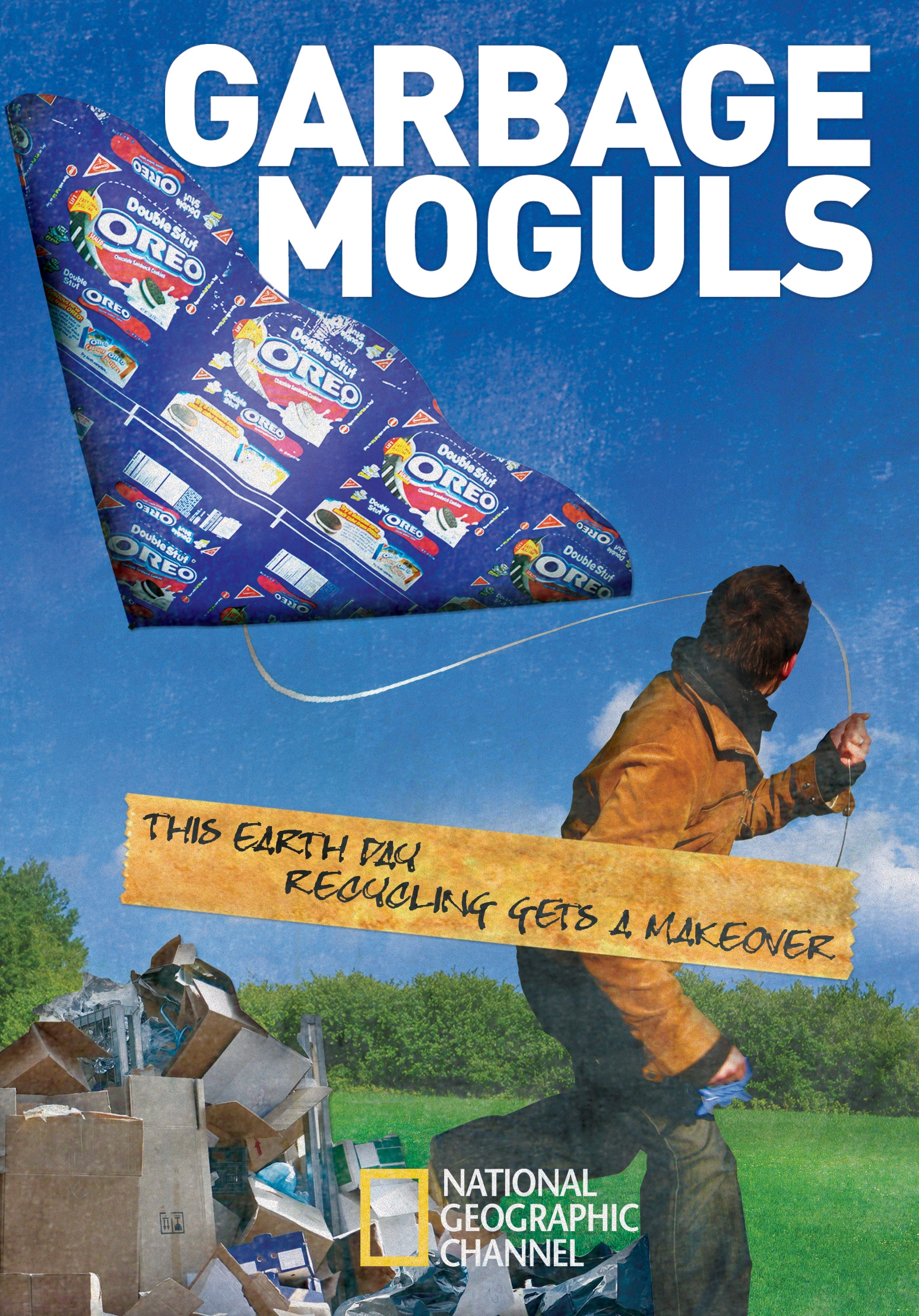
9pm ET/PT, Wed., April 22nd on the National Geographic Channel
He’s a soundbitey guy, that Szaky, which is probably an element of TerraCycle’s success. The man knows how to bottle charm.
After watching a sneak peak of the first episode—airs at 9pm ET/PT on Wednesday, April 22 a.k.a. Earth Day—I can honestly say it’s a show I would watch [If I got the National Geographic Channel. Which I did, until this week when my sister and I decided we couldn’t afford cable anymore]. It’s like Ace of Cakes, if you’ve ever seen that gem about a punk rock baker running a fancy cakemaking service with his friends. Only better, because this reality show is about a guy and his employees making neat stuff out of garbage and selling it to huge companies like Wal-Mart and OfficeMax.
Garbage Moguls is a flattering look at the TerraCycle crew. Szaky is the executive producer and in the show boldly refers to his company as an eco-revolution. But oddly enough, despite my own bias against anything profit-driven, the project doesn’t come off as entirely self-serving. They’re a cute bunch and all clearly dedicated to the TerraCycle cause—eco-capitalsim, which is just what it sounds like, in equal parts.
Episode one includes a brianstorming session about plastic cookie wrappers. First, they discuss the strengths of the material: very strong, waterproof. Then they toss out ideas for what could be made out of this product and sold commerically: poncho, hot air ballon and place mat are among the ideas rejected in favor of a flying kite.
“There isn’t’ any kind of waste that can’t be reinvented,” declares Szaky.
Which, when you think about it, is a rad concept to have aired on television, even if it’s being said in the context of personal profit. Still radder is the fact that TerraCycle collects the cookie wrappers from schools accross the country. Students and teachers gather up the trash from their institutions and mail them in to the company. In return, TerraCycle donates two cents per wrapper to the school it came from. My favorite scene is one of a couple staff members opening boxes of used Oreo wrappers and reading out the different states from which they came. It’s an all-American upcycling venture and a beautiful business model.
Anyway, enough of the spoilers. Watch for yourself and report back. I will say the most surprising bits are scenes of Szaky on the phone with buyers from large companies straight up lying that he has prototypes ready or is sure he can meet an order on time when he doesn’t and isn’t. The sense of do or die urgency lends the show some adreneleine, but isn’t the best ad for best business practices. I guess dramatic tension, good design and the fact that the company always delivers in the end overshadows this little detail.
At any rate, it’s the most entertaining Earth Day event I’ve ever come accross and sure to become one of my favotite shows. Trash! On TV! Perhaps we trashies can find a bar that gets the National Geographic Channel and organize weekly viewing get-togethers the way sports fans do for football and lesbians do for The L Word.
Update: Sorry, having issues with embedding video lately. Teasers for Garbage Moguls can be viewed here, here, here and here.
Over a couple of very depressing pages in Sunday’s edition of my morning paper, SvD, I could again follow Mattias Hagberg (read our previous interview with him!) to Ghana. Today, I am “happy” to be able to tell you that the pictures from the piece, taken by Karl Melander, can be viewed in a slideshow at the web edition of the paper. Not the “Atlantic coast beach” most of us are used to.
…has a special report on the American waste industry this week.
A news item in todays Svenska Dagbladet (2nd largest morning paper) talks about how Sweden is on it’s way to a “trash infarct” situation. As of now, we produce 1133 pounds (or 514 kilogrammes) of trash per person, per year. Even though we are top of the world in recycling, our garbage heaps grow with 3% every year, and then we haven’t even mentioned the unrecyclable (that a word?) toxic stuff that ends up at the bottom of our many trash combustion factories.
Another news item in the same paper is a cute story about kids in preschool making toys from trash, instead of buying toys. One challange seems to be that the municipal run tra$h company see risk of loosing profit in this sweet and educational activity. Makes me draw parallells to the only good scene in the movie Mammoth, where a grandmother takes her grandson to a scrap heap, showing him how kids work with collecting items that can be sold at a market, and how he doesn’t have to do that, since his mother works as a maid in the United States. (For those wondering why I would know of this particular movie, it’s from a Swedish director I will always love for his fantastic debut Fucking Åmål.)
Berlin signed a contract this week with Waste Away, Inc for a new fleet of robotic garbage trucks to start collecting trash from city homes. This trend, first started by rubbish clearance services in Bristol, has picked up in popularity around the world. Don’t be surprised if they end up in your city.
Operated by a joystick (fun!), hydraulic arm trash trucks have been tried out in other cities, including some in the U.S. They require bigger trash cans and allow for just one sanitation worker to man an entire route. I guess the days of one guy driving the truck and another one or two riding on the back and hopping off to collect the trash are over. While sanitation is hard, unenviable work, I hope this new technology doesn\’t reduce the need for sanitation workers. Our poor economy needs jobs!
Side note: in scanning the internets for images of these new trucks, I came across this gem of a children\’s book: I Stink by Kate and Jim McMullan. It\’s the first-person tale of a garbage truck and companion reader to I\’m Dirty, the first-person tale of a front-end loader. Check out this totally endearing review over at A Wrung Sponge. I\’m adding both to my list of trash books for kids.
Sweden’s largest morning paper, Dagens Nyheter, reports today that about 150 trash collectors in Stockholm threaten to go on a wildcat strike any day now, over a salary conflict with the entrepeneur handling the garbage on behalf of the municipal. The conflict itself is pretty interesting, since trash collectors here have a contract structure in which they are paid a kind of piece wage, based on the amount of trash they collect.
The employer wants to pay them a flat monthly salary (a very standard way of doing things), which for most of the workers would mean less cash. And about 20% more work. Further, the trash collectors wants to limit the amount of trash they can collect, and are complaining that there’s just so much more trash these days. Trash collector Mr Berra Ramhquist, 27 years on the job, tells Dagens Nyheter that the increase since he started is just immense.
If a wildcat strike indeed starts, one can just imagine how quickly we all will be part of an involuntary trash collecting project Mattias Hagberg style! To be continued.
Followers of this blog perhaps recall this post about the book Skräp (“skräp” being Swedish for “garbage”) from November. Today we are proud to present an interview with the author, Mattias Hagberg.

Mattias Hagberg, journalist resident in Sweden's second city Gothenburg, author of Skräp
Before we start, a little recap: Skräp is a book about garbage, in which Mattias Hagberg starts off with discontinuing the routine of taking out his family’s trash. Instead, he hides their fully loaded plastic garbage bags under the sink. This soon becomes a ridiculous exercise, and Mattias proceeds his experiment in a secret room in the cellar of the house, keeping neighbours using the cellar unaware. However, Mattias quickly understands the practical limitations of this project, and gasping for breath moves his horribly stinking trash collection (only a few days old) to the garbage container room.
Back in his apartment, Mattias Hagberg ponders over where his trash actually will be going, now that it’s out of his experiment and back into the system. Since the early 90’s, Sweden’s had an idea of system called “The Nature’s Cycle”, an idea based on the notion that our garbage can and should be recycled, i.e. return to the Nature’s Cycle. Much like Mufasa teaches his son Simba about how lions die and turn to grass, eaten by anthelopes, in the Disney blockbuster The Lion King.

Skräp, the book
Mattias Hagberg soon discovers that trash isn’t much of a happy circle-of-life story. Instead, he gives a thrilling tale about the cash in trash, how “recycling” still produces tonnes and tonnes of toxic waste and how our electronic waste ends up in slum quarters in Ghana and China, in a chain starting at your local recycling depot, going through multi-national corporations, to the mafia.
Hello Mattias Hagberg, how are you, what’s up?
– Doing alright thanks, slight headcold, other than that fine. Working on what feels like a gazillion of projects. I think most relevant for your readers is an article about the Swedish auto industry, with the angle that the point is not to save this industry, but understand that the whole system of autoism is in crisis. That constructing and buying new cars simply won’t do.
Cewl, looking forward to reading it! So, why did you decide to write a book about garbage?
– The idea was actually my editor’s. At first I was scpetic, it all felt very technical, I didn’t really know anything about garbage, had this vague idea about the recycling system working smoothly. Then I did the experiment, stopped taking out the trash, an experiment you know proved do be quite stupid. But it inspired me to take things to the next level. I realised that while we have a functioning recycling system, that system doesn’t recycle everything, far from it. And the system is suffering from the fact that we keep producing increasingly more waste. As everyday citizens however, we have a veil above our eyes for this fact, we are never confronted with the real problem: That we buy a flat screen TV when our old TV works quite well.
Which part of the work surprised you the most?
– The insane amount of garbage each of us produce in one year. Several hundrered pounds! In the average family, about 20-25% of this garbage is food, that is most often perfectly edible! I was also intrigued by how fooled we are that there is a connection between “recycle” and “close”, how we pervive recycling to be this story about a process in harmony with nature. It’s a global industry, run by multinational enterprise. To me, it resembles the middle-age trade in letters of indulgence. For example, when garbage is burned, energy is produced that heats houses, and filters keeps the smoke clean, but the toxic remains after burning, and the poisons caught in the filter, still remains, and needs to be kept somewhere.
How has this changed your relationship to garbage?
– I think that deep down, we are all aware of that more consumption is just foolish, but we ignore this and continues to buy. For myself, of course the work with the book has effected what I buy and what I do with it, but at the same time I’m a bit fed up with the individualist perspective. We must focus more on the systemic errors of our culture, bring the debate from the behaviour of people to the behaviour of enterprise. Right now we have no debate, and we know that the resources of this earth will end. The garbage system of today is something we really need to adress, together.
 everydaytrash