Archive for the ‘Trash Politics’ Category

Recycling of clunker$ not happening at neck-brake speed

Monday, October 26, 2009

In August, we asked ourselves what in the world would happen to 750,000 clunker$ that were expected to be the outcome of the Cash for Clunkers programme (or as it’s actually called, the Car Allowance Rebate System; CARS), i.e. the old cars that americans have been allowed to trade in for a cash bonus, with the condition that the car would be subject to recycling, when buying a new car. A couple of months down the line, the New York Times alert us that all is not well:

Under the program, the cars are required to be crushed or shredded within six months of the date the vehicle is transferred from the dealership. Recyclers say the deadline, even a few months away, will be hard as they try to remove spare parts like transmissions, front and rear axles, starters and alternators.

Clearly, there are consequences that were not really thought of, although how on earth you can do policy implementation analysis this poor is beyond my wits. It seems as if deadlines will now be extended, but it proves that just because you have a great political idea that people agree with (not that CARS is one of them, but that’s another discussion), it doesn’t mean that things will automatically fall into place. Or in short, a society with less waste requires excellent civil servants in order to be sustainable. Municipal architects of the world, please report.


happen to 750,000 clunker$?

ReCORK America

Thursday, October 8, 2009

ReCORK America is a recycling project of Amorim, a Portugese company and the world’s largest cork supplier. According to a spokesman for the company, the program has collected over four million corks to date…and counting. This week, they partnered with SOLE, a footwear company that will use the corks as a base for their shoes.

Recycled corks

Recycled corks

I am usually very skeptical of green business press releases, but I really like this idea. Cork is such a useful material. It’s such a shame that so much ends up in the trash. Californians can donate wine corks to the project at these locations.

RealSimple Recycling Facts

Thursday, October 8, 2009

A recycling cheat sheet.

New Eyes for the Needy

Tuesday, October 6, 2009

A colleague placed a collection box for used glasses in the kitchen at my office. Her son is collecting them for New Eyes for the Needy, an organization that recycles eye glasses in the U.S. and overseas.

Let me know if you have an old pair to spare. Or start a drive yourself.

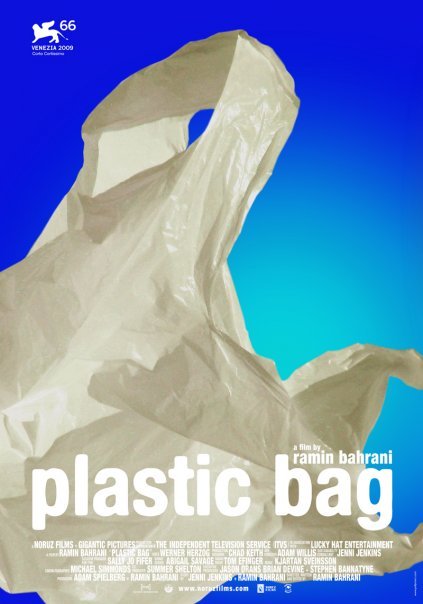
Ramin Bahrani’s Plastic Bag

Thursday, October 1, 2009
Plastic Bag poster

Plastic Bag poster

Filmmaker Ramin Bahrani‘s short film Plastic Bag, which debuted at the Venice Film Festival, is now playing at the New York Film Festival and will soon be available online.  It’s 18 minutes long and features narration by Werner Herzog.

From Flavorwire:

Here lies the increasingly apparent message (Herzog: “I wish you had created me so I could die”) of an ecological PSA that’s still poetic and quite potent, one bolstered by Sigur Rós keyboardist Kjartan Sveinsson’s lush score. Happily, you’ll be able to watch it online in the near-future since it’s one of the 11 films that make up Futurestates, a new series commissioned by The Independent Television Service (ITVS).

This project adds to my ever-growing collection of evidence that Iranian-Americans love trash.

Trash advocates gossip

Thursday, October 1, 2009

Having lived in the US for six months now, I’ve learned that one of the big things people do here is debt, which for many leads to bankruptcy. It seems that the turn has come to the advocacy agency National Recycling Coalition (NRC, the major umbrella for people in trash and recycling), which must be in financial peril I guess, reading a report from Waste & Recycling News.

Apparently, a vote to file for Chapter 7 has been temporarily suspended, while developing a reorganization plan and negotiating with creditors. Consolidation plans and ideas for restructuring however, seem to have been going on for some while, but without success. Just a month ago, a membership vote rejected the plans to merge with Keep America Beautiful (KAB). Two weeks later, KAB announced that they had hired three former executives from NRC.

What lies behind all this we don’t really know, but if anyone does know, feel free to tip us of, in open or behind the curtains…

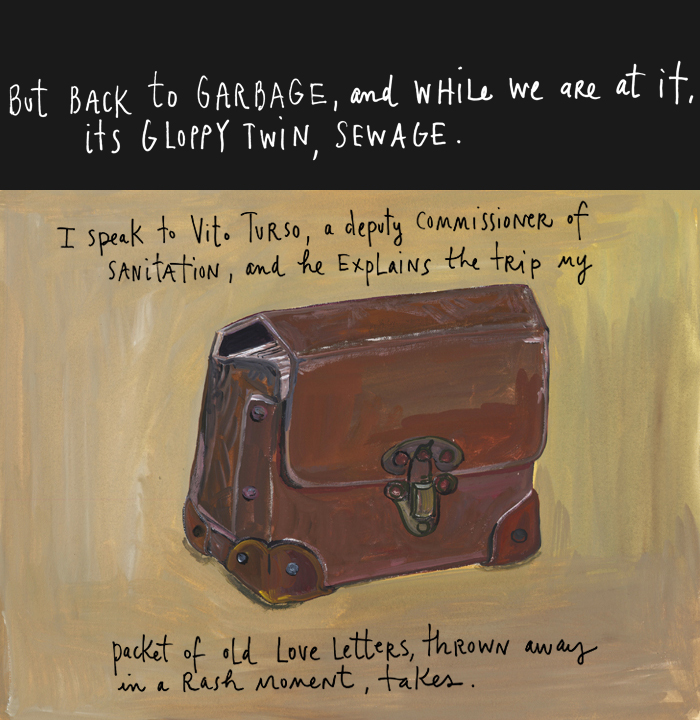
I heart Maira Kalman

Monday, September 28, 2009

…and her visual columns in the New York Times. This is especially true of her recent piece on trash and sewage.

via nytimes.com

via nytimes.com

Laurapalooza!

Saturday, September 26, 2009

We’re headed to Jersey today to take part in LaurapaloozaIn preparation, I am finally read this New Yorker article about Laura Ingalls Wilder and her daughter, Rose that everyone keeps talking about (kind of dark); and asked friends to share any anecdotes they remember about the Ingalls family reusing things and making things from scrap. Hands down the most vividly recalled example was Laura and Mary making a balloon out of a pig bladder and playing catch. Things made from scrap fabrics was a close second. What do you remember from the Laura Ingalls Wilder books and Little House on the Prairie the TV show?

Mother Jones interview with Project Kaisei

Friday, September 25, 2009

Project Kaisei, a recent expedition to further test the Great Pacific Garbage Patch, is complete. Mother Jones has the story. Thanks, Alexandra, tipster of the month!

Cairo without pigs

Friday, September 25, 2009

As you probably read in last week’s Sunday Times, the Egyptian government may now regret having killed all the pigs in Cairo in a misguided effort to prevent the spread of  Swine Flu. With no pigs to feed, the Zabaleen have no reason to go door to door collecting food scraps anymore, which means more trash ends up in the streets.

Garbage Dreams poster

Garbage Dreams poster

Filmmaker Mai Iskander emailed me after the piece ran to remind me that her documentary Garbage Dreams about three young men growing up in Cairo’s trash picking community touches on one of the core issues of the day: source separation.

It’s an interesting lens to put to the developed world. What distinguishes modern countries from those struggling to “catch up” isn’t just the fact that we have high-tech recycling facilities, it’s that we are more or less willing to sort our trash in our own homes.

The Zabaleen hope that by encouraging their neighbors to pre-sort trash, they can hang on to a piece of the profits from the waste industry before foreign waste hauling companies eclipse the need for local trash pickers. And it looks like their campaign is finally getting some buy-in from local authorities.

Sadly, there no longer seems to be much call to sort out food waste as well. Let’s hope the increased trash in the streets at the very least serves as a political tool encouraging Egyptians to think about what happens to trash after it leaves the home and what they might do to reduce waste and recycle more.

The trash of death

Friday, September 25, 2009

Ever thought of why people keep alarming there are too many people on the planet, creating too much trash, but never discuss what happens when we ourselves become trash, in that crude, horrible form of corpses? Swedish marine biologist Susanne Wiigh-Mäsak has, and she is up to something. Actually, she has been for many years, but I just recently learned about it from the September issue of the Swedish magazine Filter (who refuse to publish articles online).

Wiigh-Mäsak started pondering sometime in the late 90’s on the bad logic that we don’t really smoothly return to earth and become shadow and dust, but rather rot in coffins and at long length make it out of the coffins in the form of harmful liquids tainting the soil  and subsoil water, or are disbanded all over the atmosphere in cremation. While I personally like the idea of being sent of in particles too small to see, one must admit she has a case.

Wiigh-Mäsak’s sollution, soon to be rolled out by her enterprise Promessa Organic Inc., is to freeze-dry corpses with liquid nitrogen, and then bury them in coffins made of corn starch, just a foot below ground. She further suggests a tree or bush to be planted above the coffin, as primary beneficiary of the soon-to-be-mould corpse and coffin. This new method obviously sparks questions on ethics (“liquid nitrogen” has a rather unethical ring to it, no?), questions to which Wiigh-Mäsak gave this reply, to Filter:

I would like to show [the Swedish IRS] a twenty year old grave. After that, we could discuss ethics.

Trash Track in the news

Wednesday, September 16, 2009

Remember that supercool MIT project sticking probes in trash? It is on. Check out the nytimes.com coverage.

Baggage Claims

Tuesday, September 15, 2009

I’m back! So much trash to catch up on. For starters, last week the Wall Street Journal compared the environmental impact, usability and, of course, stylishness,  of reusable shopping bags in this slide show.

Photo credit: Boyle + Gardner

Photo credit: Boyle + Gardner

Trash detail

Thursday, September 3, 2009

Chris Brown has been sentenced to pick up trash in punishment for beating up Rihanna. My guess, this will be decidedly less funny than when Michelle Rodriguez or, my favorite, Naomi Campbell got assigned the same chore.

Greening your game

Thursday, September 3, 2009

Peter Lehner of the NRDC wrote about recycling at the US Open on the Huffington Post yesterday. His article and these promo videos highlight some nice steps the event is taking, namely using recycled and recyclable disposable products in the food court and recycling the thousands of tennis balls and tennis ball cans it takes to put on the tournament. Makes me wonder: why do tennis balls come in plastic cans?