Author Archive

Trash Casts

Friday, July 17, 2009

Today I begin informal training in sound recording from an audio engineer friend. My hope is that in exchange for helping him with some projects, I’ll walk away with the skills to record and edit little interviews, thus putting the Trashtastic back in Tuesdays. Stay tuned and feel free to submit trash cast topic ideas.

xo

Leila

Waste Not

Thursday, July 16, 2009

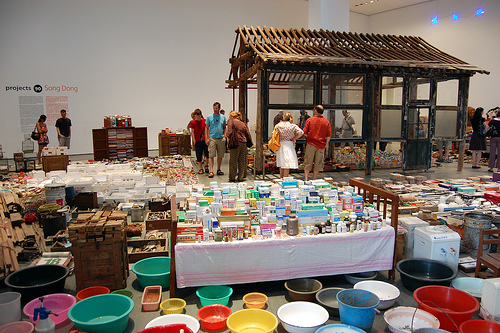
Chinese artist Song Dong takes the concept of pack rat to the extreme in a new exhibit up at the Museum of Modern Art in New York City.

Projects 90: Song Dong, via 16 Miles of String on Flickr

Projects 90: Song Dong, via 16 Miles of String on Flickr

From the MoMA site:

A collaboration first conceived of with the artist’s mother, the installation consists of the complete contents of her home, amassed over fifty years during which the Chinese concept of wu jin qi yong, or “waste not,” was a prerequisite for survival. The assembled materials, ranging from pots and basins to blankets, oil flasks, and legless dolls, form a miniature cityscape that viewers can navigate around and through.

Via unconsumption via box vox.

More fab photos from 16 miles of string here.

NYT review here.

Trash Track

Wednesday, July 15, 2009

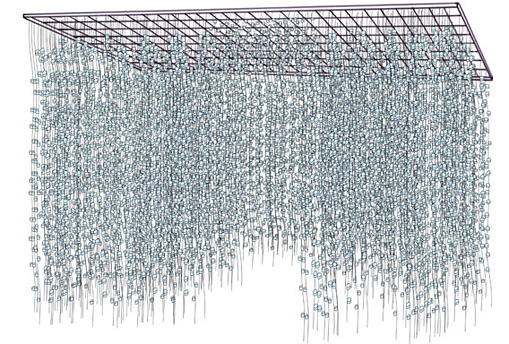
A group of MIT researchers launched a new project called “Trash Track” today, which will enlist volunteers from New York and Seattle to have their trash tagged with specially-coded wireless markers and tracked through the various waste streams.

Visualization mock-up (simulated) By E Roon Kang at SENSEable City Lab

Visualization mock-up (simulated) By E Roon Kang at SENSEable City Lab

The project is part of the SENSable City Lab (whose past work includes other sweet visualizations like this map of New Yorkers’ phone calls to the rest of the world). Apparently, we’ll be able to follow along with the migration of trash online. And in September, the Architectural League in New York City and the Seattle Public Library will host exhibits.

The project press release notes:

Trash Track was initially inspired by the Green NYC Initiative, the goal of which is to increase the rate of waste recycling in New York to almost 100 percent by 2030. Currently, only about 30 percent of the city’s waste is diverted from landfills for recycling.

The ultimate project goal  is thus to encourage us to take a closer look at what we throw away in the hopes that being kept aware of our waste after it leaves our hands motivates us to create less of it in the first place. Neat idea. Let’s see if it works.

Swallowing the screen

Tuesday, July 14, 2009

Treehugger reports that researchers are looking into recycling LCD screens into pills, bandages and other medical supplies.

El Anatsui

Monday, July 13, 2009

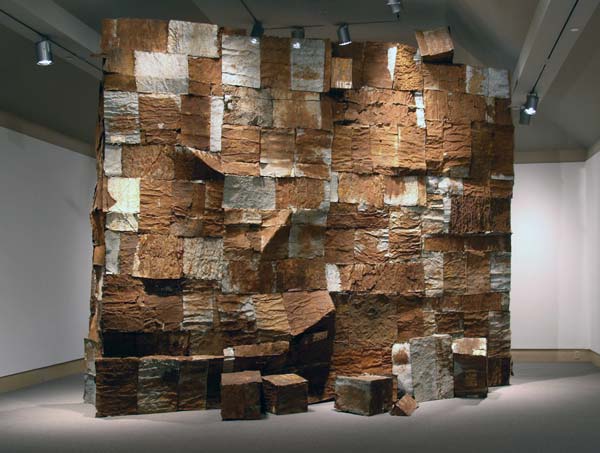
Ghanaian-born/Nigerian-dwelling artist El Anatsui uses all kinds of cool trash in his work: from would-be discarded casava graters to the caps used to top off local home brew, to milk tins and so on. Check out  the National Museum of African Art Web site for more images and to hear the artist himself describe his work, such as the Crumbling Wall pictured here.

Crumbling Wall

Crumbling Wall

T Magazine also did a pretty good piece back in February detailing the “pop recycling” and overall “Africanness” to El Anatsui’s deceptively simple pieces that fuse everyday materials into works of art. Thanks to art historian Media Farzin for the tip.

Paper, Plastic and Persistence

Sunday, July 12, 2009

In case you missed this NYT piece on recycling in housing projects, here’s a link to the text and a peek at the companion video. These women—going door to door trying to get their neighbors to buy into the idea of a recycling program for their project—are amazing.

Cheap

Sunday, July 12, 2009

Cheap: The High Price of Discount Culture is a new book out that looks pretty cool. It’s written by Atlantic writer Ellen Ruppel Shell and has a nifty teaser video on Amazon and YouTube. Ah, new media.

13,699

Saturday, July 11, 2009

Thirteen thousand, six hundred and ninety-nine people die each day from preventable diseases related to water. Artist Christine Destrempes decided to represent this daily loss of human life by stringing together 13,699 clear plastic bottle caps and arranging them in a powerful installation.

13,699

13,699

According to the artist:

The choice of using plastic bottle caps calls attention to other related environmental issues surrounding bottled water, such as privatization, depletion of aquifers, the environmental impact of plastic waste, the use of fossil fuels in making plastic, the carbon footprint of shipping bottled water, and the leaching of plastic into our water sources. Purchasing bottled water turns a basic human right into a commodity, affecting access for people in developing countries, as well as here in the United States.

Photos of the actual installation are available here. Thanks to Elizabeth Royte—author of the must-read Bottlemania: How Water Went on Sale and Why We Bought It—for the informaiton on this project.

City Harvest

Friday, July 10, 2009

Now I know a blog is no place for fundraising, but I wanted to share a free way to give money to an amazing organization whose mission is fully in line with that of everydaytrash.com. City Harvest, New York City’s premiere food rescue organization, gets $5 for every new Facebook fan to join their page by Tuesday.

Every pound of food City Harvest distributes is a pound of would-be-trash averted. Click here to help rescue food from restaurants and make sure it gets to hungry families.

Capellagården

Wednesday, July 8, 2009

Sometimes I search YouTube for trash terms. This morning, punching in “upcycle” led me to this amusing chronicle of an craft and design class in Sweden upcycling waste into designer dinner tables. Rock on.

Water world

Wednesday, July 8, 2009

Girls selling water and corn by the roadside in Northern Malawi/Leila Darabi

Girls selling water and corn by the roadside in Northern Malawi/Leila Darabi

Summertime. It’s hot and more conscious of my need for water. I suspect I’m not alone in this heightened awareness. For one thing, I’ve been seeig more water stories lately. For staters, some group is building swimming pools out of dumpsters in Brooklyn. Amazing.

Also, I read this morning that a town in Australia has plans to become the first municipality to ban plastic water bottles. They’re pissed about a big water company coming in to drain their resevoir and are fighting back with this piece of legislation.

And in London, I read in this article found via Elizabeth Royte’s blog, the council of Hackney has bought enough bottled water from the fairtrade company Thirsty Planet—which donates a portion of sales to water access in Southern Africa—to build a water pump in Malawi. As Royte points out, charity bottled water is a bit deceptive. The council of Hackney could always have served tap water at meetings and sent money not spent on bottled water directly to Malawi. Agreed.

The Beaches of Agnès

Wednesday, July 1, 2009

Agnès Varda, director of the amazing documentary Les Glaneurs et la glaneuse (The Gleaners and I), has a new film out—what appears to be a fantastical, memoir-documentary about her life as a New Wave pioneer, wife and lover of Jacques Demy and all-around badass.  Here’s the trailor.

And here’s  A.O. Scott‘s piece on the project and its creator. In it, he calls Les Glaneurs et la glaneuse “a personal and philosophical inquiry into the practice of gathering what has been discarded or passed over.” And it is. Because Varda made it. In France. If anyone else had tackled the project, it would have been a movie about freegans and politics and all that is wonky and dull and without the fun of a wacky French/Belgian woman inserting herself into the action as a very present narrator. In short, it would have been no fun at all and noone would remember that in France, they have a crazy law that requires farmers to open their farms up to the public after harvest to collect leftover food. I can’t wait to see what the rest of her life/career was like.

Anyway, since this post is only tangentially trash-related, I’m throwing in this link from a few months back on urban gleaning.  Check it out now if you missed it then.

Plastiki

Saturday, June 27, 2009

Lately, I’ve been hearing a lot about this guy David de Rothschild and his forthcoming voyage to the Great Pacific Garbage Patch on his forthcoming plastic bottle vessel, the Plastiki.

David de Rothschild

David de Rothschild

The boat and journey are loosely modeled on the adventures of Thor Heyderdahl, that salty Norweigian who sailed great oceanic distances on a flimsy-looking balsawood raft in the style of a Peruvian pae-pae.

Press coverage of this venture has been a joy to read. De Rothschild, in case you didn’t know, is an heir. In addition to personal wealth, he also has a posh British accent, rugged facial hair and his own eco TV show on the Sundance Channel.

According to Treehugger: “De Rothschild is a fascinating eco-warrior. He is gorgeous, rich and extremely eligible. ”

GOOD published this illuminating Q&A along with a sexy photo of de Rothschild sprawled in a bed of plastic. The New York Times did a thing. Even The New Yorker ran a profile.

But my favorite piece so far and by far—judged on both tone and informational content—is this SF Weekly blog post. Yay snark. Enjoy.

Oh, and not surprisingly, this guy has a sizable YouTube pressence.

Generation cassette

Wednesday, June 24, 2009

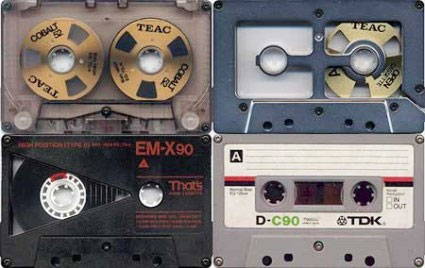
As part of their supercool series on music, uncomsuption posted a link today to the site cassette tape culture, a clearinghouse of upcyling ideas for old tapes. As it happens, I’ve been thinking a lot about cassettes lately—in the context of what is happening now in Iran.

tapes. tapes, tapes

tapes. tapes, tapes

I saw a great documentary once—on TV of course so I have no idea what it was called or how to track it down again—about new technologies and human rights. It ended on this very upbeat note saying that little camcorders were going to put an end to human rights violations because anyone could sneak one into a scuffle or stoning, turning every citizen into a potential reporter.

Behind every modern uprising, the documentary postured, lay a technological advancement. Leading up to the ’79 revolution, the Ayatollah Khomeini built his following by recording propaganda speeches on cassettes that were smuggled into Iran and passed around from person to person. Tienanmen Square was the fax revolution. And since then we have seen the text message and cell phone camera equivalents around the world. And here we are, 30 years after the Islamic Revolution, learning the true value of new media.

“So you know what Twitter is, now, right?” I asked my father on the phone this morning.  He lives in Tehran.

“Of course,” he said. “Hillary used it to send us a message.”

“And you know how it works?”

“BBC and Voice of America have been telling us how it works.”

So there you have it. Last week, he needed help to open his webmail account. This week, my dad understands the political implications of Twitter. And more importantly, my generation understands how to use it. And how YouTube and Facebook and camera phones and text messages all work.

Like everyone else I know, with or without family on the front lines, I am glued to the internet: hungry for any scrap of information or better yet context to the post-election melee and awed by the bravery of those on the streets.

Browsing these nostalgic reimaginings of cassettes makes me want to channel this nervous energy into an art project: a giant sculpture of the Ayatollah made of old cassettes with tangled strands of tape to represent his imposing eyebrows. It would have a sound element, this multimedia work of mine, a warbly cassette recording of Khomeini’s speech to the women who participated in the revolution (thanking them kindly for their participation and asking them politely to resume their places as subservient members of society). And I would call the piece “Be careful what you wish for.”

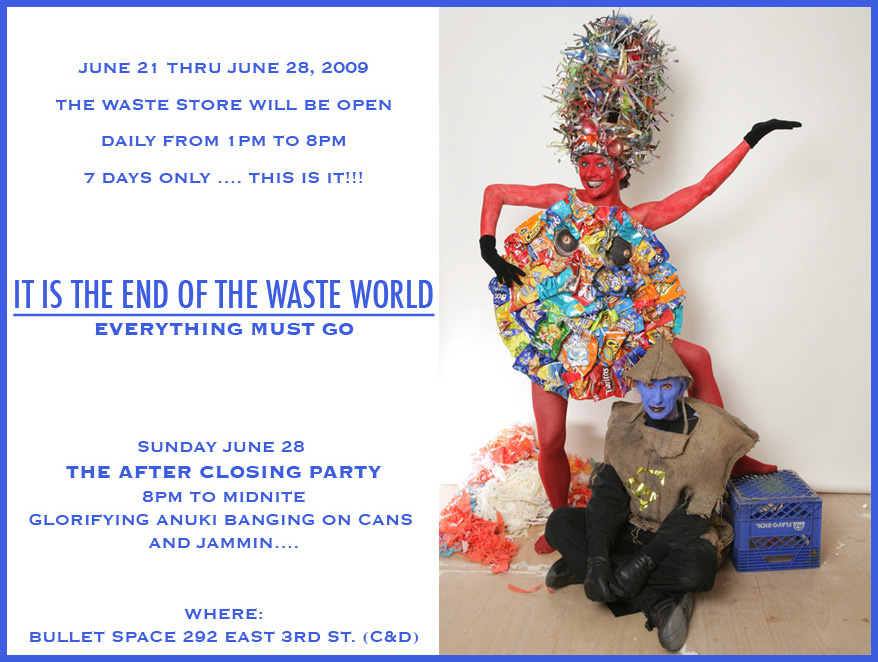
The After Closing Party

Wednesday, June 24, 2009
the after closing party

the after closing party