Archive for the ‘Trash Politics’ Category

Weekly Compactor: Blogroll Edition

Wednesday, September 2, 2009

Recent finds from around the garblogosphere:

PET pouffes

Wednesday, September 2, 2009

Keith R. over at The Temas Blog has been periodically updating a series of trash photos of amazing things made from garbage in Latin America. The latest installment features sofas and pouffes made from PET bottles in Brazil as part of  a project called Reciclagem e Cultura or “Recycling and Culture.” Apparently what began as an upcycling (thanks for the shout out, Keith) endeavor blossomed into an income-generating business program.

PET pouffes

PET pouffes

I highly recommend clicking through to read the whole story peppered with photos and video clips, here’s a teaser:

In part to get the waste collection going and get the raw materials they need, and in part to gain community acceptance for their Cooperativa Usina de Reciclagem, [local foundation] Onda Azul offered favela residents an exchange: bring in 75 to 250 empty two-liter PET bottles, and get a chair or pouffe (what some may call a tuffet, hassock or ottoman) made using PET bottles

….

The program proved so popular that they had to restrict the exchange to one pouffe per household.  Even so, nearly every house in that favela now has one of the so-called pufes ecológicos (“ecological pouffes”).

I’m headed to Rio tomorrow night for vacation. I wonder if I’ll meet anyone with an ecological pouffe!

Oh snap!

Tuesday, September 1, 2009

Elizabeth Kolbert digs into No Impact Man as only she can.

via unconsumption

The Daily Ocean

Tuesday, September 1, 2009

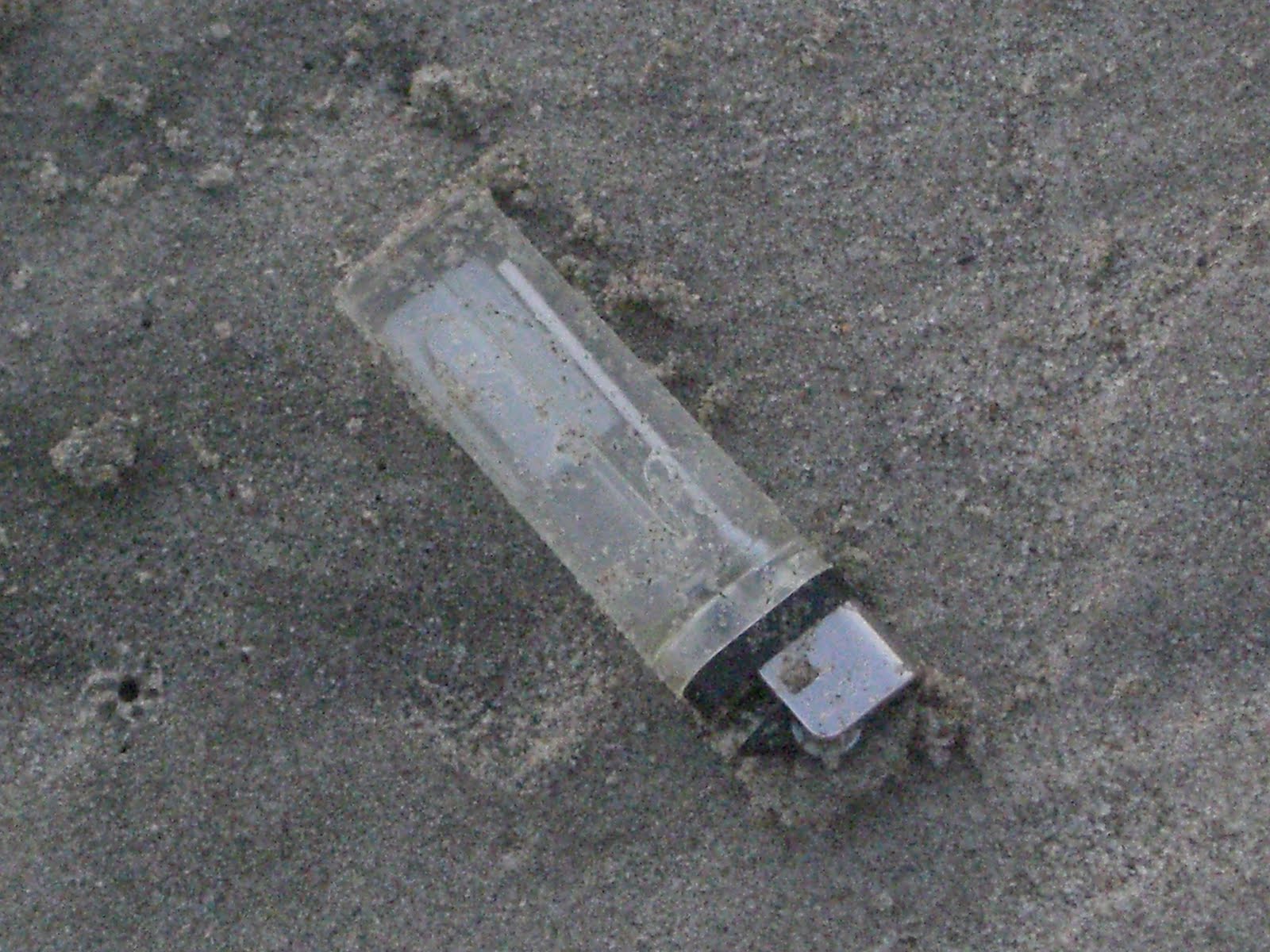
Most mornings, Sarah Bayles spends 20 minutes collecting trash around the same spot at her local beach in Santa Monica, weighs and photographs what she finds and blogs about it on her site The Daily Ocean. For more on why she does this, check out LA Green Girl’s interview with Bayles here.

Lighter via The Daily Ocean

Lighter via The Daily Ocean

Bayles plans to keep up the trash pick up for 365 (non-consecutive) days because you know how we love to conceptualize our environmental impact in terms of years. What I like about this project is a, there’s a new garblog in town and b, it’s a personal but not personality-driven project. The blog tracks the impact of everyone who uses that patch of beach as well as the reverse impact of the one person cleaning it up.

via 365 Days of Trash

The photos on The Daily Ocean are a bit like a West Coast Version of Last Night’s Garbage and remind me of Any Hughes’ amazing beach debris photography.

How does the Fed dispose of old money?

Monday, August 31, 2009

Last night, Victor and I and a few of our friends participated in our local pub quiz. Though we sadly didn’t rank in the top five teams, we had a great team name (Nation of Quizlam) and a great time. As it happens, an entire round of the quiz was dedicated to questions about the Federal Reserve (a challenging but usefully educational category). Our favorite question? “How does the Fed dispose of old money removed from circulation?”


Shredded money

Shredded money


My guess was bury it. What’s more American than a landfill? But the team overrode me and went with incinerate. When they announced the answer—bury it—we were a bit ashamed to have gotten wrong the one and only trash question of the night. At least, Vic and I consoled ourselves, we got a blog post out of the embarrassment. 

Poking around the Internet this morning, though, I see that “bury it” isn’t quite right either. Yes, lots of old cash is shredded and packed into briquettes that get landfilled. But some old money, it turns out, gets recycled. According to The New York Times, since the mid-nineties regional Federal Reserve banks have negotiated deals with companies that could use large amounts of shredded material for stuffing, roofing and who knows what else. The Fed allows any use short of advertising or confetti. I recommend clicking through to the Times article. There are some interesting factoids to be found there. For instance, the reason we didn’t recycle money earlier is because the ink used to contain lead; newer old bills, while lead-free, still hold too many chemicals to be used for just anything (shredded money is no good for animal bedding, for example, some breeders tried that and found it gave horses rashes).

Buy it, use it, break it, junk it…

Monday, August 24, 2009

Entertaining and informative video from Greenpeace featuring their electronics waste campaigns. Via 365 Days of Trash.

Naples Remains

Wednesday, August 19, 2009

Remember the Naples trash crisis? Photographer Gigi Cifali has an incredible series to help if you don’t. Click here to see it, it’s the box all the way to the right called “NAPLESREMAINS”. He also has some supercool shots of abandoned pools, so poke around—the artist’s bio says he was trained as a topographer but got bored staring at landscapes just to record their size.

Thanks for the tip, Jenny! I look forward to any juicy Naples trash gossip you stumble upon.

Plastic sheets

Monday, August 17, 2009

Remember when I told you I was excited to see what kinds of neat stuff came out of Maker Faire Africa? Case in point.

Can you see the trash?

Tuesday, August 11, 2009

Swedish Public Radio programme P3 Kultur today broadcasted an interview with me about garblogging, introducing me as a person “living a contemporary Mad Men-life as advocate and zeitgeist surfer in the capital of the World”. In other words, garbloggers are the it thing. We are still waiting to be invited to those rooftop pools though…

Our brief discussion centered around garblogging in general, and the differences in trash culture in the US and West Europe. I would say the most obvious thing is visibility of trash. Back home, our trash is well hidden in facilities that are always in close proximity (if not within) residential buildings. Over here, trash bags are all over the street every night (at this time of year, quite smelly, yes?).

Having lived in both places, I have to say that neither approach seems to make people more or less aware of the problems with our trash, which I must say is a rather intriguing insight. My conclusion is still that while public opinion and individual responsibility matters, legislation and regulation is the way to go. This comes, of course, from a belief that markets and our planet alike will do better while being under certain legislative restraints. In more blunt words, the invisible hand does not recycle. Would love other opinions on this, do comment!

(Also, apologizing for mishearing the program host, I accidentally replied ‘yes’ to the question ‘if I was living in Manhattan?’, I thought she asked were I was at the time. I, of course, live in Brooklyn.)

Trashy TED Talk

Tuesday, August 11, 2009

Captain Charles Moore of the Algalita Marine Research Center—and discoverer of the Great Pacific Garbage Patch—shares what he has seen on expeditions to that Texas-sized mass of swirling  plastic debris. Great content, a bit lackluster in the presentation.

Poop

Monday, August 10, 2009

Your burning questions about sanitation and human waste can be put to rest this week over at City Room by journalist Rose George, author of The Big Necessity: The Unmentionable World of Human Waste and Why it Matters.

Paperback/US edition

Paperback/US edition

Note the alternate subtitle in the alternating photos on her website. I wonder if the switch was hardcover/paperback change or a UK/US switch and if the latter, what that says about the way Britons versus Americans view poo.

Hardcover/UK edition

Hardcover/UK edition

What began as “adventures” became “unmentionable.”

Plastic free living

Sunday, August 9, 2009

Katherine Sharpe‘s “A Week Without Plastic” series comes to an end. Check out her reflections on the experience over at ReadyMade.

What will happen to 750,000 clunker$?

Friday, August 7, 2009

About a week ago, it looked like Cash for Clunkers (or as its actually called, the Car Allowance Rebate System; CARS), i.e. the US government program through which car-owners rich enough to buy a new car if promising not to sell the old one but rather have it demolished, was up for a lot more funding. This has now come to pass.

According to washingtonpost.com, a quarter of a million new cars have been sold through this program to date. The program has been running since early July, so I’d say that a lot. Another half a million “environmentally friendly” cars are expected to hit the roads by Labor* Day. I’m still wondering who the fat cats in the sudden demoli$hing of 750,000 old cars are, and what they are doing to take care of the lead, sulphuric acid and mercury.

[*Linguistic bonus treat of the week: I really do want to spell this “Labour”, but since its actually the name of a holiday, I’ll make an exception.]

Fresh stuff at Freshkills

Friday, August 7, 2009

New Yorkers, mark your calendars for two upcoming tours of Freshkills Park! The first requires a whopping $2 entry fee; the second one is free. Both require RSVPs.

Fresh Kills Park: Draft Master Plan, NYC.gov

Fresh Kills Park: Draft Master Plan, NYC.gov

The Staten Island Compost Project presents a Freshkills Park Compost Workshop

Saturday, August 29, 2009

12:00pm -2:00 pm @ the Freshkills Park site (a Parks bus will pick up at the St. George Ferry Terminal)

Nearly half of what we throw away could be composted and returned to the earth. Composting at home reduces the cost of yard trimming collection and processing, keeps kitchen waste out of the landfill, and turns organic material into a valuable amendment for gardens and houseplants. Best of all, it’s easy.
Join us as Mark Bigelow, Director of the Staten Island Compost Project, teaches us about the different ways to compost, the science behind the process, ways to ensure healthy compost and how to troubleshoot common issues. The workshop will be held on top of North Mound at the Freshkills Park site, with expansive views of the former landfill and the Department of Sanitation’s ongoing operations at the municipal compost facility. A tour of the site will accompany the workshop.

Space is limited, and registration is $2 per person to support the cost of demonstration materials and compost tip sheets. To register, please email freshkillspark@parks.nyc.gov with the subject heading “Composting Event” or call (212) 788-8277.

Staten Island OutLOUD presents The Poetry of Robert Frost

Saturday, September 12, 2009

12:30pm-2:30pm @ the Freshkills Park site (a Parks bus will pick up at the Eltingville Transit Center)

One of America’s most important poets, Robert Frost’s meditations on nature are considered to be some of the finest reflections on the complex relationship between humans and the natural world.

Please join us as Staten Island OutLOUD, a community dialogue and performance project, presents the Poetry of Robert Frost, a reading and conversation on the author. The readings will be held on top of North Mound at the Freshkills Park site, with expansive views of the former landfill and the William T. Davis Wildlife Refuge. A tour of the site will accompany the readings.

Space is limited. To register, please email freshkillspark@parks.nyc.gov with the subject heading “SI OutLOUD” or call (212) 788-8277.

Capturing the plastic vortex

Friday, August 7, 2009

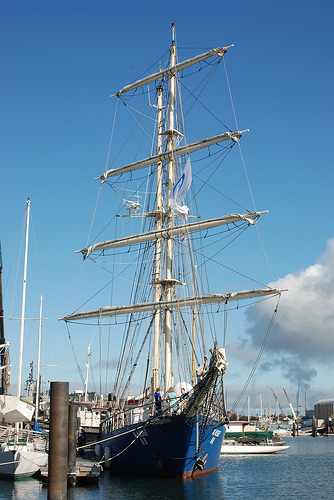
A few days ago, a “team of innovators, scientists, environmentalists, ocean lovers, sailors, and sports enthusiasts” set sail for the Great Pacific Garbage Patch to take a closer look at the gyre in the hopes of evenutally figuring out a way to clean that shit up. The expedition is called Project Kasisei. You may remember an earlier mention of this ambitious plan featuring the co-founder, entrepeneur Doug Woodring (not to be confused with David de Rothschild‘s Plastiki).

Photo by Robert Sanford via Flickr

Photo by Robert Sanford via Flickr

As you’ll recall, one of the cool things about this project is that they will be looking at the beast from all angles, especially below. The fleet includes two vessels, the Kaisei and the New Horizon. And you can track their progress day by day, as each ship has its own blog. Check them here and here. More to come as the crew reaches their destination.