Archive for the ‘Upcycling’ Category
Football Made in Africa
Tuesday, September 29, 2009Food trash insanity rant
Wednesday, September 23, 2009Back from the motherland, thinking “honestly, what are they thinking?”
Background: Swedish Public Radio are reporting today on food waste. Previously, this discusson has been focusing mainly on households (who throw out about 11 pounds of edible food every week). Today our lovely radio turned the attention to supermarkets: Annualy, supermarkets in Sweden (population 9 million) throw away 110 000 us short tonnes of perfectly edible food. Value US$ 292 million. Food giants are saying that they only do what customers want them to do, and that putting “old” food on sale is bad for their corporate image.
Again: What are they thinking? (I’m thinking I should resaddle and head into the food business. There’s obviously lots of tra$h to collect.)
For those of you who now feel guilty, check out Love Food Hate Waste, a nice little UK resource on how to at least avoid this in your home. They have recepies!
Maker Faire Africa
Wednesday, July 29, 2009
Africa is getting its very own Maker Faire—modeled after the conference of DIY inventors, crafters and all around innovators started in the Bay Area in 2006—organized by the masterminds behind the blogs Timbuktu Chronicles, AfriGadget and MIT’s International Development Design Summit. The first African installment will take place August 14-16 in Ghana and will include tracks on Robotics, Agriculture & Environment, Science & Engineering, Arts & Crafts. Here’s a link to the event blog.
I cannot wait to see what inspirational designs emerge from this meeting. Prediction: upcycling like we’ve never seen it before.
Upcycled sky tracks
Wednesday, July 22, 2009The real it thing in lower Manhattan this summer seems to be the High Line. What was commercial traffic for meat packers et al. between 1934-1980, nothing between 1980 and last year, is now a hip, weed-ridden concrete-heavy park, with a view, stretching from Washington & Gansevoort to 10th & 20th. On top of this, more park is currently being developed.
Having visited said park Sunday night, I must confess I’m sold. You have to be impressed by such clever upcycling and the courage to plant weeds and not orchids. And of course, the echo of history is something else for a train nerd such as myself.
The development from 1934 to present day can be studied through these excellent image galleries. Admission is free, but if one wants member benefits (and to support the development of the park), there are alternatives ranging from $40 to $10,000. At $350, you get a key-ring.
How cool is everydaytrash.com?
Tuesday, July 21, 2009Reading this lovely New York Times piece on secret dumpster pool parties in Brooklyn, I wonder why everydaytrash.com didn’t merit an invitation (yet)? We’re locals dammit!
Bitterness aside, here we have yet another example of how something goes from trashy to trashtastic. Makes me think of how “the future” will be, with thoughts wandering to Mad Max. In a desolate and post-apocalyptic Brooklyn, we’ll be sitting there in our pool dumpsters, growing tomatoes in oil barrels and spend a lot of time walking. That is, if everthing goes wrong. Let’s hope not.
Swedish freegan makes headline news
Friday, July 10, 2009Sweden’s second to largest TV news program, Aktuellt, tonight interviewed a Swedish freegan, who invited a team into his home, claiming everything he and his accomplice eat comes from dumpsters. For tonight, for the grand effect, they brought all the bread they would’ve been able to eat, should they want to. Check about nine minutes into this 30 minute episode of Aktuellt. For those who understand Swedish (or are very interested), a full ten minutes of on-site segments and studio discussions await.
Plastiki
Saturday, June 27, 2009Lately, I’ve been hearing a lot about this guy David de Rothschild and his forthcoming voyage to the Great Pacific Garbage Patch on his forthcoming plastic bottle vessel, the Plastiki.

David de Rothschild
The boat and journey are loosely modeled on the adventures of Thor Heyderdahl, that salty Norweigian who sailed great oceanic distances on a flimsy-looking balsawood raft in the style of a Peruvian pae-pae.
Press coverage of this venture has been a joy to read. De Rothschild, in case you didn’t know, is an heir. In addition to personal wealth, he also has a posh British accent, rugged facial hair and his own eco TV show on the Sundance Channel.
According to Treehugger: “De Rothschild is a fascinating eco-warrior. He is gorgeous, rich and extremely eligible. ”
GOOD published this illuminating Q&A along with a sexy photo of de Rothschild sprawled in a bed of plastic. The New York Times did a thing. Even The New Yorker ran a profile.
But my favorite piece so far and by far—judged on both tone and informational content—is this SF Weekly blog post. Yay snark. Enjoy.
Oh, and not surprisingly, this guy has a sizable YouTube pressence.
Generation cassette
Wednesday, June 24, 2009As part of their supercool series on music, uncomsuption posted a link today to the site cassette tape culture, a clearinghouse of upcyling ideas for old tapes. As it happens, I’ve been thinking a lot about cassettes lately—in the context of what is happening now in Iran.
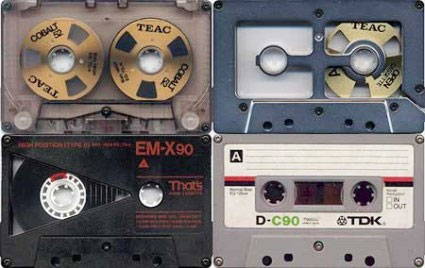
tapes. tapes, tapes
I saw a great documentary once—on TV of course so I have no idea what it was called or how to track it down again—about new technologies and human rights. It ended on this very upbeat note saying that little camcorders were going to put an end to human rights violations because anyone could sneak one into a scuffle or stoning, turning every citizen into a potential reporter.
Behind every modern uprising, the documentary postured, lay a technological advancement. Leading up to the ’79 revolution, the Ayatollah Khomeini built his following by recording propaganda speeches on cassettes that were smuggled into Iran and passed around from person to person. Tienanmen Square was the fax revolution. And since then we have seen the text message and cell phone camera equivalents around the world. And here we are, 30 years after the Islamic Revolution, learning the true value of new media.
“So you know what Twitter is, now, right?” I asked my father on the phone this morning. He lives in Tehran.
“Of course,” he said. “Hillary used it to send us a message.”
“And you know how it works?”
“BBC and Voice of America have been telling us how it works.”
So there you have it. Last week, he needed help to open his webmail account. This week, my dad understands the political implications of Twitter. And more importantly, my generation understands how to use it. And how YouTube and Facebook and camera phones and text messages all work.
Like everyone else I know, with or without family on the front lines, I am glued to the internet: hungry for any scrap of information or better yet context to the post-election melee and awed by the bravery of those on the streets.
Browsing these nostalgic reimaginings of cassettes makes me want to channel this nervous energy into an art project: a giant sculpture of the Ayatollah made of old cassettes with tangled strands of tape to represent his imposing eyebrows. It would have a sound element, this multimedia work of mine, a warbly cassette recording of Khomeini’s speech to the women who participated in the revolution (thanking them kindly for their participation and asking them politely to resume their places as subservient members of society). And I would call the piece “Be careful what you wish for.”
Trash for Teaching
Wednesday, June 24, 2009How cute is this? Trash for Teaching, a Los Angeles based NGO, provide classrooms with trash that kids can transform into art, while learning all about the important stuff. Reminds me of my kindergarden days, where those carton rolls at the center of paper rolls could be used for virtually anything (these days I just recycle them, being old and narrow minded). Why isn’t this just mandatory everywhere?
Also, for $350, Trash for Teaching will entertain 15 kids at a birthday party. You supply tables and space, they do the rest.
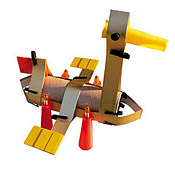
Upcycled duck, you can buy these as kits
Indonesian beats, upcycled
Sunday, May 31, 2009This is a post about upcycling old music into new beats. It is long. Skip to the end if you’re only interested in the sounds. There, you will find a free download. For those curious about how this amazing beat came to be, this is the story:
In October, I spent a week in Jakarta for work. The day job, of course, consumed the majority of my time, but I did manage to make the most of my one afternoon off that week while my colleagues were busy working on presentations and setting up meetings for the following day.
“I want to buy records,” I told our Indonesian consultant who, after some clarification that I meant vinyl and not compact discs, instructed the driver to take me to the antique market.
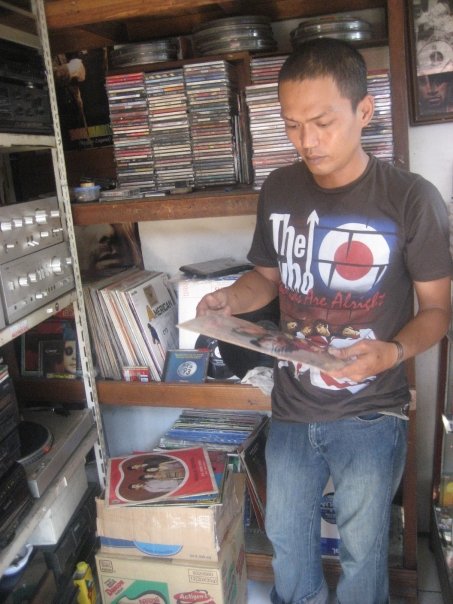
Jakarta antique market
Looking for records while traveling is a hobby I picked up from my friend Flex Unger, whom you may remember as the Brooklyn musician fond of upcycled drum machines. It is also easier said than done, at least in Africa, where I normally go for work. In Lusaka, the only records I could find were a newly released Whitney Houston album on sale at the mall and the vinyl glued to the door of a local radio station. I was on my way to that radio station on the last day of my trip—thinking I could track down the DJs responsible for the decor and ask them where to find records—when I noticed a huge curl of smoke in the air above the center of downtown. We tuned the radio to the station we were on our way to visit and got nothing but static. The station had caught fire, taking the entire building down in flames.
In Lagos, when my friends and colleagues failed to lead me to the records, I dragged several of them out to Fela Kuti‘s Shrine, the famous nightclub run by his son, Femi Kuti. There, we spent the afternoon drinking beers amidst the schwag fumes of the local Rastas, but got no closer to locating the Lagosian record trade. I tried once again to no avail last month in Kampala, where my Ugandan radio friend insists you can’t even buy a record player (though he has promised to help track down local collectors).
Digging for records in Indonesia was much easier than in Africa. Almost too easy. After a mere half hour in local traffic, the car pulled up to a row of the fanciest outdoor market stalls I have ever seen. In fact, they weren’t outdoor at all, but a pint-sized strip mall of shops selling colonial era furniture and Indonesian knickknacks. They even had doors. One of those shops sold nothing but records. I couldn’t believe it. I passed some time there, limiting my search to Indonesian music instead of my regular preference of R&B instrumentals since I only had a couple hours to spend at the market. After the mini-shop, I walked through the less built-up side of the market—open-air stalls selling greasy appliance parts and random chotchkies. There, I found two more record sellers, one of whom even had a turntable set up. I asked him to play me the records I had just purchased and bought one more from him, just to be polite. In the end this is what I took home:
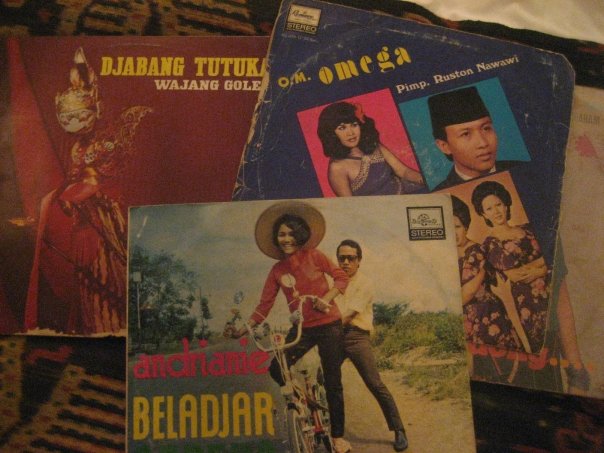
Finds from Jakarta
Three Indonesian pop albulms from the 1960s and 70s and one two-disc traditional compilation full of old opera and gamelan music. My favorite—both for the cover and what’s actually on the record—is the center album above. It’s called (in Indonesian) Andrianie Beladjar Sepeda, which my Indonesian friend (the one who helped me find the antique market in the first place, THANKS IWU!!!) told me means Learning to Ride a Bike. It’s got a kind of Gainsbourg/Bardot feel, excellent sounds to blog to.
All told, I spent $1.20 on that shopping spree: Twenty cents each for the three pop records, forty cents on the double album of traditional music and twenty cents on a lovely lunch of fritters, samosa and a banana dessert cooked in banana leaves.

Not pictured, one croquette already consumed
Though I mentioned to Flex Unger that I had picked up some records in Indonesia and even sought his advice on the purchase of a portable record player to enjoy them in Brooklyn, I never showed him these albums or brought them to his studio. My great and fruitless musical safari through Zambia, Nigeria and Uganda had carried with it the specific mission of finding African music that he might enjoy or be able to sample. Before I left on each of those trips, Flex specifically asked me look for music for him. But when I went looking for music in Jakarta, it wasn’t as much to run home to impress my DJ friend as it was to seek out personal souvenirs of a fascinating trip.
As it turns out, impressing my DJ friend happened anyway. A couple weeks ago, Flex was over at my apartment and spotted the alluring cover of Learning to Ride a Bike. “What are these??” he cried, sifting through the small stack of Jakarta finds. Since then we have spent some hours at his studio in Sunset Park transferring the records to electronic format, breaking up the fun and strange songs into smaller pieces and feeding them into Flex’ drum machine to mix and match the noises and layer them with new ones. Or rather, he has done all of that while I have looked on, pressing the occasional button on the soundboard when instructed to do so. It feels like I’ve learned something while observing the process—a vague something about timing, Pro Tools, hip hop and Southeast Asia.
More importantly, the end results have been fantastic. Check out the first finished beat. It is entitled “Steamed Bananas” after that tasty Indonesian snack and because Flex is working on a larger, super-market-themed album for which all beats must have food names. Consider this a sneak peak.
“Steamed Bananas” mixed by DJ Flex Unger
Kind of makes you want to dance, doesn’t it? For comparison, here is the original track from Learning to Ride a Bike.
“Kedjam” from the album Andrianie Deladjar Sepeda sung by Eddy & Siam
Impressive, non? Check out Flex’ label Black Rhombus for more fun tunes. And send us your stories of upcyled music and musical upcycling. I’m all about musical trash posts this summer, especially since I just figured out how to upload mp3s.
Also, this whole process has renewed my entusiasm for figuring out where they hide the records in Africa. Stay tuned. And speaking of African music, Brooklynites mark your calendars for June 25th and seek me out in Prospect Park!
First look at SMART Art finalists
Friday, May 29, 2009Trash to treasure report via finalist Mark Lukach‘s blog.
Upcycle my ride
Wednesday, May 20, 2009Check it: a group of students from Makerere University in Kampala, Uganda designed this “poor man’s car” from upcycled farm equipment and other salvaged materials, including an engine ripped from an old maize grinding mill.
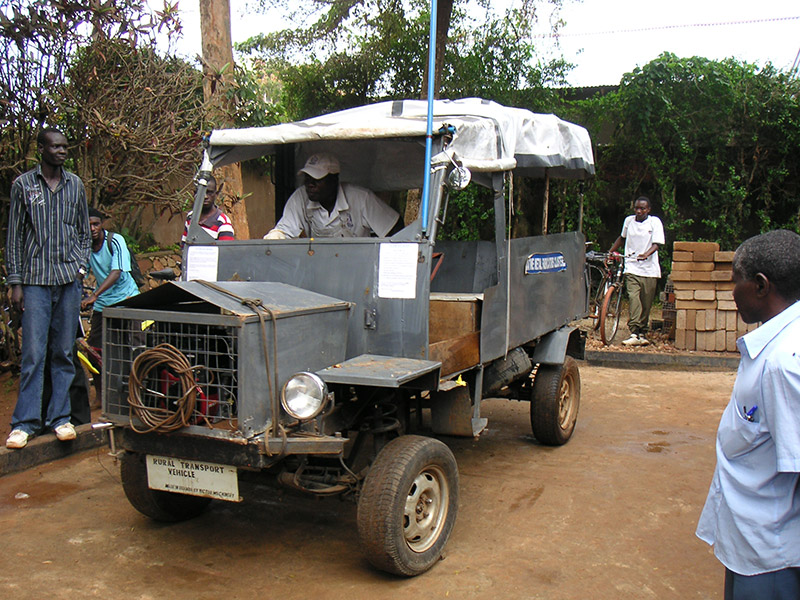
Photo by Dr. Yasin Naku Ziraba via Wired.com
Supercool. To all who say Makerere has slipped in quality and no longer deserves the “Harvard of Africa” rep, I have two words for you: pooh and pooh.
Note: I found the Wired.com post about this project via Nubian Cheetah, a blog suggested to me by Google Reader, presumably because of my ever-growing folder of African blogs. Yay technology.
Guilt personified
Wednesday, May 20, 2009In case you were wondering what $50 worth of flip flops looks like, say hello to my pink rhino. I’ve decided it’s a he and that his name is P.C.
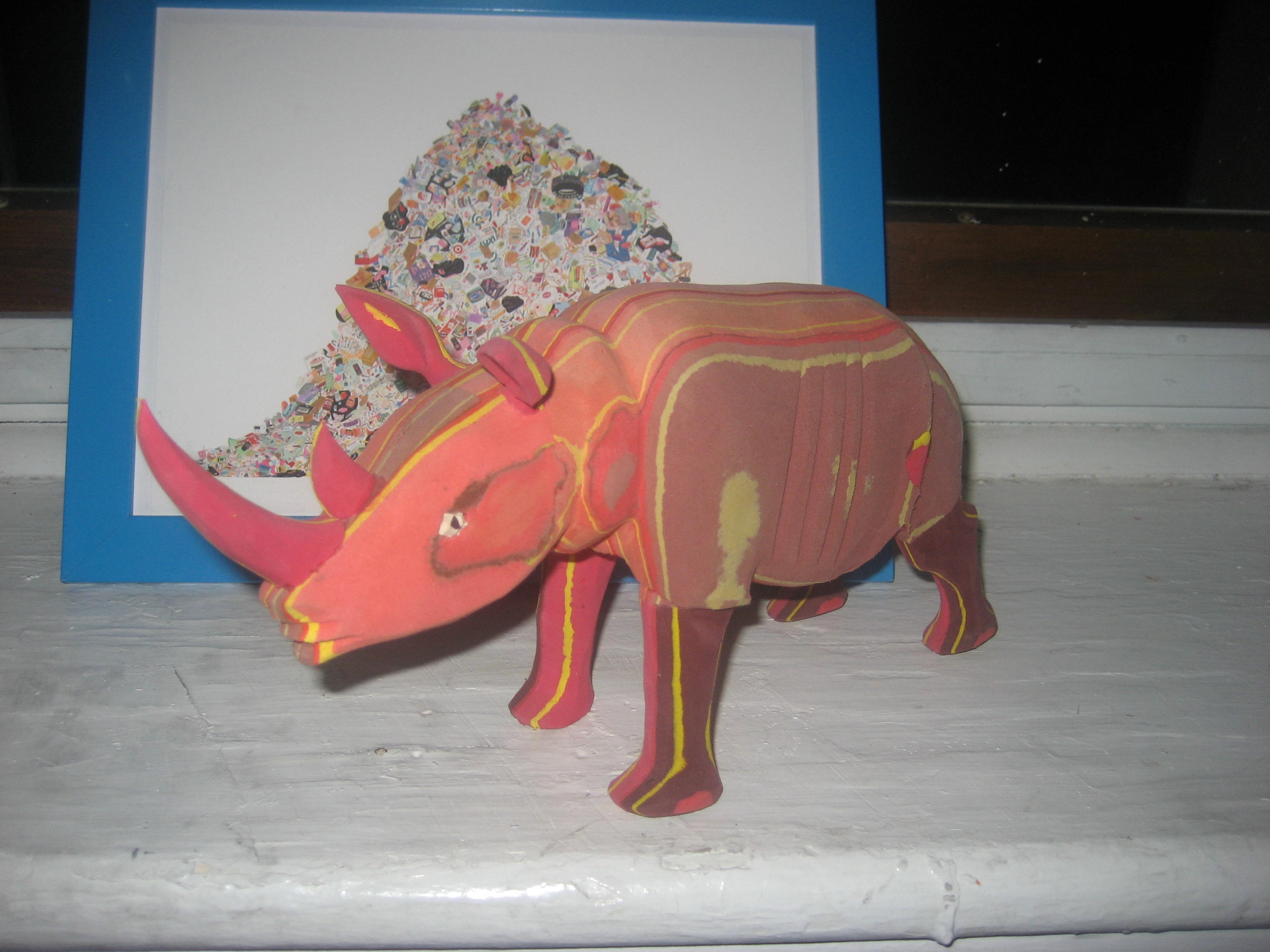
Flip flop rhino
P.S. That rad picture behind P.C. was a present from my wonderful friend Constance who found me the prettiest trash heap in the world. And framed it. As you can tell, she’s an expert gift giver.
Flipping the flop
Tuesday, May 19, 2009While in Kampala a few weeks ago, I stopped in at one of my favorite stores in the world, Banana Boat, and went on a semi-conflicted shopping spree among their fine upcycled crafts made by women’s collectives from all over Africa. I bought up a dozen strands of Ugandan paper beads for my girlfriends, homemade soap wrapped in homemade paper for my colleagues and a collection of small creatures fashioned out of bottle caps including this three piece band, now residing at my friend’s music studio in Brooklyn.

Bottlecap boogie
Ok, full disclosure. I went more than once and to more than one Banana Boat location during my week in Uganda. I couldn’t help it. While normally I try to buck the inner American, my desire to consume flares at the sight of trash. The the irony of upcylcing is that it makes me want to buy MORE.
The first wave of my Banana Boat binge was stopped short by the pricetag on a string of plastic foam beads. The moment I saw them, I knew they were made of old flip flops—likely washed up on the shores of Kenya—and, because of this, I grabbed them up. But then I saw they cost roughly $30 U.S. and I looked again and decided, actually, big foam beads on a short choker strand might be a little too UN chic for my blood. So I set down the hideous necklace and made my way deliberately to the woven basket and cardboard diorama section of the store.
It was hard to walk away. Physically hard, because my urge to buy something was so strong it nearly made me twitchy. The little voices in my head debated the novelty of flip flop jewelry versus the reality of its ugliness, the feel good return of purchasing upcyled crafts from women’s collectives versus my uneasiness with the price, the uniqueness of the product versus the fancy UniquEco logo. One of the necklaces had a tag declaring “flipflop (i was)”. I took note of the confirmation that these were indeed flipped flops upcycled by Kenyan fishing communities. And I took note of the all lowercase tagline and pretentious use of parentheses. Ugh, I thought, branding.
I left the store feeling very proud of my resolve.
The next day I dropped $50 on a hot pink rhino doll/statuette from the same company. It’s adorable with a sleek and marbled hide created by a fused pile of flip flops of similar but not identical colors. This, I thought, will liven up my bookshelf. Or hip up my office. It carries a message that is both political and fun. It will make for a cool blog post and spread envy among my friends. I NEED this.
More tales to come of Kenya and consumption.
Upcylcing on the LES
Tuesday, May 19, 2009Today is the last day to check out entries in the Pratt/Terracycle Upcycling Design Competition hosted by Sustainable NYC. I may try to swing by. Report back if you go.
 everydaytrash