Author Archive

Dung

Tuesday, December 9, 2008
elephant

Ngorongoro crater, Tanzania

A zoo in England recently dropped £150,000 on a poo-converting machine to make compost out of elephant and other dung available to them via their permanent residents.  I don’t like zoos.  Seeing animals in small and smelly spaces, much like seeing old people alone on park benches, makes me sad and uncomfortable.  I guess it’s a good thing that this particular zoo will save the waste produced on site and use it to beatify the space and feed the animals by turning it into fertilizer for feed crops and other plantings on the grounds.

Then again, I might just be biased because, as you may recall, I already have a favorite elephant dung recycling program: the Paper Making Education Trust (PAMET) in Malawi.  Here is a sample of their lovely stationary.
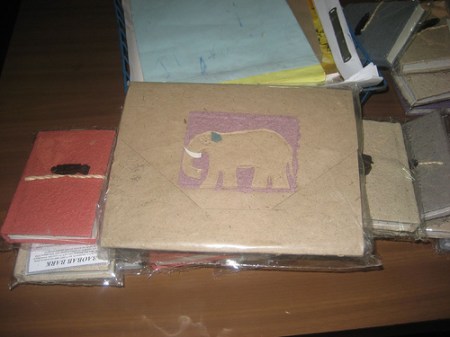
poopaper

PAMET headquarters, Blantyre, Malawi

And here is a sample of the dung and paper bricks they make and sell as low-cost fuel for homes (a product clearly endorsed by Jesus).
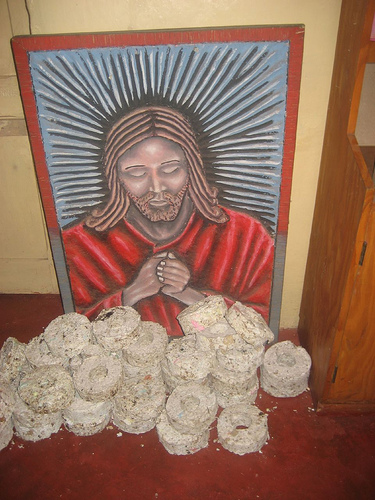
jesus2

Jesus and PAMET poo bricks

PAMET makes the world a better place by providing jobs and job training and recycling elephant dung from a game park.   They collect old school exercise books and other discarded paper and use it (mixed with dung and other plant fibers) to make stationary sold at relatively high prices by Malawian standards.  I love the idea that people employed by PAMET use the cash recooped from dung mixed with old school materials to send their kids to school.

I also recently discovered a Thai group called simply Elephant Dung Paper whose main purpose is more elefocused.  The proceeds from their paper goes back into conservation.  Here is a handy chart of how recycling poo leads to “fat and healthy elephants” (who in turn produce more dung which in turn leads to…).
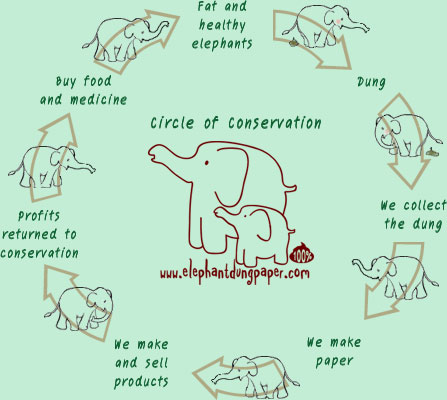
circle

via elephantdungpaper.com

And of course, the best known of the genre is The Great Elephant Poo Paper Company whose “poo-tique” you can visit online.  Consider this my nod to holiday gift guide blog posts.
The recession will not be recycled

Monday, December 8, 2008
08recyclexlarge1

Jodi Hilton for The New York Times

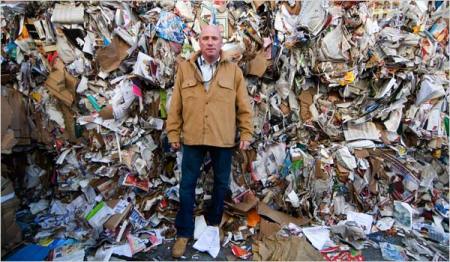
Uh oh, looks like trash ain’t worth what it used to be.  The Times reports today that recycled materials like plastic and cardboard, once sold as scap for  a profit, are piling up because no one wants to buy junk anymore.   It’s a development that sadly takes a big bite out of a cost/benefits argument for public recycling programs.  Cities don’t seem to be cutting back on collection just yet, but the figures are dramatic.

On the West Coast, for example, mixed paper is selling for $20 to $25 a ton, down from $105 in October, according to Official Board Markets, a newsletter that tracks paper prices. And recyclers say tin is worth about $5 a ton, down from $327 earlier this year. There is greater domestic demand for glass, so its price has not fallen as much.

Apparently China used to buy a lot of our junk but stopped doing so when the economy turned.  Perhaps the conversation can now turn to reducing the amount of junk Americans create in the first place.

Recycling rubble

Friday, December 5, 2008
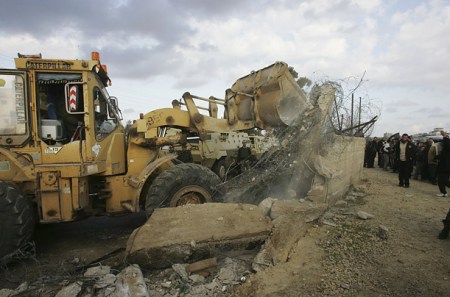
Photo of the demolition of  a similar wall in Gaza by Khalil Hamra/AP, ripped from Time.com.

Photo of the demolition of a similar wall in Gaza by Khalil Hamra/AP, ripped from Time.com.

The Red Cross will use the rubble of a wall knocked down by fighters in Gaza to line and complete a long-delayed rainwater ditch project, according to an article in the International Herald Tribune today.  Apparently, construction materials are  so hard to clear through the Israeli and Egyptian borders during these tense times that even international development agencies are suffering and, according to the article, forced to scrounge and scavenge like everyday Gazans.

The International Committee of the Red Cross has been trying to make do by scouring Gaza for materials it can use. It’s a survival technique perfected by ordinary Gazans, who use vegetable oil for car fuel when gasoline is in tight supply and ancient kerosene stoves when natural gas runs out. Gazans dig tunnels into Egypt to haul in everything from chocolate to computers.

The situation has gotten so bad that the Red Cross, a Swiss and otherwise neutral organization, issued a frustrated statement saying that the Israeli government holds up deliveries so long that this project would not have been completed had it not been for salvaged materials.

Like many aspects of the Middle East conflict, this story is a messy mix of uplifting and heartbreaking.  It is wonderful to read about resourcefulness in the face of conflict and terrible to read about politics standing in the way people’s basic needs for infrastructure and security.

Turkey trash

Thursday, December 4, 2008

turkey1 A very friendly coworker brought me some sweet potato pie today.  Traveling with my dad and sister for Thanksgiving was fun, but I have to admit I missed all the traditional foods.  Especially the pie.  I was kind of surprised at first that she still had pie, a full week later.  But when I think about it, nearly every family I know makes huge meals for Thanksgiving and the leftovers are just as much a part of the ritual as the meal itself.  Jonathan Bloom over at Wasted Food wrote about this on nytimes.com before the holiday and today responded to some of the questions generated by readers.

One of the topics discussed is food rescue, or restaurants that donate left over food to the hungry.  New York is home to one of the best food rescue programs in the world, City Harvest.  This reminds me that I’ve been meaning to post more about their incredible work.  I heard a rumor that the City Harvest founders got the idea for their nonprofit after ordering potato skins at a restaurant and learning that the rest of the potato ended up in the trash.  I’ll see if I can verify that for you before the New Year.

Turkey photo via igourmet.com

tattfoo

Wednesday, December 3, 2008

freshkills Tis the season for trash art, it seems.  I feel like I’ve been getting daily tips on creative exploration of solid waste in various media.  The latest comes via Freshkills Park (which has a Facebook page for those of you interested in keeping tabs on the conversion from landfill to massive public park).  Tattfoo is a Staten Island-based self-described “community intervention artist” who recently took some lovely shots of Fresh Kills (such as the one above, ripped from the artist’s site).

Plastic bags, Tibetan style

Tuesday, December 2, 2008

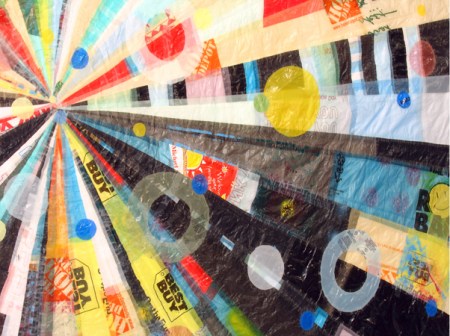
bags My friend Jennie, trash art connaisseuse, has passed on yet another find: Tibetan mandala patterns created by pasting together logo-laiden plastic bags.  Craftzine recently featured artist Virginia Fleck‘s work.  She also works with teens and makes colorful plastic skirts.
Reblogging: We are what we eat

Monday, December 1, 2008

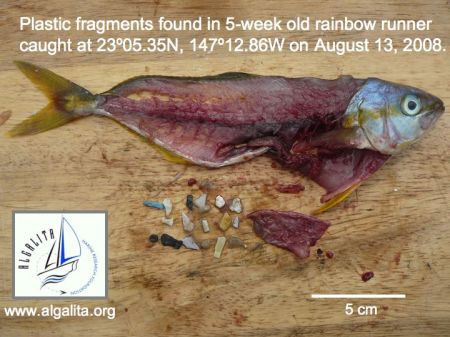
Anna over at Bring Your Own is one of the first green bloggers I started to follow when I launched everydaytrash over two years ago now.  BYO focuses on our disposible culture and its consequences.  It was through trading links with blogs like BYO that I came to the self-realization that my own blog had an environmental—and not just political and artistic—theme.   Anyway, Anna took a short break from updating BYO last summer in order to sail accross the Pacific Ocean on JUNK, a ship made of plastic bottles.  The stories she and her colleagues returned with are both fascinaitng and devastating.  Check out this post on the growing problem of plastic winding up in the bellies of fish.  Here’s a photo ripped from that post, click through for the full thing complete with a video from the ship.

rainbowrunner_plastic

While the photo is kind of gross, I find the rainbow of plastic bits morbidly pretty.  Someone should make awareness-raising jewelry out of this stuff, like post-apocalyptic pearls.  Or maybe not.  Wouldn’t want to start a for-profit plastic fish frenzy.  Just from eyeballing the fragments in this sample, it looks like this fish ate pieces of over a dozen different plastic things that ended up floating in the ocean.  It’s strange to imagine where those bits started out: action figures, food containers, toothpaste caps…

Second Lives

Sunday, November 30, 2008

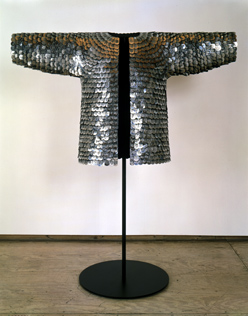
metaljacket The Museum of Arts and Design has a show up through February 15th called Second Lives: Remixing the Ordinary.  The exhibit, which features work from 50 artists, includes recycling in its highest form: artistic and funcional.  Well, some of it anyway, from what I can tell based on this Brooklyn Based weekly listserv (forwarded to me by my friend, Jennie, whom I will be hitting up to accompany me to the show to see for ourselves.  We had a great time checking out quilts and little creatures made from old bottle caps at the American Folk Art Museum last week.  New Yorkers are advised to check it out.  Disregard what I said about it costing $15 in the original post, the show is in fact free).
Despite the tip source, MAD is located in Manhattan.  I ripped this photo from their Web site.  It depicts a piece called Metal Jacket crafted by Korean-born artist Do Ho Suh entirely out of dog tags.  Even in this tiny picture, the jacket looks very powerful.  Also featured on the MAD site are a flock of butterflies molded out of old records (I’m a sucker for things made out of vinyl, it always looks so cool) and a flowing white gown made out of latex gloves.  More to come once I’ve had a chance to see all this upcycling for myself.

Trash hiatus and happy Thanksgiving

Thursday, November 27, 2008

Hello from Essaouira, Morocco.  Sorry for the light, or rather absence of posting this week.   My sister and I decided rather last minute to spend the holiday weekend…plus a few extra days…with our Iranian father by meeting up half way between Tehran and Brooklyn.  I hope you are all having wonderful meals today with loved ones whether or not you celebrate American Thanksgiving.

Here are some other links to check out until I return home to more familiar keyboards and speedier Internet service on Sunday.

Swedish trash schizophrenia

Friday, November 21, 2008
burn

Incinerator

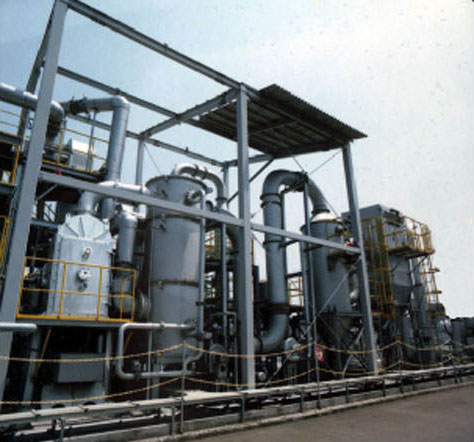
Victor, our man in Stockholm, just sent me this troubling story from Swedish National Public Radio.  Apparently the trash incineration biz in Sweden is outpacing waste production by Swedes.  They’ve built so many new facilities that trash must now be imported from other European countries just to meet the demand to burn it up: 600,000 tons in the last year alone.

As you may recall from this book recommendation earlier this month, Sweden also exports electronic waste to Ghana—one kind of trash in, another out.  Aside from burning trash not being the best for the environment, all that waste hauling must be taking up shitloads of energy.  With two tips in one month, I’m upgrading Victor to Eurotipster Extraordinaire and look forward to more strange garbage news otherwise hidden from the non-Swedish-speaking world.

Photo of Japanese incinerator ripped from the Global Environment Centre Foundation.

City girls don’t like to get greasy

Thursday, November 20, 2008

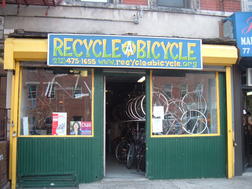
recycleabike Recycle a Bicycle teaches young people that bikes are awesome and shows them how to fix them when they break.  One way the program raises money is via sales of jewelry made of old bike chains.  Funy enough, these tough chick accessories grew from girly origins.

chainbracelet1

According to today’s Brooklyn Daily Eagle:

Several years ago, Recycle-A-Bicycle received a small grant for science and technology. [Former bike mechanic and founder Karen] Overton used the grant to start an after-school program for middle school-aged girls to come into the shop and build bikes. “But the girls came in and rebelled,” she said. “They didn’t want to get greasy.”

Around the same time, a man, whom Overton nicknamed “John the jewelry man,” used to come into Recycle-A-Bicycle and ask to look through the small parts bin, taking various pieces that he used to make jewelry. Seeing a way to get the girls learning (and not greasy), Overton asked him to teach her how to make jewelry out of bicycle parts.

Who are these prissy girls?  I’m kind of disappointed to read that they don’t like to get dirty.

Hubcap zoo

Thursday, November 20, 2008

dragon I discovered this dragon and other wonderful hubcap animals via Esther over at Je me recycle.  Apparently, this British guy collects hubcaps on the road and crafts them into creatures that he then sells for megapounds.  Not bad.

Trash talk on January 8th in Princeton

Tuesday, November 18, 2008

TALK: “GARBLOGGING”

4:00 p.m.

Leila Darabi

The world of “garbloggers” is diverse and ever-growing, ranging from artists sharing work made out of recycled materials to armchair environmentalists tracking their own waste to make a political statement.

Leila Darabi, creator of the blog everydaytrash, will give an overview of the many voices talking and tracking trash online and the common themes connecting them.

Trained as a journalist, Darabi works in international development, a career which allows her to blog about trash from the far reaches of the planet.

Save the date!  This is my contribution to the Princeton Environmental Film Festival hosted  by the Princeton Public Library.  For a complete schedule of events, click here.  Note that my little talk precedes the screening of a trash film which is then followed by legendary trash author, Elizabeth Royte of Garbage Land and Bottlemania fame.

The garbage of gadetry

Tuesday, November 18, 2008

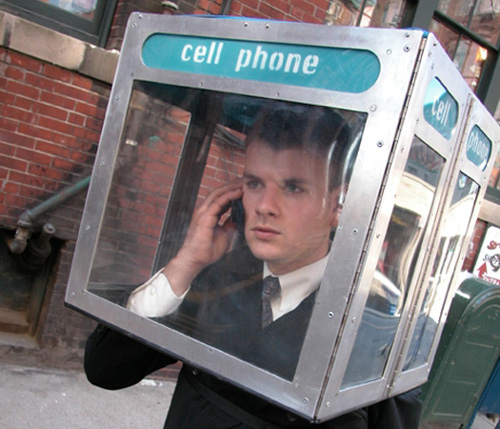
portable-cell-phone-booth A new study by the Pew Internet & American Life Project yields some amusing and educational findings:  half of gadget users need help to get their smart phones, cell phones and computers to work; many of these devices break; and users experience a range of emotions when they can’t get their stuff to work.

Interestingly, but not surprisingly, cell phones are more likely to break in the hands of younger users.  And, most relevant to our interests here, 15% of users never get their device fixed—that’s a lot of cell phones, smart phones and computers headed straight for the trash.

The AP has a nice summary of key findings, including a breakdown of the various emotions people feel when trying to fix a  broken device ranging from confident to confused.

Image via Laughing Squid

Operation Ivy

Friday, November 14, 2008

  Really people, why am I always the last to know?  I can’t believe that in two years of garblogging I’m only now discovering that in 2006 a group of Wesleyan students travelled around to five Ivy League campuses and made a documentary about diving in those elite dumpsters.  Having grown up on a sucession of college campuses, I’m thrilled to see ANY effort to reduce the waste.  I know homelessness and hunger are complex problems, but when walking around a college campus, especially the well endowed sort, it is hard to fathom how anyone could be needy in this sickly over-satiated country.  Dumpster diving in college towns is so easy it’s more of a public service than a sport.

Of course half of the Princeton students (sample size unknown) polled on this collegate blog disagree that it’s a good idea.  Shocking.